Deaflympics 2025 Media Watch (19 November 2025, 09:00 JST)

The headlines this morning are impressive—if you could find them.


Japan’s own Maki Yamada sprinted to gold in the men’s 400 m, delivering the host-nation’s first win at the 2025 Games. Nippon+1

Taiwan picked up two silvers, one from hurdler Hsu Le and another from shooters Hsu Ming‑jui & Kao Ya‑ju. Focus Taiwan – CNA English News

Ukraine’s tally also soared with nine golds so far. Межа. Новини України.


Yet despite the wins, the global sports pages remain strangely quiet. The athletes are in motion. The record boards are ticking. The cameras? Still mostly pointing elsewhere.


If the Deaflympic movement has one job, it was to show the world they matter. Right now, they’re doing the work. The question: will the world show up?

Bravo to the organising Committee for livestreaming, here’s the highlights for 19th November

Thank you to the UK LumoTV for daily bulletins on the GB athletes. We wonder if other nations are able to provide the same?

A Clean Sweep for Ukraine on Day 1 of 25th Summer Deaflympics

Tokyo 2025 – Ukraine Dominate Both Men’s and Women’s Sprint Orienteering

What an explosive start to the Deaflympics in Tokyo — not just in the men’s race, but across the women’s field too. Orienteering opened the Games with back-to-back masterclasses from Team Ukraine, who didn’t just impress… they owned the podiums.

Ukraine stormed the first event of the Games with a perfect 1–2–3 finish.

  • Gold: Nazar Levytskyi – 12:57
  • Silver: Dmytro Levin – 13:54
  • Bronze: Volodymyr Fedoseienko – 14:00

It was a commanding performance, setting the tone for Ukraine’s campaign.

Then the women stepped up — and delivered something just as breathtaking.

Ukraine didn’t just win. They swept the entire podium again.

  • Gold: Anna Vanasaun – 11:57
  • Silver: Hanna Fedosieieva – 12:16
  • Bronze: Hanna Androsovych – 12:40

All three were sharp, fast, and utterly fearless on the Tokyo course. Finland’s Sara-Elise Ruokonen and Lithuania’s Adrija Atgalaine chased hard, but Ukraine’s trio were simply untouchable.

Two events.
Two podium sweeps.
Six medals — all Ukrainian.

If today is any indication, Ukraine’s orienteering squad is here not just to compete, but to set the pace for the entire Deaflympics.

Tokyo 2025 has only just begun, and already the storylines are electric. More results, more drama, and more phenomenal athletic performances are on the way.

Understanding Audism in Deaf Sport

The unseen barrier that perpetuates the discrimination of deaf people in sport.

Audism is the belief that hearing and speaking are superior to being deaf and using sign language. It leads to discrimination and systemic barriers that marginalize deaf people in education, employment, and sport. The term was coined by Tom Humphries (1977) and has since been explored in Deaf Studies and Disability Studies.

In sport, audism manifests in coaching structures, team dynamics, funding, communication, and access to opportunities. Many sporting organizations fail to recognize Deaf sport as distinct from disability sport or do not provide adequate accommodations, which limits deaf athletes’ participation and success.

Prof Tom Humphries first coined the phrase Audism in the 1970s

Key Aspects of Audism in Deaf Sport:

Linguistic Discrimination – Favouring spoken language over sign language

  • For many coaches and team staff verbal communication is the default, leaving deaf athletes struggling to follow instructions in training and competition. The also take the path of least resistance and engage more with non-signers.
  • Most organisations in the sports economy fail to provide sign language interpreters, assuming that lip-reading or written communication is enough—despite evidence that lip-reading is only about 30-40% effective.
  • Deaf sports teams and events often receive less media coverage because they do not fit traditional (spoken language-based) broadcasting formats.

Medical Model Bias – Viewing deafness as a “deficiency” that needs fixing

  • Sports federations inadvertently, out of ignorance, prioritize hearing aids or cochlear implants over sign language and accessible communication strategies, pushing deaf athletes toward a “hearing” approach to sport.
  • Deaf athletes who do not use hearing technology are overlooked or excluded because coaches and administrators see them as “too difficult to work with.”
  • In classification systems for disability sports, such as the European Disability Golf Association, deaf athletes are disallowed from competing in their elite class compete because deafness alone does not qualify them for Paralympic categories, reinforcing the idea that the lived-experience of deaf athletes and the Deaflympic classification is less valid.

Institutional Barriers – Lack of access to coaching, funding, and competition pathways

  • Many national governing bodies do not fund elite Deaf sport at the same level as other disability sports, making it harder for deaf athletes to access high-performance training.
  • Deaf athletes often face fewer opportunities to compete internationally because Deaf-specific events (like the Deaflympics) receive far less support compared to the Paralympics or mainstream sport.
  • In some cases, deaf players in mainstream teams are expected to “adapt” rather than teams making accommodations for them. For example, if a referee relies only on a whistle, a deaf athlete misses key signals during a match.

Cultural Erasure – Disregarding Deaf sport as a distinct culture

  • Deaf sport has its own history, traditions, and rules, yet many sports organizations treat Deaf sport as an afterthought, assuming deaf athletes should just integrate into mainstream teams.
  • Sporting federations sometimes fail to recognize Deaf sport records and achievements, treating them as secondary to hearing competitions.
  • Deaf athletes feel pressured to conform to hearing norms rather than being encouraged to celebrate Deaf identity in sport.
  • Sports federations (Cricket Australia) initially adopting deaf sports teams but over time failing to recognise the strategic significance of their Deaf sport partners (Deaf Cricket Australia) and capitalising on Deaf Gain.

Everyday Prejudice – Patronizing attitudes and lack of inclusion in team culture

  • Deaf athletes in mixed (hearing and deaf) teams often experience exclusion—for example, being left out of informal team chats or not being fully involved in pre-game strategy discussions.
  • Hearing coaches and teammates sometimes assume deaf athletes need “extra help”, even when they are fully capable of competing at the same level.
  • There have been reports of derogatory remarks made against deaf players in mixed disability teams, reinforcing the idea that they are not fully accepted.
Illustration from “What is Audism and How to Avoid It”

Audism in sport is not just about access—it’s about respect, equity, and recognition. True inclusion means more than adding an interpreter or letting a deaf player join a hearing team—it requires systemic changes in funding, training, and competition structures. Recognizing Deaf sport as a distinct and equal sporting category is crucial for breaking down audism and allowing deaf athletes to compete and thrive on their own terms.

To read more on the politics and challenges for Deaf sport “Same Spirit Different Team”

Breaking Barriers or Building Them? The Case for Deaf Women’s Cricket

A report by UK Deaf Sport and Women in Sport sheds light on the significant challenges faced by deaf teenage girls in sport. It identifies key barriers such as communication difficulties, lack of inclusive environments, and gender bias that discourage participation. These findings are not unique to the UK—globally, deaf women and girls face systemic obstacles when trying to engage in sport at all levels.

A striking example of this is Cricket Australia’s decision not to support Deaf Cricket Australia women’s team. This choice sends a disappointing message about the priorities within the sport and the level of commitment to true inclusivity. Deaf women and girls in Australia, much like their counterparts in the UK, are being told—explicitly or implicitly—that their participation is not a priority.

Melissa Hale, Deaf Cricket Australia Read Bianna Boeker’s interview

The Parallels Between UK and Australian Deaf Women’s Sport

The UK Deaf Sport report highlights the importance of role models, accessible pathways, and a welcoming environment in fostering participation. When governing bodies fail to invest in women’s deaf sport, they reinforce the very barriers that studies like this seek to dismantle. If deaf teenage girls already struggle with access to inclusive environments, how much harder is it when there are no representative teams at a national level?

The impact of this decision extends beyond the cricket field. Sport is a crucial vehicle for confidence, leadership skills, and social connection. By refusing to support the women’s deaf cricket team, Cricket Australia is limiting opportunities for female athletes who already face greater hurdles to participation.

What Needs to Change?

Cricket Australia must reconsider its position and actively support Deaf Cricket by building a women’s programme. This includes:

  • Providing financial and logistical support to help develop a pathway for deaf female cricketers, just as hearing players have access to structured pathways.
  • Investing in inclusive coaching by ensuring that coaches are trained to work with deaf athletes, rather than relying solely on interpreters.
  • Promoting deaf female role models to inspire the next generation of cricketers.
  • Aligning with broader inclusion efforts seen in other sports that are actively working to break down barriers for women with disabilities.

The Bigger Picture

This is not just about cricket—it’s about ensuring that all athletes, regardless of gender or disability, have access to equal opportunities. The decision by Cricket Australia contradicts the growing global movement towards greater inclusivity in sport. Organisations such as UK Deaf Sport are making strides in addressing these issues, but without the backing of national governing bodies, progress will be slow.

The question is: does Cricket Australia want to be remembered as an organisation that fosters inclusion or one that reinforces exclusion? The choice is theirs, but the consequences will be felt most by those who need support the most.

It’s time for change. Support your national deaf sports!

For a more in-depth dive into the politics and challenges of deaf people in sport “Same Spirit Different Team”

Challenges Facing DeaflympicsGB Sports Ahead of 2025 Deaflympics

As Great Britain and other nations prepare for the 2025 Summer Deaflympics in Tokyo in 306 days time, several challenges emerge, particularly when compared to nations that provide robust governmental recognition and funding for their deaf athletes.

Funding Disparities

In the UK, elite deaf athletes often receive less financial support than their counterparts in the Olympics and Paralympics. This lack of elite funding hinders their access to top-tier training facilities, coaching, and competition opportunities, potentially affecting performance levels. In contrast, countries with substantial government backing can offer their athletes comprehensive support, leading to a more conducive environment for success. Chris Ratcliffe, CEO of UK Deaf Sport explains to the BBC why “We have to fund the Deaflympics Ourselves”

Recognition and Awareness

The Deaflympics historically receive less media coverage and public attention in Great Britain compared to the Olympics and Paralympics. This limited visibility results in fewer sponsorship opportunities and a lack of public support, which are crucial for athlete development and morale. Nations that actively promote deaf sports and celebrate their athletes’ achievements tend to foster a more inclusive sporting culture.

Access to Training Facilities

Deaf athletes in the UK face challenges in accessing training facilities equipped to meet their specific needs. This includes the availability of sign language interpreters and coaches trained to work with deaf athletes. Without adequate facilities and support, athletes may struggle to reach their full potential. In contrast, countries with dedicated resources for deaf athletes can provide tailored training environments that enhance performance. It has been argued that there is coaching talent and experience within the Deaf sports community, that would provide the coaching and technical support required which then reduces the need for expensive interpreting and the deployment of coaches who may be highly qualified but lack the communication skills and cultural essence needed to lead in elite sport.

International Competition Experience

Limited funding and support can restrict opportunities for British deaf athletes to compete internationally, which is vital for gaining experience and improving performance. Regular exposure to international competitions allows athletes to benchmark against top competitors and adapt to different competitive environments. Countries that invest in sending their athletes to international events provide them with invaluable experience that can be advantageous during the Deaflympics.

Advocacy and Policy Support

The level of advocacy and policy support for deaf athletes varies between countries. In the UK, the #FairPlayforDeafAthletes campaign is advocating stronger policies form the Department of Culture, media and Sport that will ensure equal opportunities and support for deaf athletes. The UK may argue that the current economic climate makes it very difficult to provide such funding but this will not stand up against the commitments made by countries such as Ukraine whose resources are also engaged in the heroic defence of their territory in war with Russia.

Addressing these challenges requires a concerted effort from sports governing bodies, policymakers, and the community to ensure that British deaf athletes are adequately supported and prepared to compete on an equal footing with their international counterparts at the 2025 Summer Deaflympics in Tokyo.

Show your support for DeaflympicsGB

Make a donation to support Great Britain’s athletes as they prepare for Tokyo! https://www.justgiving.com/campaign/deaflympicsgb

Deaflympian grabs TV Game show job

A Popular gameshow on the BBC in the UK has recruited Jodie Ounsley, GB Deaflympian as a Gladiator.

Professional Exeter Chiefs Rugby Player, Jodie Ounsley, is named ‘Fury’ thanks to her power and passion for competition. A former England Women’s Rugy Seven’s player, Brazilian Jiu Jitsu British Champion and five times World Coal Carrying champion, she won the title of Deaf Sports Personality of The Year in 2020.

Jodie has Gladiators in her blood, her father was a contender on the show in 2008, and she has been training to outdo him ever since. When she was younger she even dressed up as a Gladiator and practiced the games in her living room! Contenders beware, when that game starts you’ll feel the wrath of ‘Fury’.

You can follow at https://www.gladiatorstv.com/

This comes after a series of TV shows featuring deaf contestants in different countries over the years. We recently saw GB Football Deaflympian Jamie Clark in an SAS style show.

Who was the first Deaf person to swim the English Channel?

Since completing her English Channel swim yesterday Verity Green has been contacted by many to congratulate her and some have queried if she was the first Deaf woman to swim the channel. Green has got in touch with Two Big Ears to see if we could find out.

Verity Green

During our text conversation with Green she explained that another Deaf swimmer had planned to make the swim earlier in July but had postponed her event due to lack of training. They told Green that if she completed the swim then she would be the first Deaf British woman to complete the crossing.

When researching for our book Same Spirit Different Team, we came across much information about Deaf sports people and we were able to reassure Green that as far as records show, she is the first British Deaf woman to make a solo crossing of the English Channel.

The first Deaf woman to complete the swim, also happened to be the first ever woman to do so! Gertrude Ederle (1905-2003) was an American. She swam the English Channel in 1926 at the age of 20.

Gertrude Ederle – picture Wikipedia

Before that, Ederle was the first woman to swim the length of New York Bay, aged 15 and she won three medals at the Paris Olympics.

According to pbs.org Ederle’s hearing was lost after contracting measles as a child and then in her own words the channel swim left her “Stone Deaf”. You can read more about Ederle at pbs.org and xxx

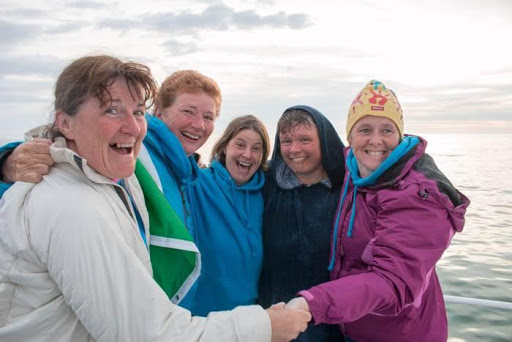
In July 2014 a team of Deaf Irish women became the first Deaf team to complete the Channel swim by taking turns to swim in relay. They completed the journey in 14 hours and 10 minutes. More info and here

Irish Women’s Swim team – picture Channel Swimming & Piloting Federation

Other successful English Channel crossings by Deaf swimmers:

July 2016 Andrew Rees is the first British Deaf man to complete the crossing solo. Info and at the BBC

Andrew Rees – picture Channel Swimming Association

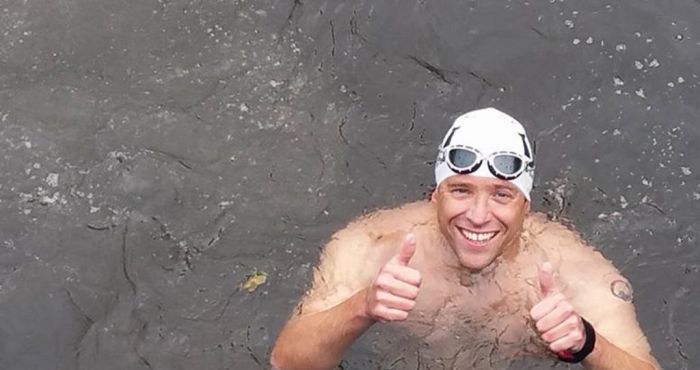
August 2017 Wesley Nolan, the first Deaf Irish person to swim solo. Irish Times

Wesley Nolan – picture Irish Post

It is possible that there are other Deaf swimmers who have completed the English Channel swim solo or as team – if you have this information please share below in the comments.

We will continue this feature on swimming SOON with an interview with English Channel swimmer Verity Green who is registered dual-sensory disabled as we ask her if she has considered competing in the Paralympics.

See you all soon!

EDSO Members seek Vote of No Confidence at Congress

Ahead of today’s European Deaf Sport Organisation Congress, former General Secretary shared an open letter and vlog to explain the situation about his dismissal and concerns of poor leadership.

VIDEO INTRO:

A brief explanation of this article

Today, Saturday 10 July 2021, at the European Deaf Sport Organisation (EDSO) online Congress, one of its national members, UK Deaf Sport will table a motion of no confidence in the EDSO Board. The reason for this relates to the unexplained reasons for the 2019 abrupt dismissal of Philip Gerrard, a Vice President of UK Deaf Sport who, at the time was the EDSO Secretary General – In 2018, he was overwhelmingly voted in by the EDSO membership on his popular manifesto to help EDSO modernise and reform.

Gerrard has asked Two Big Ears to publish his IS vlog here for the benefit of the whole European Deaf Community as a matter of public interest. The vlog will be uncomfortable viewing for members of the EDSO Board because its is a frank account of concerns:

VIDEO FROM P. GERRARD:

Philip Gerrard Explains reason behind the vote of no confidence. This vlog is in International Sign

During his tenure, Gerrard kept his word to support EDSO by following up on his promises, he identified the following challenges facing the EDSO Board:

  1. Lack of strategic thinking presented and reported on to member countries at meetings and in-between.
  2. Lack of opportunities and encouragement for women to join the EDSO Board.
  3. Lack of robust and transparent financial processes which led to the closure of the EDSO bank account.

After Gerrard was dismissed, UK Deaf Sport and other countries were expecting to see an improvement or changes made to the organisational issues that were raised. But since nothing has happened, the motion to make a vote of no confidence has been submitted.

Considering the amount of time that has passed since his dismissal, Gerrard has written an email and a vlog for the EDSO members to read to ensure that they fully understand the reasons for the vote of no confidence. Gerrard has also asked Two Big Ears to publish both the vlog and the messages here so that the grassroots membership in deaf sports clubs as well as the Deaf community in European nations have full access to what is going on.

As we publish this post, we understand that other nations have pledged their support to vote for this. In addition to explaining the reasons for the vote of no confidence, the motion also puts forwards recommendations that:

  1. All EDSO members deliver a vote of no confidence and ask for an independent review into the reasons for the dismissal of Philip Gerrard as EDSO Secretary General and;
  2. That the EDSO Board engage with its members to ensure that national representatives can fully access future EDSO meetings and events.

When we were approached by Philip Gerrard, we asked him why he wanted to go public. His explanation was straight to the point: “To give members the opportunity to seek reform with EDSO.”

Ahead of todays EDSO congress, UK Deaf Sport has sent in a message of support to Gerrard’s email and expressed their concerns “We are disappointed with the expereince our UK Deaf Sport International Relations ambassador has had, and look forward to seeing steps taken by EDSO to ensure greater commitment towards gender equity and good governance which is something we strongly believe in.

UK Deaf Sport will be represented at the Congress by Gordon Hay, from the UKDS International Relations Group and Valerie Copenhagen, UKDS Executive Director. They will also table a second motion that EDSO meetings (online and face to face) must modernise and be delivered with captions in English alongside International Signs. Readers will ask “Why English?” In line with international protocol, English is the official language of communications for official EDSO business and this is stated in the EDSO constitution.

Never Heard of the Deaflympics?

Samsun emblem2017-s-large

As we get closer towards the Opening Ceremony of the 23rd Deaflympic games in Samsun, Turkey this summer, Deaflympic athletes and their supporters are working hard to raise the profile of this event through Social media (Facebook, Twitter, LinkedIn, Instagram etc) – this is generating the important and necessary exposure that the event needs.

This is important because it is still largely unknown in the sports world and to the general public and therefore many people will be finding out about the Deaflympics for the first time. When they learn that the Deaflympics are the oldest International multi-sports event in the world for disabled people, they want to know why they have not heard the name before.

All types of movements and organisations within society are highly dependent on the political and public profile that the leaders inherit, cultivate or acquire. The founding of the Olympic, Deaflympic and Paralympic movements all originate from the ideals, beliefs, innovations and leadership of three individuals who have been credited as ‘founding fathers’ of their respective events. They were Baron de Coubertin, Eugene Rubens-Alcais and Ludwig Guttmann.

These founding fathers all started their movements from different starting points and once people understand this, they will realise how important the Socio-economic backgrounds and the amount of political influence that these leaders had was critical in raising the profile of their causes.

Socio-economic backgrounds

Before the first Olympic and Paralympics Games were inaugurated, Coubertin and Guttmann had already become very successful, wellconnecetd and highly celebrated in their professional careers.

In contrast, the co-founder of the International Games for the Deaf, Rubens-Alcais, in his lifetime, never progressed to become anything more than a car-mechanic in a Paris suburb. This surely suggests that the legacy of Eugene Rubens-Alcais is remarkable.

Without a comparable high standing in society, Rubens-Alcais was unable to call upon networks or influential political support when most needed. Described as a ‘brilliant’ man of modest habits, he spent the whole of his adult life in a sparsely furnished and simple attic apartment. He gave all his time and everything he had to the cause of his friends and others.

He was eventually recognised decorated several times by his fellow countrymen; Officier d’Académie 1930 (Silver Palms) – awarded in France for contributions to national education and culture, Médaille d’Or de l’Education Physique (1930), a Gold Medal for Physical Education, Chevalier du Mérite Norvegien (1960), Chevalier du Mérite Social and the Commandeur du Mérite Sportif (1962).

For Guttmann, his starting point was very different. When he first established the Stoke Mandeville games, he was able to call upon the support of many influential people. One of his spinal-cord associates was Professor Maglio, who ran an Italian research centre on impairments. They collaborated and worked to ensure their Games followed on from the 1960 Olympics in Rome. Dr Nakamura, a Japanese medical researcher worked with Mr Kasai, Chairman of the Japanese Sports Association for the Disabled who, through him, had close ties to the Japanese government. And Kasai’s further influence secured funding for the 1964 Games from both public and private sector sources. When the Mexican government cited ‘technical difficulties’ as their reason for not hosting the Paralympics in 1968, the Israeli Government was lobbied by the ILAN Society (a group of disability activists); and this resulted in the event being hosted near Tel Aviv.

 Political Influences

The political connections accessible to Coubertin and Guttmann placed them in a position of influence that Rubens-Alcais could never hope to achieve.

The Olympics were not an original idea of Coubertin. In the beginning, an Englishman, Dr Brookes attempted to revive the concept of the original Olympic Games but was studiously ignored by the British sports establishment, despite having contacts within the Greek government and with the Greek Olympic philanthropists, the Zappas cousins. Brookes then began to collaborate with Coubertin who used his international society contacts to persuade the King of Greece and its government, along with others, to fund the 1896 Olympics in Athens.

The British government funded Guttmann’s research work so he already had the political backing he required. The idea of using sport as a motivator came to Guttmann when he observed patients playing a game in their wheelchairs utilizing a puck and an up-turned walking stick. The Disabled Persons (Employment) Act was passed by the British government in 1944 and members of Parliament who were war-veterans themselves ‘insisted that the act give preference to those injured as a result of war service’. This, however, focused on those who had become disabled by the trauma of war and did nothing to help the congenitally disabled that had not been injured in the line of duty.

It is necessary to digress here, whilst on the subject of political influence, and introduce a fourth pioneer – Eunice Kennedy Shriver, founder of the Special Olympics. Her first “Shriver Camp” was set up in 1962 and was an indelible part of the philanthropic Joseph P. Kennedy Jr. Foundation and the political drive of President John Kennedy towards the needs of children and the field of intellectual disability. The Kennedy legacy still remains a large attribute of the Special Olympics today.

Eugene Rubens-Alcais, who was born with normal hearing but became deaf at an early age due to fever, already had odds stocked against him when, in the 1920s, he began his far-reaching friendship with Antoine Dresse. Antoine came from a family of Belgian bankers and industrialists in Liege. These two men formed a unique alliance of interests as they began to build a federation of pan European Deaf sports organizations. They had small networks to draw upon and neither had the credibility of a highly respected international social/professional position. But, nevertheless, what they had was an opportunity to empower disabled people in a society that largely ostracised them.

Eugene Rubens-Alcais resigned as the President of the Comité International des Sports Silencieux (CISS) in 1953 and was succeeded by four other leaders who had to compete with Guttmann’s political standing until Robert Steadward in turn succeeded him. Rubens-Alcais’ successors were also people of modest socio-economic standing (See table below)

Table: CISS Presidents during the time Guttmann led the International Stoke Mandeville Games Federation (ISMGF)
Rubens Alcais FRA (1924-1953) Car mechanic
Oscar Ryden SWE (1953-1955) Joiner, woodcarver, Sculptor, editor and lecturer.
J.P Neilsen DEN (1955-1961) Carpenter
Pierre Bernhard FRA (1961-1971) Carpenter, wood sculptor, coffin maker and WW2 resistance fighter.
Jerald Jordan USA (1971-1995) Printer, teacher, administrator at Gallaudet University for the Deaf.
Further details and biographies can be found in CISS 2001: A Review.

To read more about this subject and understand how the disempowerment of disabled people and the professional background of Deaflympic leaders may also have been a strong factor in the low-profile of the Deaflympics, you can order your own copy of Same Spirit Different Team here.


The above article is an edited extract from the book itself.
Critical Review of Thomas Giddens’ documentary: “Does Deaf Football have a Future?”

I have been eagerly anticipating the release of a new documentary “Does Deaf Football Have a Future?” because it is the first time in a while that a programme about Deaf sport was being made in the UK where I had no involvement or insight. I wanted to compare this documentary with my analysis and perspective of the way in which media promotes the Deaflympic Movement and Deaf sport.


The documentary has been made at BSL Zone who support the next generation of d/Deaf filmmakers through their Zoom 2014 scheme aimed at d/Deaf scriptwriters and directors who have some experience but have never had their work broadcast on television. This is Thomas Giddens first ever attempt at documentary filmmaking where he explores ideas about the future of Deaf football. The film is now available online.


There are an infinite number of ways to analyse a subject and in Same Spirit Different Team I highlight the important of how the media representation of sport shapes and informs public attitudes to disability sport. Journalists have the power to inform or not to inform and they construct reality from their particular perspectives. I was looking forward to finding out how far Giddens would take his responsibility of wielding power to inform us about the future of Deaf football.


Without giving too much away; I recommend that you watch this enjoyable and well-made documentary as I think it gives people a broad perspective of Giddens potential as a documentary maker. This debuting director was limited to 15 minutes of airtime and I think he did well to;

  • Use old newsreels and contemporary footage, to give us an historical perspective from the experience of the current GB manager Philip Gardiner.
  • Advocate the current politics and philosophies about deaf football
  • Briefly explore the importance of role models and inclusive football
  • Give us all a hint into what the senior management at GB Deaf Football believes needs to be done in the future


Exposure to mass media plays a significant role in reinforcing existing norms and attitudes that might serve to change public attitudes. Family and peer opinions can be strong, but these too are mass media influenced. Journalists have the power to inform or not inform and they construct reality form their particular perspectives.


I hope this experience has inspired Giddens to continue making sports documentaries because the more coverage we have of the Deaflympics and Deaf sport, the more information we have to share with the public and society to increase exposure and encourage debate and discussion.


Whatever coverage is realised, it does influence attitudes towards the Deaflympics brand; and so it is important that national federations like UK Deaf Sport and their IOC representative the International Committee of Sport for the deaf (ICSD) interacts with the media as much as it possibly can; to present a positive and attractive brand to future athletes, target audiences, corporate supporters and others who are essential to the sustainability of Deaf sport.


The Zoom film scheme is designed to support the next generation of d/Deaf filmmakers. Included five days training, mentorship, script development, production and communication support. Find out more by logging into the BSL Zone.