World Deaf Golf Launches Official Global Ranking System

The World Deaf Golf Federation (WDGF) has announced the launch of the World Deaf Golf Ranking (WDGR), creating, for the first time, an official worldwide ranking system for Deaf golfers.

The new ranking system is designed to recognise performances across national, regional, world championship and Deaflympic competitions, providing a clearer picture of where Deaf golfers stand on the international stage.

For many years, Deaf golf has lacked a consistent global ranking structure. The introduction of the WDGR is therefore a significant step forward in the development of the sport, helping players, national associations and supporters track performance and progress over time.

How the Ranking System Works

The World Deaf Golf Ranking operates on a rolling four-year cycle, aligned with the Deaflympic cycle.

Players earn ranking points through performances in:

  • National Deaf Golf Championships
  • Regional Deaf Golf Championships
  • World Deaf Golf Championships
  • Summer Deaflympics

Points are awarded based on both the level of competition and the number of competitors in each event category.

The highest-ranking events carry the greatest rewards:

Summer Deaflympics

  • Winner: 140 points
  • Runner-up: 100 points
  • Third place: 80 points

World Deaf Golf Championships

Depending on field size:

  • Winner: 100–120 points
  • Runner-up: 80–90 points
  • Third place: 60–70 points

Regional Championships

Depending on field size:

  • Winner: 15–45 points

National Championships

Depending on field size:

  • Winner: 10–20 points

This structure ensures that athletes are rewarded not only for winning but also for competing successfully in larger and stronger fields.

National Championships Now More Important Than Ever

The WDGF has asked all member countries to submit the results of their National Deaf Golf Championships to ensure players receive the ranking points they have earned.

National associations can submit results from both 2025 and 2026 championships.

From 2027 onwards, results must be submitted within one month of the event taking place.

To be accepted, submissions must:

  • Be signed by the President or Honorary Secretary of the national Deaf golf or Deaf sports federation.
  • Include each player’s International Committee of Sports for the Deaf (ICSD) number.
  • Be submitted within the required timescale.

The WDGF has stated that players whose ICSD number is not supplied will still appear on the ranking list, but their results cannot be fully processed within the ranking system.

What This Means for Players

The introduction of a global ranking system provides several benefits:

  • Recognition of achievement at national and international level.
  • Greater visibility for Deaf golfers around the world.
  • A clearer pathway from national competition to international events.
  • Increased credibility for Deaf golf within the wider sporting landscape.
  • Additional motivation for players to compete regularly and improve their ranking position.

For emerging golfers, strong performances in national championships can now contribute directly to their international standing.

What This Means for National Golf Organisations

For NGO’s Golf, the ranking system creates an opportunity to showcase the strength of Deaf golf within the sport.

It also highlights the importance of maintaining accurate player records, including ICSD registration numbers, and ensuring that national championship results are submitted promptly.

With future qualification pathways likely to place increasing importance on competitive results and rankings, the WDGR could become an important reference point for player development and international selection discussions.

A Positive Step Forward

The launch of the World Deaf Golf Ranking represents another important milestone in the growth of Deaf golf worldwide.

By recognising performances consistently across national, regional and international competitions, the WDGF is creating a system that rewards achievement, encourages participation and strengthens the competitive structure of the sport.

For Deaf golfers everywhere, the message is simple: every championship now counts.

£3,000 (€3,500) to Watch. £4,000 (€4,700) to Compete.

As thousands of Arsenal supporters descend on Bucharest for tonight’s UEFA Champions League Final, many will spend upwards of £3,000 (€3,500) on flights, hotels, tickets, food, and travel.

They will not be alone. Thousands of Paris Saint-Germain supporters will also make the journey, turning the city into a truly international gathering of football fans united by a shared passion for sport.

For most fans, it will be money well spent.

Football is about passion. It is about belonging. It is about being there when history is made.

Nobody questions their decision.

Nobody asks why they are spending so much money.

Nobody suggests they should stay at home and watch it on television.

Because people understand that sport matters.

Yet at the very same time, Deaf athletes selected to represent Great Britain at the Deaflympics are being asked a very different question.

“Why do you need financial support?”

The contrast is striking.

Tonight, thousands of supporters will spend thousands of pounds to watch elite athletes compete.

Meanwhile, Deaf athletes who have earned the right to compete on the international stage are fundraising simply to get there.

Many members of the public are surprised when they learn that Deaflympians often face significant personal costs to represent their country. The common assumption is that athletes competing for Great Britain are fully funded.

The reality can be very different.

For many athletes across Team DeaflympicsGB, the cost of participation can reach around £4,000 (€4,700) per person once travel, accommodation, preparation, equipment, insurance, and team costs are considered.

These athletes are not spectators.

They are not attending for entertainment.

They are representing their country against the world’s best Deaf athletes.

Like every elite competitor, they have spent years training, sacrificing family time, balancing employment, education, and other commitments, and funding their own development to reach this point.

Many Deaflympic athletes are also young people on low incomes. For some, the financial burden is so significant that they make the heartbreaking decision not to attend the Deaflympic Games at all, despite earning selection through their performances.

The question therefore is not whether Deaf athletes should be fundraising.

The question is why they have to.

Sport has the power to inspire communities, challenge perceptions, and create opportunities for future generations. When Deaf athletes stand on an international stage, they are doing far more than competing for medals. They are demonstrating what is possible for young Deaf people who may never have seen someone like themselves wearing a Great Britain shirt.

Most football supporters would probably agree with that.

Many would likely be shocked to discover that athletes representing their country still face such barriers.

After all, if society can understand why someone might spend £3,000 (€3,500) to witness sporting history, surely it can understand why athletes representing Great Britain deserve support to make sporting history themselves.

The #FairPlayForDeafAthletes campaign is not about asking for sympathy.

It is about asking for fairness.

Because no athlete should have to wonder whether they can afford to represent their country after they have already earned the right to be there.
Michael Woods Has Reached Everest. Now What?

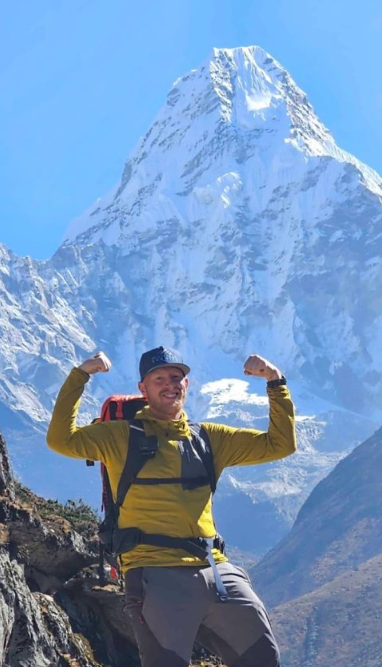
When Michael Woods stood on the summit of Mount Everest earlier today, he achieved something extraordinary.

To be clear, Michael is not the first profoundly Deaf person in the world to climb Everest. Other Deaf climbers have reached the summit before him. However, he is believed to be the first profoundly Deaf person from the UK to achieve this remarkable feat.

That distinction matters.

Not because records are everything, but because representation matters.

For generations, Deaf people have been told—sometimes directly, sometimes indirectly—to lower their expectations. To be realistic. To accept limitations that others place upon them.

Michael’s climb challenges that narrative.

Everest does not care whether you are Deaf or hearing. It does not make allowances. It simply demands preparation, resilience, skill and persistence.

The same is true of many challenges Deaf people face every day.

Success rarely arrives in a single moment. It is built through thousands of decisions: to keep training, keep learning, keep believing and keep moving forward when progress seems slow.

The summit is simply the visible part of the journey.

For young Deaf people especially, Michael’s achievement provides something powerful: proof.

Proof that Deaf people belong in every arena of life.

Proof that barriers can be challenged.

Proof that ambition is not limited by hearing status.

Not everyone will climb Everest.

But everyone has their own mountain.

A qualification. A career. A business. A sporting ambition. A personal challenge.

Michael Woods has shown us that great achievements begin in exactly the same way:

First you dream.

Then you believe.

Then you do the work.

Congratulations, Michael. The view from the top belongs to you.

The inspiration belongs to all of us.

#MichaelWoods #Everest #DeafCommunity #DeafSuccess #DeafSport #DeafLeadership #TwoBigEars #DreamBelieveAchieve #BreakingBarriers #RepresentationMatters

We were congratulated. We are still Excluded

Last week, the UK government finally acknowledged Deaflympians in Writing.

In a letter to the Culture, Media and Sport Select Committee, Sports Minister Stephanie Peacock congratulated the 65 Deaf athletes who represented Great Britain at the Tokyo Deaflympics, praising their “extraordinary talent and resilience” and calling them role models for Deaf children.

Recognition matters. Deaf achievement is often ignored entirely.
But recognition without change is not progress.

When you read the letter closely, it becomes clear that nothing fundamental has shifted.

Fair Play for Deaf Athletes

Praise does not equal equality

Despite the congratulations, Deaflympians are still excluded from the UK’s elite sport system. There is no access to Athlete Performance Awards. No place on the World Class Programme. No consistent funding for coaching, medical support, or performance preparation.

The explanation is the same one Deaf athletes have heard for years.

Deaf sport is governed by the International Committee of Sports for the Deaf, not the International Paralympic Committee. Because of this, Deaflympians are described as sitting “outside UK Sport’s remit”.

This is presented as a neutral technicality. It is not.

It is a decision that keeps Deaf athletes on the outside.

“Outside the remit” means “not designed for Deaf people”

Funding systems are built by people. They show priorities. When a system repeatedly excludes one group, the problem is not the group — it is the setup.

Deaf athletes train at elite level. They compete internationally. They follow anti-doping rules. They represent Great Britain under the flag, just like Olympic and Paralympic athletes.

The difference is not ability or commitment.
The difference is that Deafness does not fit neatly into the boxes the UK already uses.

Instead of redesigning the boxes, the setup asks Deaf athletes to accept exclusion.

Grassroots funding is not the same thing

The Minister’s letter highlights significant grassroots investment through Sport England, including funding for UK Deaf Sport and a specialist inclusion post.

Grassroots funding is important. It helps Deaf people get active and build community sport.

But grassroots funding does not pay for elite training. It does not cover international competition schedules. It does not offer full-time coaching, performance support, or the stability needed to compete against fully funded national systems.

Congratulating Deaf athletes for winning medals while pointing only to participation funding sends a clear message: Deaf sport is welcome at the bottom of the pathway, but not at the top.

We have had meetings before

The letter confirms more meetings. UK Sport will meet Deaf athletes. The Minister is open to further discussion.

Meetings are welcome. Listening matters.

But Deaf athletes and Deaf organisations have already told these stories. Evidence has already been shared. The problem is well understood.

What has been missing is not information.
What has been missing is action.

Without clear outcomes, meetings risk becoming another way to delay decisions while athletes continue to self-fund, self-organise, and self-sacrifice.

This is not about asking for favours

Deaf athletes are not asking for charity.
They are not asking to be “included” as a gesture of goodwill.

They are asking for equal recognition of elite performance.

They train. They compete. They win medals. They represent Britain on the world stage. They inspire Deaf children who rarely see themselves reflected in national sport.

If that is not elite sport, then the definition of elite sport is broken.

The real question

The Government’s letter is polite. It is careful. It avoids conflict.

But it does not answer the central question Deaf athletes are asking.

If Deaflympians are good enough to represent Great Britain,
good enough to win medals,
and good enough to inspire the next generation —

why are they still not good enough to be funded like other elite athletes?

Until that question is answered with real change, congratulations are just words.

You can read the UK Government press release and letter here

#FairPlayForDeafAthletes

MPs Back Call for Deaflympics Funding Parity Following #FairPlayForDeafAthletes Campaign

Following the success of British athletes at the Tokyo Deaflympics, MPs on the Culture, Media and Sport Committee have formally recommended that the Government fund elite Deaf sport and recognise the Deaflympics on the same basis as the Olympics and Paralympics.

While this does not yet represent full Parliamentary backing, it is a significant step forward for UK Deaf Sport’s #FairPlayForDeafAthletes campaign.

At Two Big Ears, we welcome this intervention — and we are clear about what must come next.

Deaflympians excluded from public funding

In its letter to the Secretary of State, the Committee states:

“Elite deaf athletes in the UK are the only disabled elite sports group that has no access to public funding whatsoever.”

Despite competing at the highest international level, Deaflympians:

  • Receive no UK Sport funding
  • Have no lottery-backed performance pathway
  • Must self-fund training, coaching, travel, physio and kit

This exclusion is not accidental. It is a long-standing policy gap.

Deaflympics recognised as part of the Olympic family

The Committee also makes clear that Deaf sport is already part of the recognised elite system:

“The Deaflympics [are] part of the Olympic family and the only games in which there is a classification for deaf people.”

This directly challenges the idea that Deaflympians sit outside elite sport structures.

Tokyo Deaflympics: success despite the system

MPs highlighted the reality faced by Deaf athletes preparing for Tokyo:

“To take part, our deaf athletes have to continuously raise money for training fees, travel, physio and kit.”

“For Tokyo, the 65 UK athletes who took part had to raise £250,000 between them, just to enable them to represent this country.”

All of this happened while athletes were training for elite competition and working or studying full time.

The conclusion was clear: Deaf athletes succeed in spite of the system, not because of it.

The funding ask — and why it is modest

UK Deaf Sport estimates that:

“£3 million [is needed] to prepare a team through the next full cycle, ready for the 2029 Deaflympics.”

The Committee noted:

“That is less than 1% of what UK Sport has awarded for the Olympics and Paralympics in one Olympic cycle.”

This is not an excessive demand. It is a proportionate request for equality.

Committee recommendation, not yet a Parliamentary vote

The Committee is explicit about what it is asking Government to do:

“Commit, via UK Sport, to £3 million of funding now for elite deaf sport in the current Deaflympics cycle.”

“Permanently recognise the Deaflympics in the same way you do for the Paralympic and Olympic Games for funding purposes.”

This is a formal recommendation. It now requires:

  • Government acceptance
  • A funding decision
  • Political will to act

Two Big Ears: fair play must mean fair funding

As the Committee concludes:

“The Deaflympians who represented our country on the global stage… deserve an equal opportunity.”

The #FairPlayForDeafAthletes campaign has now been reinforced by Parliamentary scrutiny.

The evidence has been heard.
The recommendation has been made.

Now the Government must decide whether it will act.

“What Happens Next?” – Simple Explainer

Where we are now

  • The Culture, Media and Sport Committee has reviewed evidence
  • It has written formally to the Secretary of State
  • It has recommended £3 million in funding and permanent recognition of the Deaflympics

What this does NOT mean

  • This is not yet a vote of Parliament
  • Funding is not yet agreed
  • Policy has not yet changed

What must happen next

  1. The Government responds to the Committee
  2. Ministers decide whether to accept the recommendation
  3. UK Sport is instructed (or not) to release funding
  4. Longer-term recognition is agreed or rejected

Why this matters
Committee recommendations carry political weight.
Ignoring them requires justification.

This is the strongest position Deaf sport has held in UK policy discussions to date.

Read the full article on the UK Parliament website

Deaflympics 2025 Media Watch (19 November 2025, 09:00 JST)

The headlines this morning are impressive—if you could find them.


Japan’s own Maki Yamada sprinted to gold in the men’s 400 m, delivering the host-nation’s first win at the 2025 Games. Nippon+1

Taiwan picked up two silvers, one from hurdler Hsu Le and another from shooters Hsu Ming‑jui & Kao Ya‑ju. Focus Taiwan – CNA English News

Ukraine’s tally also soared with nine golds so far. Межа. Новини України.


Yet despite the wins, the global sports pages remain strangely quiet. The athletes are in motion. The record boards are ticking. The cameras? Still mostly pointing elsewhere.


If the Deaflympic movement has one job, it was to show the world they matter. Right now, they’re doing the work. The question: will the world show up?

Bravo to the organising Committee for livestreaming, here’s the highlights for 19th November

Thank you to the UK LumoTV for daily bulletins on the GB athletes. We wonder if other nations are able to provide the same?

Deaflympics 2025 Media Watch – 18 November 9:00 JST

Today brought real competition into full view. The newswire from 2025 Summer Deaflympics pegged athletics finals at Tokyo — women’s 100 m victory for the Netherlands, and Japan’s Sasaki Takuma reacting after the men’s 100 m final. 

But despite the spectacle, the global sensors of sports media largely stayed quiet. With medals decided, the takeaway feels familiar: the athletes are making headlines, but the headlines aren’t making the athletes.

Deaflympics media Watch (for 17th November 2025)

Support Assistant

I can help you set up automatic posting to Facebook! You’ll need a Facebook Page (not a personal profile) to connect with your WordPress.com site. Go to Jetpack → Social in your dashboard and click “Connect an account”, then choose Facebook and follow the prompts to connect your Page. Want me to walk you through what happens next?

Perfect! After you connect your Facebook Page, every new blog post you publish will automatically share to Facebook. But you can customize this for each post – when writing a post, click the green Jetpack icon at the top-right and you can toggle sharing on/off, choose which networks to share to, or add a custom message. Ready to try connecting your Facebook Page?

Got it! Let’s troubleshoot this. First, can you check if your Facebook connection is still active? Go to Jetpack → Social and see if your Facebook account shows as connected or if there’s a “Reconnect” button. Also, when you publish a post, do you see the sharing options in the Jetpack panel on the right side of the editor?

That’s frustrating! Let’s check the sharing settings for your posts. When you edit one of your recent posts, look for the Jetpack social sharing panel on the right side – does it show Facebook as enabled for that specific post? Also, are you publishing to a Facebook Page or trying to share to a personal Facebook profile? WordPress.com can only share to Pages, not personal profiles.

Let me help figure this out! Try disconnecting and reconnecting your Facebook Page – go to Jetpack → Social, click the three dots next to your Facebook connection, and select “Disconnect”. Then reconnect it fresh. Sometimes Facebook changes their permissions and a fresh connection fixes the issue. Want to try that and see if your next test post shares properly?

A gold medal landed yesterday. It should have lit up the sports world. Instead, it flickered in the margins.

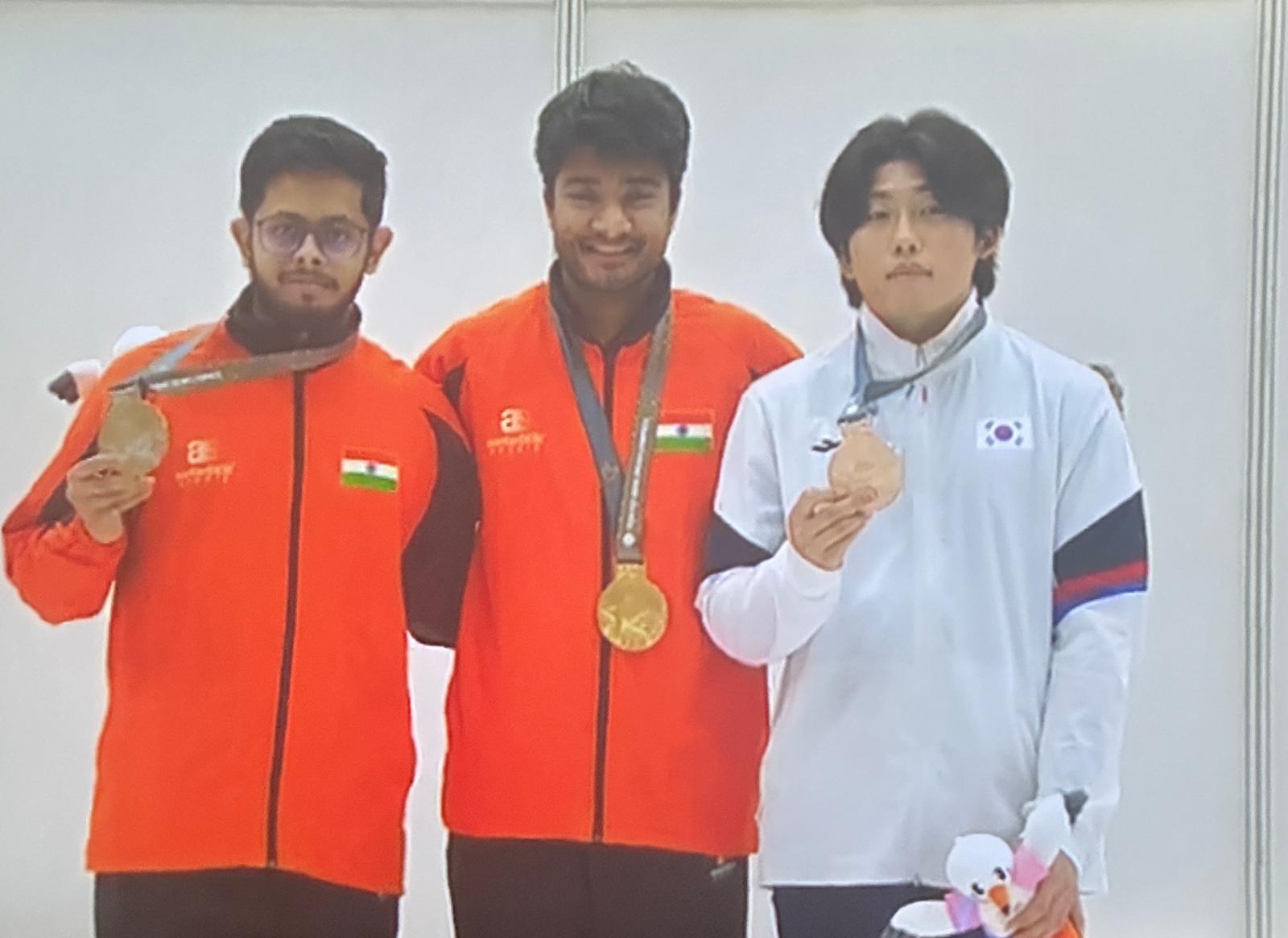
Indian shooter Dhanush Srikanth claimed gold in the men’s 10 m air rifle at the Tokyo Deaflympics and broke a world record in the process. (The Times of India) Yet the global headlines barely moved.

Dhanush Srikanth won gold and broke a world record in the Men’s shooting


In Japan, a local Japanese-language outlet ran a tech/inclusion piece on the Games and the host city’s accessibility strategy — accessible to those digging through Japanese livestreams, but easy for global sports desks to ignore.


And in Latin America, a Spanish-language website celebrated the arrival of the Games with local athletes boarding flights, yet still no major live result coverage.

The UK media ran a strong piece on the funding gap facing Deaflympians, reminding the world that while medals are won recognition is still waiting.


The athletes are winning. The stories are there. But the broadcast and mainstream media radar? Still silent.

The question stands: when record-breaking performances happen, will they get the spotlight they deserve — or will they remain hidden in niche feeds?

What you can do

Watch the action livestreamed on YouTube

Get the results and details on the official website

Mainstream media can get the accreditation they need

State of the Coverage (Sunday Round – Up)

Written 0900 JST 16th Nov. 2025

A week in, and here’s the truth: the athletes are competing; the headlines aren’t.


Across five days of the 2025 Summer Deaflympics in Tokyo, we’ve watched proud squads, historic centenary stories, and digital streaming hints – but seen almost no major network spotlight.

Opening Ceremony – 15th November 2025

Teams from India and South Africa told their stories. Japan, as host city, backed sign language, tech and Deaf culture. Local newspapers, specialist media and regional outlets lit up. But the big broadcasters? They’re still warming up. They’re running features, not live sport. They’re watching from the sidelines, not in the arena.

That’s the gap we’re here to call out. It’s not about counting page-views or “good news pieces.” It’s about whether Deaf sport gets equal airtime. It isn’t yet.

So as we head into the heart of the Games next week, we’ll ask: If an athlete breaks a record, will the world know? If a team wins gold, will their country’s screens show them? If a young Deaf athlete makes her debut — will it matter to the sports narrative?

If the answers keep being “no,” then our job, our spotlight, our voice matters more than ever.

Media access to the Deaflympics is available here

Live coverage on You Tube

Official Deaflympics 2025 website