Deaf lose up to seven years of life.

The BBC News website today has reported that obese people are at risk of losing up to eight years of life. Many would not find that surprising, even non-scientist could tell you that being obese is a serious health risk and potentially people could shorten their life-spans. You can read more on this report at the end of this post.

What I think people will find more surprising is that people aged 20-40 years old today have a 50% likelihood of losing seven years of life because they will develop a significant hearing loss in the remainder of their lifetimes and that untreated hearing loss will put them at risk to depression, anxiety, social isolation, chronic health conditions (diabetes, acute kidney disease and chronic heart disease) and mental health leading to a loss of seven years of life.

The World Health Organisation (WHO) study Global Burden on Disease (2000) calculated that adult-onset hearing loss was, at the time, the world’s second leading cause of Years Lost to Disability.

17% of the adult population in the US, 30% of 60-70 year olds and 50% of those over age of 75, have a significant hearing loss. Between 9% and 22% of this group also have a dual sensory disability of severe sight and hearing loss. It is the worlds third most prevalent chronic health condition facing older adults and in the UK, it is expected to be in the top ten disease burdens, above cataracts and diabetes, by 2031.

Western nations are facing an ageing population in 2010-2030 as the baby boomers reach the age of 65. Currently, only 20% of Americans with a hearing loss and 1 in 3 in the UK seek help, leaving a total of 32.8 million people with no support to manage life with their hearing loss.

You can read more about this impending epidemic and find out what the Deaflympic Movement and Deaf sport should do to alleviate this impending health and economic crisis in Same Spirit Different Team.

“Obese lose up to eight years of life”, James Gallagher, Health Editor, BBC News website.

A Tribute to Professor Margaret Talbot OBE PhD, FRSA

Today at 7:55am, Deaf sport lost one of its greatest supporters, Professor Margaret Talbot.

Margaret Talbot

I am greatly indebted to Margaret, as I, like countless others, can count her as one of my loyal friends and a great professional mentor. She never wanted anything in return, always happy to share her thoughts and offer insight when things were going well or falling apart. I treated her counsel with care because her time and support was something special and valuable, not to be abused.

I first met Margaret when I was 19 years old, working at Friends for Young Deaf people in the early 1980s, she took a great interest in our sport and development work with young deaf and hearing people – at that time, we were pioneering Deaf people’s involvement in the CCPR Community Sports Leaders Award and it was through her inspiration as CEO of the Association of Physical Education UK that contributed towards my decision to get into PE teaching.

Later, when she was CEO at the Central Council for Physical Recreation, she encouraged me to speak publicly at meetings and conferences about Deaf sport and challenge her peers and political decision makers to think about how National Governing Bodies of sport and education could be more inclusive and equitable.

When I came to write “Same Spirit Different Team – The Politicisation of the Deaflympics. Margaret was there to offer guidance, even offering the time to read drafts and suggest changes. It did not matter that she held high office in the world of sport and acted as consultant to the United Nations, she never forgot those of us at the chalk-face, in the classrooms, on the sports fields; we were her equals, no matter what.

I hold a deep sense of gratitude to Professor Talbot and cherish every word she wrote in her Foreword for my book. Those of us, who had the privilege to know her, will remember her as someone who knew how to challenge ignorance and bigotry in a way that allowed people not to lose face, a rare talent indeed.

Happy Travels my Friend.

Can we keep blaming the Referees ?

A story that has been circulating in the UK media this week about Deaf footballers is a prime example of how the media influences public perception about Deaf people and their involvement in sport.


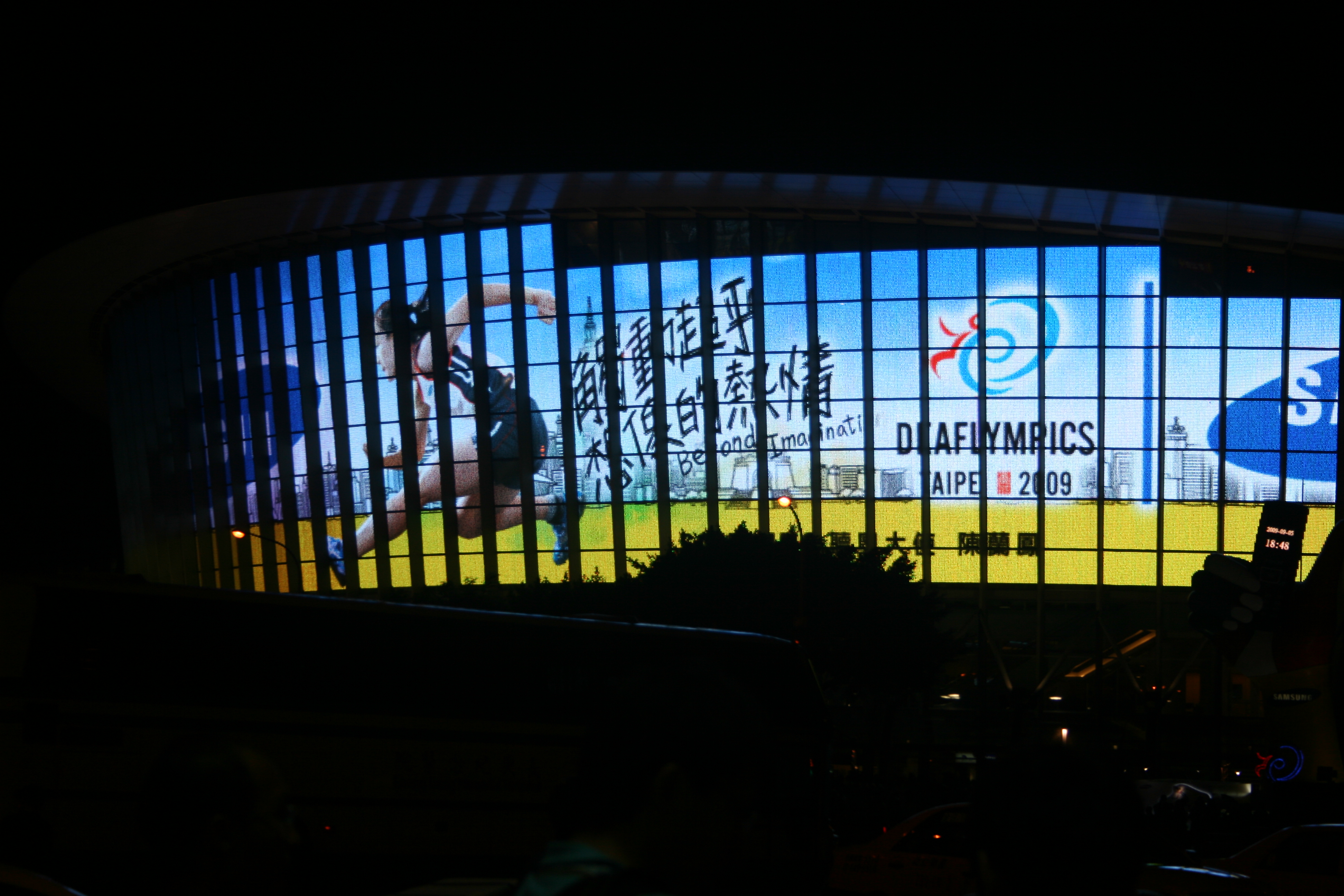
GB v Japan  Summer Deaflympics 2009, Taipei

GB v Japan Summer Deaflympics 2009, Taipei – Photo by Sam Perkins

The first headline in the Birmingham Mail (07:00 26th May 2014) was “Birmingham Deaf football team end season on minus six points.” details


By the time others had got hold of the story and published online, the headlines read :

“Deaf football team concede 164 goals because they couldn’t hear referees whistle.” (Mirror 10:53 )  details


“Deaf football team who conceded 164 goals, appeal against relegation because they couldn’t hear the referees whistle.” (Metro 12:32) details


“They would keep running after the whistle blew: Deaf football team who finished on record low points total blame not being able to hear referee.” (Mail Online 13:43) details


How have the readers reacted?

From all the comments posted:

36% were either prejudiced or negative in their attitudes towards Deaf and disabled people

20% showed their support to the Deaf players and felt referees should be trained to be deaf-friendly with flags.

17% offered constructive suggestions for improving the situation in future

17% were critical of the media’s handling of the story

10% commented constructively that there were other factors causing poor performances

It is a worrying statistic to see 36% prejudiced against Deaf people. This appears to reflect a similar study of racism in the 2013 British Social Attitudes Survey published this week declaring that 1 in 3 people surveyed admitted to being racially prejudiced.

(27th May 9:15am) Callum Fox , Marketing and Communications Officer at North Riding County Football Association:

“If you’re going to pinch a story, have the decency to quote the original which was published in the Birmingham Mail … Also shame on Metro for completely twisting the story to suit their desire for click bait by omitting an entire section of quotes in which the manager says he blames the teams performance for their poor performances, not the ref as you claim. The “journalist” who wrote this ought to be ashamed of himself.”


It can be argued that a more skillful Deaf player will be able to cope without the need for referees to wave flags. But in the Deaflympics, the elite Deaf football competition, match officials do use flags as the following picture will illustrate:

Referee carrying flag during Deaflympics competition.

Referee carrying flag during Deaflympics competition.   – Photo by Sam Perkins


In the background, we can see additional match officials with flag during Deaflympic competition.

In the background, we can see additional match officials with flag during Deaflympic competition.  Photo  by Sam Perkins

As I mentioned in my last post, it is often said that the rules of sport do not need to be modified for deaf athletes and players. This is misleading, it should be pointed out that the playing environment does need to be adapted – everyone in football does need to become more deaf aware and if they really believe that they are inclusive, they have to take action and compensate by using flags. But, quite rightly, there are Deaf football teams who perform consistently well against hearing opponents and so referees not waving flags is not the only reason for the failure of Birmingham Deaf FC.


UK Deaf Sport staff are investigating the matter and have been working with Birmingham FA and the UK Deaf Football Federation to move forwards and make improvements. When UKDS consulted with partners at Birmingham Institute for the Deaf who have been supporting the football club it was reported that team are unhappy with how the story has been portrayed, the team are the first to admit that they did not play well, and due to lack of organisation and commitment ended in a very poor result.

“From what we can tell, the reporter focused on the issue of lack of flag usage”.

The BDFC secretary said

Deaf people want to play sports and be treated equally to other people yet after one disappointing season they have been published in newspapers for all the wrong reasons.”


Whilst there are many factors that will affect a team’s performance in a competition, the fact remains that in team sports, if the players do not feel they can trust officials to be unbiased they will not be motivated to sustain their involvement and seek ‘the level playing field’ elsewhere. To be truly inclusive governing bodies of sport need to be more proactive and take their responsibilities seriously by working with Deaf sport to provide the right level of training an awareness that is required of everyone involved, players as well as officials.


Enterprising companies have used wireless digital technology to create vibrating armbands that react when a whistle is blown. But this technology is far too expensive and beyond the reach of the regular amateur club, so for now, football needs to follow the Deaflympic protocol for match officials to use visual signals to signal that the whistle has been blown.

For a more in-depth study of how the media portrays the Deaflympics, read Same Spirit Different Team available now from Action Deafness Books.

Are the Deaflympics really necessary ?

A common question I often get asked : “Are the Deaflympics really necessary?”

The straight answer is “Absolutely.”  However, people seek justification for that assertion – they want to understand it in ways that they can relate to.

Recently, I came across a short video of Helen Willis and her life as a student at university. Helen wears a cochlear implant and the video explains the pros and cons of day to day living. Before you read the rest of this post, you need to watch the film, (there are subtitles and there is some sign language) It is only about 9 minutes long so please bear with me and come  back to this page once you have finished watching here.

Welcome back. Now, I suspect that some of you will have already decided how some scenes in that video give clear reasons why the Deaflympics are really necessary for the benefit of Deaf people. However, if you are still unsure, allow me to elaborate.

The IOC, in its wisdom, believe that the Deaflympics segregate Deaf people from society. On the contrary, the Deaflympics are necessary to provide opportunities to a balanced world of “silence and synthetic sound”. Although there have been advances in Cochlear Implant technology that now overcomes some of the limits in Helens implant, there is still a need for assistive technology and other resources to enable a Deaf person to function independently. Implants are not a cure and flashing doorbells, electronic note-takers, sign language and the company of other deaf people is still required.

The Deaflympics are necessary because the IOC and sport has not yet solved the barriers that prevail in sport. It is said that the ‘rules of the game’ do not need to be adapted for deaf people – but the environment does. Opportunities to improve communication for Deaf athletes and others in the sports environment remain uncharted, untapped and under-resourced. The assistive technology already in use at the Deaflympics is still not a regular feature in the sports competitions run under International Federation rules. Sports officials are also still ignorant to the simple changes that can be made to enable Deaf athletes to respond when play is stopped. Thus, the Deaflympics are necessary in order to teach the IOC and sport what is required to become inclusive.

The Deaflympics are necessarily  important for society because the development of an elite athlete is similar to the career development of every employee of working age and there are two areas that need attention in order to progress, succeed and get promoted. The first area is the development and practice of skills and activity of the job itself, this has to be done in the most efficient and effective way possible. The second area is the continuing professional development, socializing and networking that enables the worker/athlete to take on more information, insights and confidence to develop their skills and activity area further.

Helen’s experience as a student in an elite academic environment mirror the same difficulties facing Deaf athletes who work hard to function in the elite sporting environment. Like Helen, their brains have to work overtime to fill in the gaps so they can understand the complex information that their coaches are conveying. So much brain-power is used, just keeping up with the coaches and other support staff that assistive technology and resources or changes in behavior and working practices are required.

The sports environment is still very much like the pub scenario described by Helen. She is amongst fellow elite students but she feels useless, all she can do is watch people lips move because it is impossible to understand every word despite being skilled at lip-reading. The ability to contribute is an important measure of a persons worth to others.

The Deaflympic pathway is necessary because it is an untapped source of Olympic talent that has only been utilised by a very small minority ( Terence Parkin, Dean Barton-Smith ) to balance out or springboard up to the next level of elitism. Unfortunately, governments and national governing bodies are blinkered by the Olympic/Paralympic monopoly as the only pathway for disabled athletes. By doing this, they have marginalised elite deaf athletes to the back of the queue when it comes to access to the funding and resources required to succeed. I have covered the impact of this monopoly extensively in the book; Same Spirit Different Team.

The Deaflympics are really necessary because sport and physical activity are beneficial to people’s personal health, well-being and academic/economic efficiency. The same is obviously true for Deaf people, well, it was at one time, when educational systems based on Deaf schools fostered the adoption of active healthy lifestyles engineered through the school – community links that prevailed. Nowadays, that has all but disappeared. Deaf sport has been fragmented and in some localities obliterated into extinction.

The workplace is a stressful environment for everyone and it is possible find ‘release’ in sport and physical activity or other forms of recreation that takes our noses off the grind-stone and allow us to relax and recharge. But not so for Deaf people, the bolt-holes everyone takes for granted are still stressful environments for Deaf people and Helen’s involvement in Dancesport is a good illustration that sport is the ‘happy place’ we can all escape to and ‘forget our cares and lose ourselves’.

Like Helen, all Deaf people seek out the benefits of sport within the mainstream environment, in the local clubs and facilities that are close to hand. But as we saw in the video, the acoustic environment of sport does not lend itself well to effective listening and communication. The interviewer in the video asks Helen “When do you hear? – When do you hear about the results?”. Helen answers “I think I am going to be very happy with it. I’ll be very happy with whatever they say”. Realizing that Helen had not understood the question, the interviewer patiently tries again “Do you know when you hear?” and Helen was able to answer the original question, thus contributing effectively.

The important point to consider here is that this was a one off situation in the relatively short relationship between the interviewer and Helen that lasted for the duration that the film was made. But this occurs more often in the daily relationship between Deaf and hard of hearing people and their hearing friends, colleagues and family members. This scenario repeats itself time and time again, people lose patience and draw away and stop communicating with deaf athletes because it becomes burdensome. I once came across a declaration made by a hearing person that you can invite your Deaf friend to a party once, but only once because the situation with communication was too awkward.

In the film, Helen’s parents are supporting her at the dance competition. Whether or not this is a usual occurrence is irrelevant but their presence serves to answer another point about the support structures that elite athletes need and how this can be found in the Deaflympics. There was someone in the sporting environment that was able to communicate more effectively with Helen as a competitor and provide her with the stress-free interactions that enable the athlete to stay calm and composed under pressure.

If we do eventually succeed in persuading the IOC and sport to recognise and support the Deaflympic pathway correctly, the majority of athletes in the Summer and Winter Deaflympic will still not reach the pinnacle of the Olympics, but they will at best have been given the opportunity to reach their potential. This is true in the case of Rajeev Bagga, five-time Deaflympic badminton gold medalist. Bagga never reached the Olympics, but he did compete in the Commonwealth Games and other world –ranking events. Now retired from the Deaflympics, he still competes internationally in mainstream Masters badminton for England and is now sharing his knowledge and experience with Deaf and hearing people as a badminton coach through opportunities that have been created by Sport England recognizing the key strategic importance of UK Deaf Sport, the British representative of the Deaflympic movement and its network of sports opportunities offered by third sector deaf organisations and their partnerships with national governing bodies and other providers of physical activity. We are only just starting to get there.

We can argue that some political decisions that were made in the late 1980s and early 1990s by the leadership of the Olympic, Deaflympic and Paralympic movements have denied Bagga the opportunity to compete at the Olympics. The International Committee of Sport for the Deaf and Deaf sport needs to learn from this and move forwards. Deaf sport needs to teach society that the Deaflympics are necessary and have much to offer non-deaf people in return.

If you want to know what those benefits are right now or need further information on the politics that have shaped Deaf sport into what it has become today, read Same Spirit Different Team, the latest book on the Deaflympic games.

Thank you to Helen for sharing her experiences with us.
 

Celebrating Women in Deaf Sport

The Twittersphere is a crowded place today with every opportunity to tweet the celebration of International Women’s Day.

??????????????????????????????

Here in the UK, the Women’s Sport and Fitness Foundation has launched its “Say Yes to Success” campaign to drive more commercial and media investment and attention to women’s sport. They plan to achieve this through investment and coverage of as many high quality events and competitions as possible.

According to WSFF, women’s sport only receives 0.4% of the total commercial investment in sport and only gets 7% of sports coverage by the media.

Today I am celebrating women in Deaf sport. I want to do this because I am concerned about the lack of deaf women taking up strategic roles in sport. UK Deaf Sport is currently recruiting for new Board members and we are very impressed with the high calibre of applications that we have attracted and we hope to be making some announcements later in the year. However, we need more women to apply for a place to help us go forwards.

Personally I don’t think we are communicating publicly how important women are to UKDS, perhaps people think we already have this sorted ? Maybe there is a lack of inspiration ? or there is a resignation that it remains a male dominated institution and it will be difficult to make an impact?

UK Deaf Sport has, up until now, always had women on its board of trustees, but both remaining women have tendered their resignations this year and we will not have replacements on the board at our AGM on 26th March.

I cannot stress how important it is that we have women represented at board level. There is so much that needs to be done and we need inspirational leaders to come and help us achieve our ambitions.

Did you know that at the first Deaflympics in Paris, 1924, there was only one woman competing. The pioneer of women was Hendrika Nicoline Van der Heyden (NED) who competed alone in the 100m backstroke swimming. According to Same Spirit Different Team  “Her event is probably, the first and only ‘walkover’ in the history of the Deaflympics.”

IMG_0533In the 2013 Summer Deaflympics, the majority of medal winners in the GB team were women. Athletic’s Melanie Hewitt, Lauren Peffers and the GB Womens Football team. The team was inspired by a charismatic Chef de Mission Fiona Brookes who was at the forefront from the moment she took on the role.

The CISS (Committee International Sports des Sourds) was the first international sports organisation to appoint a women, Maria de Bendeguz (VEN)  onto its Executive Committee in Koln 1981.

Donalda Ammons followed next as CISS Secretary General in 1997 and then succeeded John Lovett as President in 2005 and served until 2009 as she celebrated what was the most successful Deaflympic Games in terms of commercial and media coverage to date when the City of Taipei invested $200m of which $4.34m came from commercial sponsors and vastly increased media coverage which saw attendances rise from 12,00 in Melbourne 2005 to 278,884 in Taipei.

IMG_8221

Emile Sheng, CEO of the Taipei DOC said that the real ‘gold’ in staging the Deaflympics was not in the number of medals generated by the national Chinese Taipei team or the financial profit generated but by the raising of Taiwanese international profile, initiating a regeneration of Taipei City and, for the countries leading businesses, showcasing their products and services. Tony Phoo, an economist with Standard Chartered bank Taiwan PLC, observed:

Taiwan has long been seen primarily as a supplier of electronics components. This will change after the nations socio-economic development is displayed for all to see. (Brisebois 2009, p60 Same Spirit Different Team 2014)

The UK Deaf Table Tennis Association, this week has appointed Sereena Gilmour as its Chairperson. She is the mother of Deaflympian Nick Gilmour and the wife of the late John Gilmour who the UKDTTA owe a great debt to for his dedication and hard work.

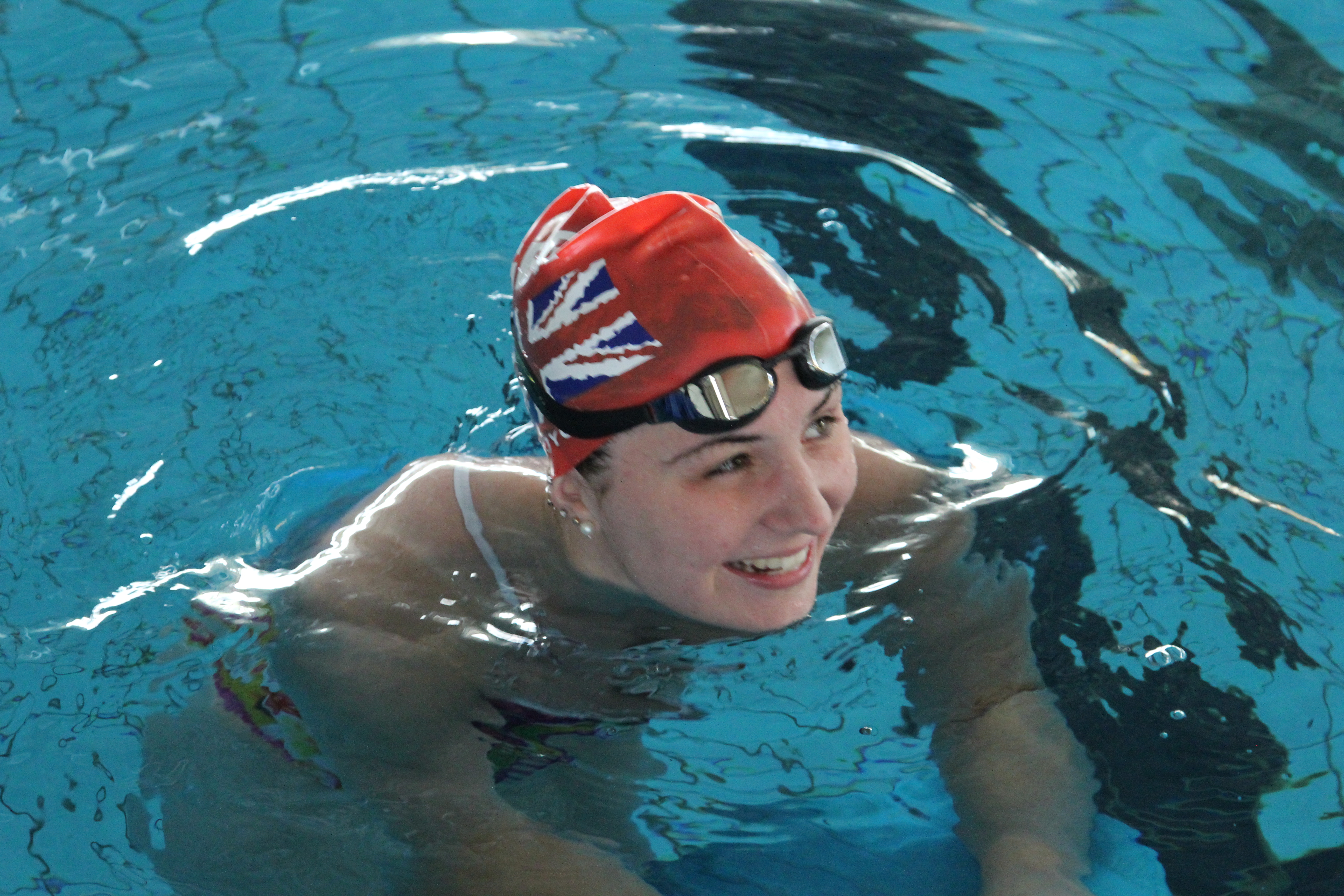
IMG_1138Swimmer Danielle Joyce is currently enjoying sporting success breaking 3 world records at the EFDS National Juniors last week and destined to go further.

Like the WSFF, we need more media coverage of the Deaflympics. Same Spirit Different Team explains in detail how in 2001 the IOC contributed US$9m for the promotion of the 2008  Paralympics and US$14m for the 2010 and 2012 events but only 150,000 swiss francs for the Deaflympics to cover 2005-2009. The book suggests a plan of action.

PE and Deaf children

Hello Readers,

Your Sign Language version here.

Lord Moynihan, outgoing Chair of  British Olympic Association is worried that poor quality PE lessons, lack of space on timetables means that a failure to provide “a ladder of opportunity” for children will lead to an increasingly wide gap to standards between state and independent schools.

Two Big Ears is concerned that this means a ‘double whammy’ of lost opportunity for deaf children in schools.

Moynihan says that primary school children are being taught PE by teachers who lack the expertise to deliver the subject because most primary teachers receive just six hours of training in sport at university or college. Two Big Ears would add that that means there is very little training to make teachers aware of the needs of deaf children in their classes. Two Big Ears suggests that schools should do more to link up with local community providers to help them deliver appropriate activity. Teachers of the Deaf are usually English and language specialist and very rarely have any skills or training towards PE or after-school sport, working with the local community will be of benefit to them.

Moynihan wants to see a greater range of activity such as dance to inspire children turned off by traditional team games. Deaf children would be further marginalised by this. We need to see an emphasis on accessible activities that are inclusive and are activities that children can continue with at home with siblings, friends and family. The fundamentals of physical exercise should be nurtured.

Lord Moynihan said the nation is failing to “identify and provide a ladder of opportunity and performance pathways for outstandingly talented kids in the state sector”

Deaf children at primary and secondary mainstream schools are marginalised from after-school clubs and activities because many of them are bussed or taxied to school and the transport service providers are not flexible enough to accommodate this. The problem lies with Local Education Authority budgets not enabling such resources to be used more flexibly. Deaf children who have talent will be missing out.

Schools need to welcome the support of specialist organisations in the community who can come in and work with staff and pupils to enable them to become aware of the sporting pathways and opportunities that exist NEARER to home instead of at school. This information also needs to reach parents of deaf children so that they can help in this process.

Over 90% of deaf children are educated in their ‘local’ mainstream school and will not be aware of sporting pathways available to them. Visits to every school at least once a year by organisations such as UK Deaf Sport or one of its many National Deaf Sports Organisations would help to bridge the gaps in knowledge, not just for deaf children but for all.

If you are concerned about what you read and would like to contribute your ideas, time or support in any other way, please contact Bryan Whalley  bdwhalley@o2.co.uk  Chair of the UK Deaf Sport sub-committee on PE & School Sport for Deaf children. This committee meets three or four times a year to feed information up to the decision makers at the Youth Sports Trust and also acts as a hub of information for PE staff, teachers, classroom assistants and parents worried about deaf children’s lack of opportunity in PE.

Sports Survey for Black & Ethnic Minority Deaf people in the UK.

20th September 2012

Hello Readers!

It has been six days since our last post and Two Big Ears has been working hard dealing with a range of other potentially interesting posts to share with you. There are so many important topics to discuss, it is difficult to decide where to start next.

So, whilst we are still working away on some new posts, Two Big Ears would like you to help two excellent organisations here in the UK.

Action Deafness, in Leicester UK and Sporting Equals UK are collaborating on a research project into Black and Ethnic minority Deaf people and sport. Now unfortunately, at the moment, this research is only for UK residents.

However, my friends at Action Deafness will be very happy to share the results of the research with us when it is ready and perhaps we can all learn something from it.

I would like to see how powerful the internet is for Deaf people and how well we can reach people to fill in this form. If you are not a member of a Black or Ethnic minority in the UK, please pass it on to the right Deaf people and ask them to help out.

The questionnaire can be downloaded NOW, please send it back to the researchers by email and let them know you saw it on Two Big Ears!

Why should Society Recognise and respect the Deaflympics?

On Friday Two Big Ears promised to answer the question ‘Why should society recognise and respect the Deaflympics?”

In tonights post, Two Big Ears will demonstrate that the Deaflympics are worthy of its equal standing to the Paralympics by using the concepts of “Deaf Gain” and the Social and Medical Models of Disability and the benefits of elite disability sport.

Commentators and spectators alike are suggesting that the Paralympics is re-defining the term ‘disability’ and therefore justifying a sociological impact of sport. The Deaflympics are also capable of doing this.

First some short definitions:

“Social Model of Disability”  The social model of disability identifies systemic barriers, negative attitudes and exclusion by society (purposely or inadvertently) – society is the main contributing factor in disabling people.

“Medical Model of Disability” The medical model of disability focusses on the individuals limitations and ways to reduce those impairments or using adaptive technology to adapt them to society.

“Deaf Gain” is defined as a reframing of ‘deaf‘ as a form of sensory and cognitive diversity that has the potential to contribute to the greater good of humanity. There are several concepts within Deaf Gain, including; Deaf Increase – the opposite of hearing loss, emphasising that Deaf people have something of importance. Deaf benefit – deafness is a benefit as well as a loss. Deaf contribute – all the ways deaf people contrinbute to humankind

Between 1988 and 1993, the ICSD became a member of the IPC to try and find a way to assimilate into the Paralympics. Unfortunately, through the social model of disability the process identified systemic barriers created by the need for interpreters and the costs of this.  When I was interviewed by BBC Newshour yesterday, the presenter challenged the issue “But surely, these days the costs of providing funds to give paralympians specially designed wheelchairs, limbs , equipment and so on must far outweigh the costs of providing sign language interpreters – (in order to allow Deaflympians into the Paralympics)?” A mute point up for discussion between IPC and ICSD

In 1924, the founders of the Silent Games were looking for ways to empower deaf people though the Olympic ideals of Cubertin. Using the power of an international muli-sports competition for the greater good. The motto at the 2009 Taipei Deaflympics was “Power in Me” (The Chinese literal translation was “The Power of Silence”) it empowered both the deaf and the hearing to come together and learn about sign language. The Deaflympics brought a benefit to the Taiwanese hosts to enable them to provide a service to visiting athletes and supporters. The LOC of the games was a mixed team of deaf and hearing people in order to empower everyone and give them an opportunity that would ordinarily be denied.

In the context of Deaf Gain, Deaflympic athletes and coaches should be valued by society because they have something to contribute. Hearing coaches and athletes can pick up new ways of learning and interacting with their sports environment in order to improve performance. One example I have read is an occasion where the Swiss national junior snowboard team hired a coach who was deaf. “The coach realised that the snowboarders were listening to the sound of the board cutting into snow so they could work out if they were making the quickest stops and sharpest turns possible.  The coach was not satisfied with this reliance on auditory cues and made his athletes wear ear-plus during training. Deprived of their usual sensory feedback, the snowboarders initially felt out of their element, but the earplugs forced them to learn to depend on the feel of the snow beneath their boards. Eventually the athlete’s performances improved markedly.”

The Deaflympic are a great forum for “transnationalism” through gesture and sign language. A model of human interaction in a globalised world. Deaflympians are able to interact and communicate with each other across linguistic boundaries immediately. Therefore, in comparison, Olympians and Paralympians have to find a common spoken language before they can communicate successfully.

This week, Tom Smith, a deaf cyclist from Wales is competing in the European Deaf Cycling championships. Tom is not a native sign language user, he has been educated using the oral tradition. His tweets from Russia this week illustrate transnationalism. “Sign language improving. Alphabet similar to ASL. Just keep forgetting f & g ha ha!….. After the race, stood around talking to Russians, Belgians, French, Germans, Austrians, six nationalities including me – one language. How cool is that!”

By comparison, in the book “Sky’s the Limit” there is a description of a daily routine of GB cycling academy which at the time, was 3 hours road work, one hour lunch, 3 hours French then 3 hours track work. They needed to learn French so that they could live and work on mainland europe where French is a dominant language for cycling teams and training environments.

Olympians and Paralympians have a lot to gain from the valuable contributions that Deaflympians bring to human communication.

The article I  have read on ‘Deaf Gain’ concludes with the potential impact of this concept.

“For most parents, the concept of a deaf baby conjures up anxious thoughts of isolation, limited communication and myriad other difficulties for their child. But that is the old frame. The new frame, the frame of Deaf Gain, sees the baby not as a problem but as an asset. A family with a deaf baby benefits by being exposed to a new language and culture and to new people, ideas and experiences. A deaf baby is value added to a family, but the contribution benefits not only the family but general society as well. Every deaf baby born on this planet is a gift to humankind.”

In a world where the Deaflympics is recognised and valued, the above vision of a deaf baby in a hearing family could be translated to a local level in sport. At the moment, to most coaches and athletes, the concept of a deaf athlete/teammate conjures up “anxious thoughts of isolation, limited communication and a myriad of other difficulties”. But through Deaf Gain, the team can see the deaf athlete as an “asset”. A team with a deaf player benefits by being “exposed to a new language and culture and to new ideas and experience”. Value the Deaflympics and it will become a gift to sport and humankind in the same way that the Olympic and Paralympics have inspired a generation this summer.

Two Big Ears was originally planning to stop his campaign when he Paralympic flame was extinguished. But it has been decided to continue as they are some much more to learn about deaf sport. Only by keeping the Deaflympics and the forefront of society’s conscious might we see a “fair deal” for Deaflympians.

Two Big Ears will be blogging twice a week. so please watch out for future posts.

If you like what you are reading here and wish to keep up with other discussions on the subject, you are welcome to visit the UK Deaf Sport group on LinkedIn for professional discussions.

Why are Deaflympians treated so Differently? Part 3

BSL VERSION COMING SOON!

On Wednesday, Two Big Ears looked at how the 21st century media uses 19th century freak show structures, stories and techniques to market the Paralympics and why this is having a negative impact on Deaf sport because Deafness is a hidden disability.

Tonight, (or through the early hours of Friday!) Two Big Ears is going to re-write history by describing what philosophies influenced the people who created the “Silent Games” in 1924 and the “Stoke Mandeville Games” of 1948 and the way that these ideas have been recorded in history, influences the way people treat Deaflympians differently today.

First of all, we look at what inspired Eugene Rubens – Alcais, a Deaf car mechanic and competitive cyclist from Paris to dream up the first international multi-sports event for disabled people in 1924

He drew his courage from Pierre de Coubertin the French aristocrat who in the late 19th century promoted the benefits of athletics and organised the modern Athens Olympics in 1896. Coubertin wanted to introduce PE to French schools. He believed that his countrymen were easily defeated in war because they did not take fitness seriously enough. He travelled the world to study different methods of teaching:

“What Coubertin saw on the playing fields of Rugby and the other English schools he visited was how “organised sport can create moral and social strength”. Not only did organised games help to set the mind and body in equilibrium, it also prevented the time being wasted in other ways. First developed by the ancient Greeks, it was an approach to education that he felt the rest of the world had forgotten and to whose revival he was to dedicate the rest of his life. (Wikipedia)

Eugene Rubens- Alcais was born in 1884 and grew up in a time when “societies everywhere viewed deaf people as intellectually inferior, linguistically impoverished and often treated as outcast”. He became a prominent member of the French Deaf community, led the Paris Sports Club for Deaf Mutes and became President of the French Deaf Mute Sports Federation. Inspired by Coubertin’s ideas of the Olympics and together with the help of a young Belgian named Antoine Dresse, they created the idea of the international “Silent Games” as a way of challenging the oppression towards deaf people at that time. They used “Olympic ideals” to give the deaf communities around the world the “moral and social strength” to help each other and improve their place in society. Self-empowerment and forbearers of the “Social Model of Disability”.

Eugene and Antoine timed the “Silent Games” to be held in Paris two weeks after the 1924 Paris Olympics to gain maximum possible exposure. The “Silent Games” were modelled on the Olympics and despite what the IPC want everyone to believe today, it is the “Silent Games” that were the first international games ever for any group of people with disabilities. “The games immediately became the social context for countries to deliberate about similarities and differences in the welfare of their deaf people and afterwards, the deaf sporting leaders assembled at a café in Paris and established Le Comite International des Sports Silencieux (CISS) which was later named ICSD; The International Committee of Sports for the Deaf.”

Not surprisingly, Eugene earned the nickname the ‘deaf baron de Coubertin

In the last year of the 19th century, Ludwig “Poppa” Guttman was born in Germany and rose to become an eminent doctor. He fled Jewish persecution in Nazi Germany and came to England to work at Stoke Mandeville Hospital.

Ludwig grew up during the “Jewish Revival” which included the use of physical training and sport as an expression of new Jewish self-confidence and a way for the Jews to integrate into a non-Jewish environment. Is this pretty much what Eugene Rubens- Alcais was attempting to do for deaf people to live in a non-deaf environment ?

It has been assumed that Ludwig’s involvement in sport as a youth would have influenced his later ideas for using sport to rehabilitate his spinal-injury patients and their reintegration into normal life. He came up with the idea of the first Stoke Mandeville Games in 1948 to coincide with Opening Day of the London Olympics of that year, 24 years after the international “Silent Games”

WHO SHOULD HAVE THE RECOGNITION ?

At this point, Two Big Ears would like to re-write history correctly, contrary to what The Spinal Injuries Clinic at Stoke Mandeville claim. Ludwig Guttman was not one of the founding fathers of organised physical activity for people with a disability. That honour goes to Eugene Rubens-Alcais with the support from Antoine Dresse.

Eugene Rubens-Alcais is described by his peers as “a man of modest habits who lived in a sparsely furnished and simple attic apartment, a mansard, while he passionately pursued his vision he gave all his time and what he had in working for deaf people and deaf sports.” Another account is “he always lived in relative poverty and died in 1963. His activities did not enrich him (financially) and is a motive furthermore to honour his memory.”

Ludwig Guttman in comparison was a ‘hearing’ person and rose to become an eminent British neurologist, awarded the OBE, CBE and was knighted in 1966.

Two Big Ears requests that British “hearing” society retracts its claim to have ‘invented disability sport’ through their adopted Dr “Poppa” Guttman and we should give due regard and respect with a posthumous honorary award to the earlier achievements of the Frenchman and the Belgian who got there first. Furthermore, a BBC Sports Personality Award should be given to the Deaf Club in Glasgow who 140 years ago, established the first deaf football club in the world in 1871-72.

The Deaflympics is a “silent” deaf voice in a hearing community inspired by “louder” Olympic and Paralympic “hearing” voices. It is time for the majority to listen and accept and properly honour the truth and support its Deaflympians on equal terms with Paralympians. Two Big Ears is not suggesting a merger of the two movements – he will share his ideas in a later blog.

On Monday Two Big Ears will answer the question ‘Why should society recognise and respect the Deaflympics?” Two Big ears will demonstrate that the event is worthy of its equal standing to the Paralympics by using the concepts of “Deaf Gain” and the Social and Medical Models of Disability and the benefits of elite disability sport.

Two Big Ears is now taking a well-earned rest to visit family ‘up north’ and enjoy what promises to be a fantastic finale and Closing Ceremony for the 2012 Paralympics. We will have a light-hearted break from all this heavy philosophical stuff with some weekend-banter and pictures of those who are supporting Two Big Ears.

Goodnight

YOUR BSL VERSION WILL BE HERE SOON

Why are Deaflympians treated so differently ? Part 2

Written by Stuart Harrison

Yesterday Two Big Ears and I looked at how financial prioritization to Olympic and Paralympic sport in the UK has been detrimental to deaf sport whilst in other countries there has been a more equitable approach to recognising elite Deaflympians within sport pathways.

This post is probably the most difficult one for me to write because it will be controversial. I have shared my views privately over the years with colleagues whom I could trust whilst always looking for the opinion of others and evidence that would back up his perspective. This week he has been able to find evidence in an article in The Independent on Sunday by Peter Popham examining the work of Danielle Peers, a Paralympian who now coaches sport and is working on her PhD thesis in disability, sport and human rights at the University of Alberta.

I have long harboured the opinion that people’s perception of disability influences decision makers when thy decide that Paralympians are more deserving of support than Deaflympians because of the “19th century freak show phenomenon“. Deaflympians don’t look freaky.

Peers demonstrates that the Paralympics are ‘sold” to create more profitable versions of the “Games” . Marketing has “drawn on the specific structures, stories and techniques of freak show”.

This appeals to ‘gawking” tendency when promoters focus on tragedy and deformity instead of athletic achievements.

On the opening day of the Paralympics  I bought a national newspaper with the entire front and back cover displaying a photograph tightly zoomed in on bladed legs. I doubt that a similar image of Usain Bolt’s legs, would sell news.

I agree with Peers that the  Channel 4 ‘superhuman Paralympians’ video “showing a car flipping and a worried pregnant woman reinforced disability as tragic and horrible.” And I would like to add that no superhuman Learning Disabled athletes are in the video, they are outwardly ‘normal’ – so not marketable.

Deafness is a “hidden” disability and cannot compete for government funding or media coverage in the same way because people do not see Deaflympians as being any different to able-bodied athletes and therefore in 2009 did not challenge the Sports Minister Gerry Sutcliffe MP, when he argued that Deaf athletes are not discriminated against because they (are normal) and can compete in the Olympics like Antonio Ally. You cannot ‘focus’ on the bodies of Deaflympians as a “problem”.

The huge amount of negativity aimed at a BBC blog written yesterday featuring the views of the International Committee of Sport for the Deaf ICSD, illustrates public misconceptions very clearly

Popham concludes his article with “Disability like racism, is in the eye of the beholder. And while a handful of superb athletes are put on a pedestal, the grinding lives of the majority go on as before.”

Tomorrow’s third part will look at the philosophies behind the formation of the “Silent Games” in 1924 and the “Stoke Mandeville games” of 1948 and how “history” has been written in a way that influences people to treat Deaflympians differently.

You can read Peter Popham’s article about Danielle Peers here

Two Big Ears was working early this morning at BNI Hinckley, pleased to hear that some members have been following the blog. Thank you!