MPs Back Call for Deaflympics Funding Parity Following #FairPlayForDeafAthletes Campaign

Following the success of British athletes at the Tokyo Deaflympics, MPs on the Culture, Media and Sport Committee have formally recommended that the Government fund elite Deaf sport and recognise the Deaflympics on the same basis as the Olympics and Paralympics.

While this does not yet represent full Parliamentary backing, it is a significant step forward for UK Deaf Sport’s #FairPlayForDeafAthletes campaign.

At Two Big Ears, we welcome this intervention — and we are clear about what must come next.

Deaflympians excluded from public funding

In its letter to the Secretary of State, the Committee states:

“Elite deaf athletes in the UK are the only disabled elite sports group that has no access to public funding whatsoever.”

Despite competing at the highest international level, Deaflympians:

  • Receive no UK Sport funding
  • Have no lottery-backed performance pathway
  • Must self-fund training, coaching, travel, physio and kit

This exclusion is not accidental. It is a long-standing policy gap.

Deaflympics recognised as part of the Olympic family

The Committee also makes clear that Deaf sport is already part of the recognised elite system:

“The Deaflympics [are] part of the Olympic family and the only games in which there is a classification for deaf people.”

This directly challenges the idea that Deaflympians sit outside elite sport structures.

Tokyo Deaflympics: success despite the system

MPs highlighted the reality faced by Deaf athletes preparing for Tokyo:

“To take part, our deaf athletes have to continuously raise money for training fees, travel, physio and kit.”

“For Tokyo, the 65 UK athletes who took part had to raise £250,000 between them, just to enable them to represent this country.”

All of this happened while athletes were training for elite competition and working or studying full time.

The conclusion was clear: Deaf athletes succeed in spite of the system, not because of it.

The funding ask — and why it is modest

UK Deaf Sport estimates that:

“£3 million [is needed] to prepare a team through the next full cycle, ready for the 2029 Deaflympics.”

The Committee noted:

“That is less than 1% of what UK Sport has awarded for the Olympics and Paralympics in one Olympic cycle.”

This is not an excessive demand. It is a proportionate request for equality.

Committee recommendation, not yet a Parliamentary vote

The Committee is explicit about what it is asking Government to do:

“Commit, via UK Sport, to £3 million of funding now for elite deaf sport in the current Deaflympics cycle.”

“Permanently recognise the Deaflympics in the same way you do for the Paralympic and Olympic Games for funding purposes.”

This is a formal recommendation. It now requires:

  • Government acceptance
  • A funding decision
  • Political will to act

Two Big Ears: fair play must mean fair funding

As the Committee concludes:

“The Deaflympians who represented our country on the global stage… deserve an equal opportunity.”

The #FairPlayForDeafAthletes campaign has now been reinforced by Parliamentary scrutiny.

The evidence has been heard.
The recommendation has been made.

Now the Government must decide whether it will act.

“What Happens Next?” – Simple Explainer

Where we are now

  • The Culture, Media and Sport Committee has reviewed evidence
  • It has written formally to the Secretary of State
  • It has recommended £3 million in funding and permanent recognition of the Deaflympics

What this does NOT mean

  • This is not yet a vote of Parliament
  • Funding is not yet agreed
  • Policy has not yet changed

What must happen next

  1. The Government responds to the Committee
  2. Ministers decide whether to accept the recommendation
  3. UK Sport is instructed (or not) to release funding
  4. Longer-term recognition is agreed or rejected

Why this matters
Committee recommendations carry political weight.
Ignoring them requires justification.

This is the strongest position Deaf sport has held in UK policy discussions to date.

Read the full article on the UK Parliament website
Deaflympics media Watch (for 17th November 2025)

Support Assistant

I can help you set up automatic posting to Facebook! You’ll need a Facebook Page (not a personal profile) to connect with your WordPress.com site. Go to Jetpack → Social in your dashboard and click “Connect an account”, then choose Facebook and follow the prompts to connect your Page. Want me to walk you through what happens next?

Perfect! After you connect your Facebook Page, every new blog post you publish will automatically share to Facebook. But you can customize this for each post – when writing a post, click the green Jetpack icon at the top-right and you can toggle sharing on/off, choose which networks to share to, or add a custom message. Ready to try connecting your Facebook Page?

Got it! Let’s troubleshoot this. First, can you check if your Facebook connection is still active? Go to Jetpack → Social and see if your Facebook account shows as connected or if there’s a “Reconnect” button. Also, when you publish a post, do you see the sharing options in the Jetpack panel on the right side of the editor?

That’s frustrating! Let’s check the sharing settings for your posts. When you edit one of your recent posts, look for the Jetpack social sharing panel on the right side – does it show Facebook as enabled for that specific post? Also, are you publishing to a Facebook Page or trying to share to a personal Facebook profile? WordPress.com can only share to Pages, not personal profiles.

Let me help figure this out! Try disconnecting and reconnecting your Facebook Page – go to Jetpack → Social, click the three dots next to your Facebook connection, and select “Disconnect”. Then reconnect it fresh. Sometimes Facebook changes their permissions and a fresh connection fixes the issue. Want to try that and see if your next test post shares properly?

A gold medal landed yesterday. It should have lit up the sports world. Instead, it flickered in the margins.

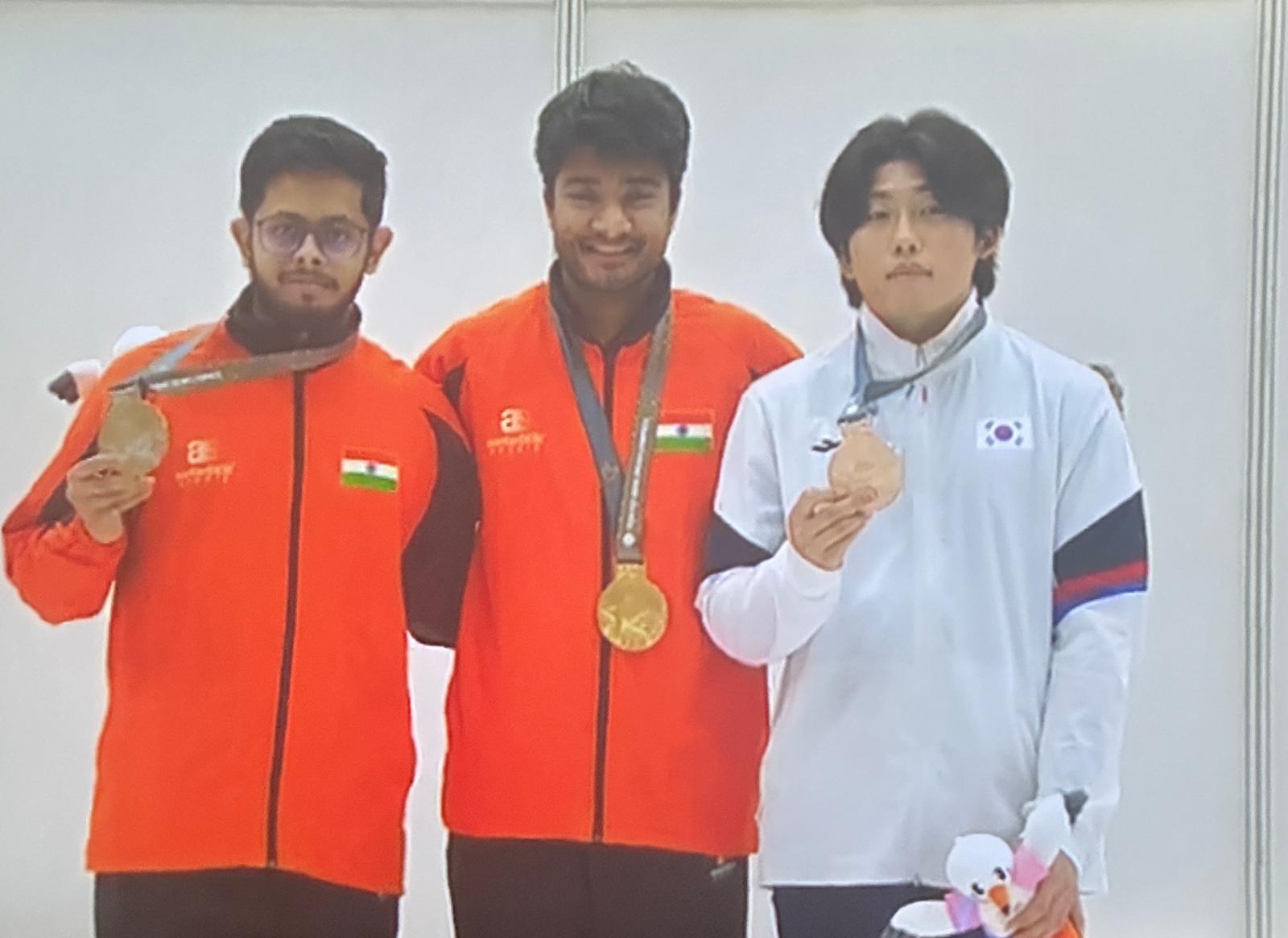
Indian shooter Dhanush Srikanth claimed gold in the men’s 10 m air rifle at the Tokyo Deaflympics and broke a world record in the process. (The Times of India) Yet the global headlines barely moved.

Dhanush Srikanth won gold and broke a world record in the Men’s shooting


In Japan, a local Japanese-language outlet ran a tech/inclusion piece on the Games and the host city’s accessibility strategy — accessible to those digging through Japanese livestreams, but easy for global sports desks to ignore.


And in Latin America, a Spanish-language website celebrated the arrival of the Games with local athletes boarding flights, yet still no major live result coverage.

The UK media ran a strong piece on the funding gap facing Deaflympians, reminding the world that while medals are won recognition is still waiting.


The athletes are winning. The stories are there. But the broadcast and mainstream media radar? Still silent.

The question stands: when record-breaking performances happen, will they get the spotlight they deserve — or will they remain hidden in niche feeds?

What you can do

Watch the action livestreamed on YouTube

Get the results and details on the official website

Mainstream media can get the accreditation they need

The Legend Returns

Terence Parkin Comes Out of Retirement to Return to the Deaflympics Pool

In one of the most exciting announcements of this year’s Deaf sporting calendar, legendary South African swimmer Terence Parkin has officially come out of retirement — and he’s heading back to the Games.

Photo from South African Deaf Sports federation facebook

For many in the Deaf community, Parkin is more than an athlete. He’s a symbol of excellence, resilience, and the power of Deaf representation on the world stage. With over 400 international medals, including his iconic silver at the 2000 Sydney Olympics, and countless Deaflympics records, Parkin has long been regarded as one of the greatest Deaf athletes of all time.

Now, after stepping away from competitive swimming, he’s returning to the international arena once again — and the excitement is already building.

A Champion’s Legacy

Parkin has dominated Deaflympics history:

  • Multiple-time Deaflympics gold medallist
  • Holder of long-standing Deaflympics records
  • A role model for generations of young Deaf swimmers

His comeback sends a powerful message: Deaf excellence doesn’t fade — it evolves.

Why This Matters

Parkin’s return is not just about competition. It’s about visibility. It’s about continuing to push boundaries for what Deaf athletes can achieve — and inspiring a new wave of swimmers who look up to him as proof of what is possible.

In an era where #FairPlayForDeafAthletes is gaining momentum around the world, having one of the most decorated Deaf athletes step back onto the stage adds incredible energy to the movement.

Looking Ahead to the Games

Whether he’s chasing new times or simply soaking up the atmosphere of international competition once more, Parkin’s presence will elevate the Games — for athletes, supporters, and the global Deaf community alike.

His return is a reminder of one thing:

Legends don’t retire. They rise.

Deaf Cricket Australia Closes: Implications for Future Generations

A Heart-breaking Decision That Shakes the Deaf Sporting Community.

On January 31st, 2025, members of Deaf Cricket Australia (DCA) gathered at Melbourne Deaf Cricket Club. Others joined online for the historic but deeply emotional meeting. The organization announced its closure. What should have been a celebration of 130 years of Deaf cricket in Australia turned into a painful farewell.

Two Big Ears could look in and ask questions during the live-streamed session. We thank Expression Australia for setting up the technical arrangements.

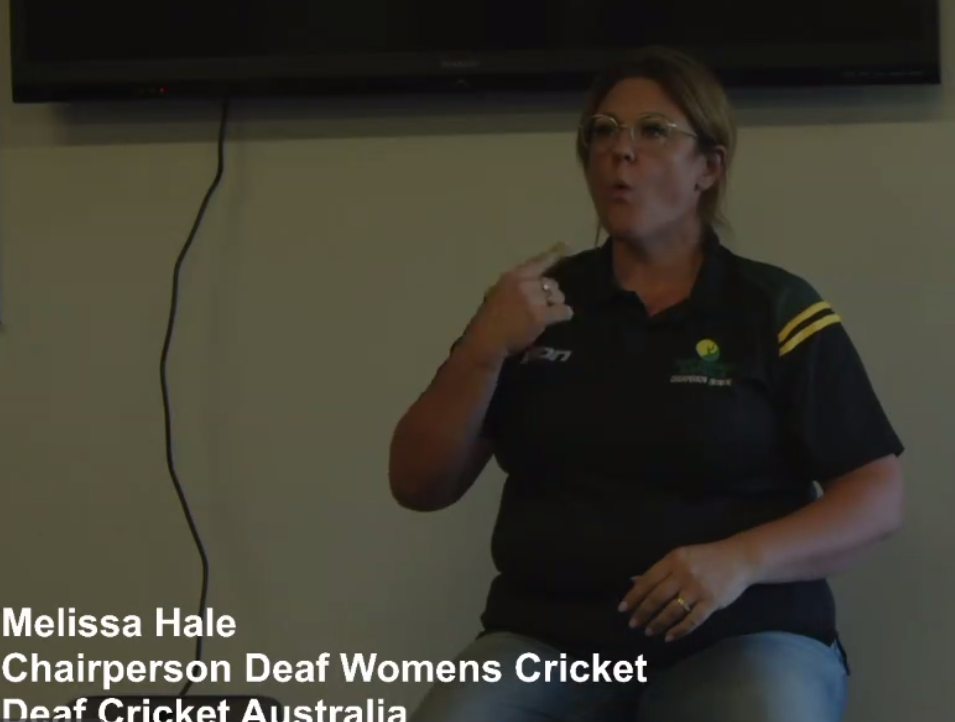
The decision was not made lightly. DCA representatives Melissa Hale, Justin Bergin, and James Hale stood before a devastated audience. They explained the irreversible breakdown in negotiations with Cricket Australia (CA). The raw emotion in the room was unmistakable. As they spoke, their heartbreak was visible to everyone. They fought to hold their composure. It was clear how much this loss meant to them.

Cricket Australia’s Grip on Deaf Cricket

In recent years, Deaf Cricket Australia had to adapt to the structures set by Cricket Australia. Cricket Australia controls the National Cricket Inclusion Championships (NCIC) and the Australian Deaf Cricket Team.

The problem? Cricket Australia had full control.

Under its agreements, DCA:

  • Lost its autonomy to run independent competitions or seek its own sponsorship.
  • Was denied the right to form an Australian Deaf Women’s Cricket Team. This happened despite other countries like India and Sri Lanka already having theirs.
  • Had no say in decisions affecting Deaf cricket at a national level.

Melissa Hale made it clear:

“We knew from 130 years of history how Deaf cricket works. Cricket Australia just did not agree.”

With most hard-of-hearing players growing up in the hearing world, DCA’s biggest fear was the loss of Deaf leadership. They worried that the future of the sport would become just another hearing-dominated system. This change will strip it of the cultural and community values that made it unique.

Melissa Hale, DCA, speaking at the meeting.

A Decision Five Years in the Making

For over five years, Deaf Cricket Australia pushed for greater Deaf leadership. They also advocated for Deaf mentors and a structure that protected Deaf culture within the sport.

But the barriers were impossible to break. Cricket Australia repeatedly denied requests for a Deaf Women’s team. They offered no explanation. The organization also blocked attempts to secure independent sponsorship due to corporate agreements.

Audience member, Tamara Trina spoke for women in the Deaf community. She felt that Cricket Australia’s attitude towards deaf women is Audist and quite discriminatory. This attitude extends to deaf people.

Faced with no alternative, DCA made the painful decision to cease operations and seal its history. The name, logo, and trophies—including the prestigious Webby Cup and Abraham Shield—will now be preserved as historical artifacts.

A Tearful Goodbye: Holding Composure in the Face of Heartbreak

The most gut-wrenching moment of the night came when Melissa Hale, Justin Bergin, and James Hale gave their final remarks.

Each one fought back tears as they addressed the audience. Their voices wavered, and their hands trembled as they signed, trying not to break down. The weight of their words was heavy, and everyone in the room felt their pain.

Justin Bergin has been part of Deaf Cricket Australia since 1994. He shared how difficult it was to explain this decision. He found it challenging to communicate it to DCA life members like John Webb OAM, Kevin Smith, and Tony Clews.

“It’s been part of my life for 30 years. This was the hardest thing I’ve ever had to do.”

James Hale alluded to the internal battles and sleepless nights that went into this decision. He recalled a painful meeting with state representatives in March 2024. During that meeting, it became clear that DCA can no longer continue.

Melissa Hale, visibly struggling to keep her emotions in check, admitted:

“.. the three of don’t really want to be here tonight. We do know that the three of us are going to break your hearts.”

As they spoke, the room was silent. Many in the audience had tears in their eyes. The heartbreak was not just theirs—it belonged to the entire Deaf cricketing community.

What Happens Now?

With DCA gone, the NCIC will continue under Cricket Australia’s control, but with no Deaf leadership. This raises urgent concerns:

  • Without Deaf mentors, how will new Deaf players be welcomed into the sport?
  • Will Deaf culture and identity be respected in a hearing-dominated system?
  • Can Deaf Sports Australia (DSA) step in and make sure that Deaf cricket doesn’t disappear entirely?

Phil Harper from Deaf Sports Australia acknowledged these challenges. He admitted that DSA oversees 16 different sports. It does not have the resources to take over grassroots Deaf cricket development.

A Loss Felt Across Generations

The closure of Deaf Cricket Australia is more than just a sporting decision. It is a cultural loss for the Deaf community.

For 130 years, Deaf cricket has not just been a game. It is a place of belonging. It was a space where Deaf people connect through their language, identity, and shared experiences.

Now, that space is gone.

A Call to Action

The future of Deaf cricket now lies in the hands of the players and the community. Cricket Australia will continue running its teams. Yet, the question remains: Will Deaf players be capable of finding playing opportunities in this new system? Or will Cricket Australia’s decision be the beginning of the end for Australia’s biggest deaf sport?

If the community wants change, now is the time to step ahead. They should contact Deaf Sports Australia. It’s important to push for a system that respects Deaf identity and leadership.

For now, Deaf Cricket Australia is gone. But the spirit of its players, past and current, will never be forgotten.


#DeafCricketAustralia #EndOfAnEra #CricketForTheDeaf #DeafSports #CricketAustralia #InclusiveSport #DeafCommunity #130YearsOfHistory.

Ukraine Strengthens Support for Deaflympians

The Ukraine Ministry of Youth and Sport continues to recognise Deaf athletes alongside their Olympic and Paralympic peers.

The Ministry of Youth and Sports of Ukraine has reaffirmed its unwavering commitment to inclusivity in sports by officially recognizing Deaflympians as equals to their Olympic and Paralympic peers. This significant milestone was solidified through Order No. 7742, signed on December 23, 2024, which introduces updated criteria for identifying key enterprises and organizations crucial to the national economy within the field of sports during special periods.

A Milestone in Sports Equality

Under the new directive, the Ministry has explicitly included the development and support of the Deaflympic movement alongside Olympic and Paralympic initiatives. This move ensures that Deaf athletes receive the same level of backing in training, competition, and resource allocation, reinforcing Ukraine’s position as a leader in sports inclusivity.

Key aspects of the approved criteria include:

  • Supporting the development of physical culture and both Olympic and non-Olympic sports in Ukraine.
  • Guaranteeing the execution of events listed in the Unified Calendar of Physical Culture, Sports Events, and Competitions.
  • Providing comprehensive training for national team athletes in sports officially recognized in Ukraine.
  • Implementing anti-doping measures across all sports activities.
  • Organizing and facilitating nationwide physical culture and sports rehabilitation programs for individuals with disabilities, military personnel, and ensuring the operational efficiency of Paralympic and Deaflympic training bases.
Logo of Ukraine Deaf Sport

Advancing Inclusivity in Sports

This landmark decision demonstrates Ukraine’s dedication to fostering an environment where Deaf athletes have equitable opportunities to excel and represent their nation on the world stage. By embedding Deaflympic support into national sports policies, the Ministry is not only investing in athletic excellence but also championing the rights and recognition of athletes with hearing impairments.

As global conversations around inclusivity in sports continue to evolve, Ukraine’s progressive stance serves as a model for other nations striving to create truly inclusive sports environments. This announcement marks a proud moment for the Ukrainian sports community and a promising future for Deaf athletes nationwide.

We celebrate this vital step towards equal recognition and look forward to witnessing Ukraine’s Deaflympians continue to thrive and inspire.

Original Source: https://unn.ua/news/the-ministry-of-youth-and-sports-has-approved-new-criteria-for-the-criticality-of-enterprises-in-the-field-of-sports