MPs Back Call for Deaflympics Funding Parity Following #FairPlayForDeafAthletes Campaign

Following the success of British athletes at the Tokyo Deaflympics, MPs on the Culture, Media and Sport Committee have formally recommended that the Government fund elite Deaf sport and recognise the Deaflympics on the same basis as the Olympics and Paralympics.

While this does not yet represent full Parliamentary backing, it is a significant step forward for UK Deaf Sport’s #FairPlayForDeafAthletes campaign.

At Two Big Ears, we welcome this intervention — and we are clear about what must come next.

Deaflympians excluded from public funding

In its letter to the Secretary of State, the Committee states:

“Elite deaf athletes in the UK are the only disabled elite sports group that has no access to public funding whatsoever.”

Despite competing at the highest international level, Deaflympians:

  • Receive no UK Sport funding
  • Have no lottery-backed performance pathway
  • Must self-fund training, coaching, travel, physio and kit

This exclusion is not accidental. It is a long-standing policy gap.

Deaflympics recognised as part of the Olympic family

The Committee also makes clear that Deaf sport is already part of the recognised elite system:

“The Deaflympics [are] part of the Olympic family and the only games in which there is a classification for deaf people.”

This directly challenges the idea that Deaflympians sit outside elite sport structures.

Tokyo Deaflympics: success despite the system

MPs highlighted the reality faced by Deaf athletes preparing for Tokyo:

“To take part, our deaf athletes have to continuously raise money for training fees, travel, physio and kit.”

“For Tokyo, the 65 UK athletes who took part had to raise £250,000 between them, just to enable them to represent this country.”

All of this happened while athletes were training for elite competition and working or studying full time.

The conclusion was clear: Deaf athletes succeed in spite of the system, not because of it.

The funding ask — and why it is modest

UK Deaf Sport estimates that:

“£3 million [is needed] to prepare a team through the next full cycle, ready for the 2029 Deaflympics.”

The Committee noted:

“That is less than 1% of what UK Sport has awarded for the Olympics and Paralympics in one Olympic cycle.”

This is not an excessive demand. It is a proportionate request for equality.

Committee recommendation, not yet a Parliamentary vote

The Committee is explicit about what it is asking Government to do:

“Commit, via UK Sport, to £3 million of funding now for elite deaf sport in the current Deaflympics cycle.”

“Permanently recognise the Deaflympics in the same way you do for the Paralympic and Olympic Games for funding purposes.”

This is a formal recommendation. It now requires:

  • Government acceptance
  • A funding decision
  • Political will to act

Two Big Ears: fair play must mean fair funding

As the Committee concludes:

“The Deaflympians who represented our country on the global stage… deserve an equal opportunity.”

The #FairPlayForDeafAthletes campaign has now been reinforced by Parliamentary scrutiny.

The evidence has been heard.
The recommendation has been made.

Now the Government must decide whether it will act.

“What Happens Next?” – Simple Explainer

Where we are now

  • The Culture, Media and Sport Committee has reviewed evidence
  • It has written formally to the Secretary of State
  • It has recommended £3 million in funding and permanent recognition of the Deaflympics

What this does NOT mean

  • This is not yet a vote of Parliament
  • Funding is not yet agreed
  • Policy has not yet changed

What must happen next

  1. The Government responds to the Committee
  2. Ministers decide whether to accept the recommendation
  3. UK Sport is instructed (or not) to release funding
  4. Longer-term recognition is agreed or rejected

Why this matters
Committee recommendations carry political weight.
Ignoring them requires justification.

This is the strongest position Deaf sport has held in UK policy discussions to date.

Read the full article on the UK Parliament website

Deaflympics 2025 Media Watch (19 November 2025, 09:00 JST)

The headlines this morning are impressive—if you could find them.


Japan’s own Maki Yamada sprinted to gold in the men’s 400 m, delivering the host-nation’s first win at the 2025 Games. Nippon+1

Taiwan picked up two silvers, one from hurdler Hsu Le and another from shooters Hsu Ming‑jui & Kao Ya‑ju. Focus Taiwan – CNA English News

Ukraine’s tally also soared with nine golds so far. Межа. Новини України.


Yet despite the wins, the global sports pages remain strangely quiet. The athletes are in motion. The record boards are ticking. The cameras? Still mostly pointing elsewhere.


If the Deaflympic movement has one job, it was to show the world they matter. Right now, they’re doing the work. The question: will the world show up?

Bravo to the organising Committee for livestreaming, here’s the highlights for 19th November

Thank you to the UK LumoTV for daily bulletins on the GB athletes. We wonder if other nations are able to provide the same?

Deaflympics 2025 Media Watch – 18 November 9:00 JST

Today brought real competition into full view. The newswire from 2025 Summer Deaflympics pegged athletics finals at Tokyo — women’s 100 m victory for the Netherlands, and Japan’s Sasaki Takuma reacting after the men’s 100 m final. 

But despite the spectacle, the global sensors of sports media largely stayed quiet. With medals decided, the takeaway feels familiar: the athletes are making headlines, but the headlines aren’t making the athletes.

Test Post

Just testing stuff !

State of the Coverage (Sunday Round – Up)

Written 0900 JST 16th Nov. 2025

A week in, and here’s the truth: the athletes are competing; the headlines aren’t.


Across five days of the 2025 Summer Deaflympics in Tokyo, we’ve watched proud squads, historic centenary stories, and digital streaming hints – but seen almost no major network spotlight.

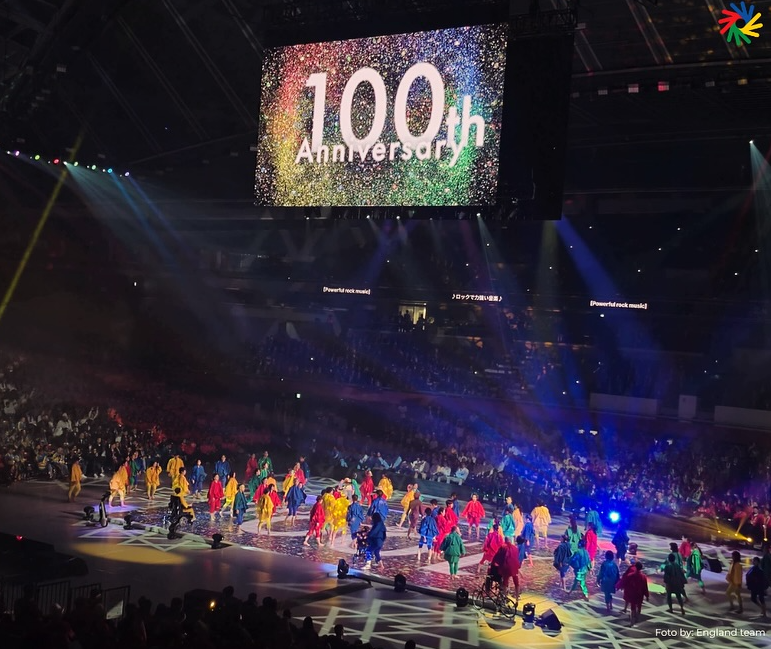
Opening Ceremony – 15th November 2025

Teams from India and South Africa told their stories. Japan, as host city, backed sign language, tech and Deaf culture. Local newspapers, specialist media and regional outlets lit up. But the big broadcasters? They’re still warming up. They’re running features, not live sport. They’re watching from the sidelines, not in the arena.

That’s the gap we’re here to call out. It’s not about counting page-views or “good news pieces.” It’s about whether Deaf sport gets equal airtime. It isn’t yet.

So as we head into the heart of the Games next week, we’ll ask: If an athlete breaks a record, will the world know? If a team wins gold, will their country’s screens show them? If a young Deaf athlete makes her debut — will it matter to the sports narrative?

If the answers keep being “no,” then our job, our spotlight, our voice matters more than ever.

Media access to the Deaflympics is available here

Live coverage on You Tube

Official Deaflympics 2025 website

Deaflympics Media Watch (16 November 2025)

Data collected 0900 JST 16-Nov-2025

The Games are underway — but you’d hardly know it from the world’s sports desks.

Today should have been the moment the headlines shifted from warm-up stories to actual competition: goals scored, medals won, shocks, heroics, heartbreak. Instead? Silence. And not the Deaf kind. The media kind.

Yes, the results exist. They’re sitting quietly on the official Tokyo 2025 website. They’re in federation match reports — like the USA Deaf Women smashing Japan 5–0, or the Ukrainian men putting five past the US team. They’re hidden in Japanese corporate updates and athlete sponsor pages. The wrestling brackets are fully up. The schedules are live. The data is there.

Japan Today reported on members of the imperial family in attendance at the Opening Ceremony. (Image: POOL via ZUMA press Wire)

But where are the stories?

Where is the mainstream “Day 1 at the Deaflympics”?
Where is the BBC Sport medal table ticker?
Where is the ESPN highlight reel?
Where is even one big newsroom saying “Here’s what happened today”?

This is the pattern we’re exposing: if a Deaf athlete wins, you have to dig through official PDFs and federation pages to find out. The world’s sports media aren’t telling the story. Not yet. Media access information

And that’s exactly why we’re watching.
Exactly why we’re documenting this gap.
Exactly why we’re doing this work.

Because the athletes are competing.
The results are happening.
The moments are real.
The coverage should be too.

Real sport with real results, ignored by real newsrooms.

All the details are here on the official Deaflympics2025 website

Live action via You Tube

Combined Mainstream Media Watch of Deaflympics 14 + 15 November

The Deaflympics are here — and the world is making noise in short, unexpected bursts.

Every day at 0900 JST we will make a round up of the previous days media coverage.

Day 0 gave us warm send-offs, big squads and small victories in visibility.
Olympics.com lit the match with a 111-strong team and one of the best flagbearer stories you’ll read this year. South Africa rolled out its Deaflympic history like a flex. Japan finally joined the conversation, proudly talking Deaf culture, sign language and tech that lets you see sound. Taiwan kept it sweet and simple with one perfect airport selfie.

Day 1 hit a different gear.
The Japan Times stepped up with a thoughtful, detailed feature that actually treated Deaf athletes like elite competitors, not curiosities. The World spotlighted the Deaflympics turning 100 — a message so obvious you wonder why broadcasters keep ignoring it. And then, at last, a shift: Yahoo Sports published a “how to watch” guide for free live streams. Not a TV revolution, but it’s a start.

Illustration featured in Japan Times

Across two days, one thing is crystal clear:
The written coverage is showing up. The broadcasters? Still stretching in the warm-up area.

But the athletes are already on the track. And they’re not waiting.

Combined takeaway

Two days in, the Deaflympics are shining loudest in written media.
The athletes are visible. The culture is visible.
Sign language is visible.
The broadcasters, though? Still playing hide-and-seek.

But the flame is lit — and the story is beginning to grow, we have read that NHK will broadcast the Opening and Closing ceremonies live, so we will report on that claim tomorrow.

Previous Mainstream Media Coverage This Week

In a brief yet significant segment, BBC Breakfast showcased members of the UK Deaflympics team ahead of their departure to Tokyo, highlighting the athletes’ rigorous preparation and the historic nature of this year’s Games. The piece emphasised the pride of representing Deaf sport on the world stage and touched on the broader issues of visibility and recognition for Deaf athletes — though the focus remained largely on inspirational narrative rather than deeper media-rights or coverage-strategy questions.

And an earlier but still recent piece from the UK parliament’s Culture, Media & Sport Committee outlining that MPs have written to broadcasters over the absence of planned coverage for the Deaflympics.

You Can Help!

Do you know of any other mainstream media coverage of the Deaflympics 2025 – send us a link with the reply button

The Legend Returns

Terence Parkin Comes Out of Retirement to Return to the Deaflympics Pool

In one of the most exciting announcements of this year’s Deaf sporting calendar, legendary South African swimmer Terence Parkin has officially come out of retirement — and he’s heading back to the Games.

Photo from South African Deaf Sports federation facebook

For many in the Deaf community, Parkin is more than an athlete. He’s a symbol of excellence, resilience, and the power of Deaf representation on the world stage. With over 400 international medals, including his iconic silver at the 2000 Sydney Olympics, and countless Deaflympics records, Parkin has long been regarded as one of the greatest Deaf athletes of all time.

Now, after stepping away from competitive swimming, he’s returning to the international arena once again — and the excitement is already building.

A Champion’s Legacy

Parkin has dominated Deaflympics history:

  • Multiple-time Deaflympics gold medallist
  • Holder of long-standing Deaflympics records
  • A role model for generations of young Deaf swimmers

His comeback sends a powerful message: Deaf excellence doesn’t fade — it evolves.

Why This Matters

Parkin’s return is not just about competition. It’s about visibility. It’s about continuing to push boundaries for what Deaf athletes can achieve — and inspiring a new wave of swimmers who look up to him as proof of what is possible.

In an era where #FairPlayForDeafAthletes is gaining momentum around the world, having one of the most decorated Deaf athletes step back onto the stage adds incredible energy to the movement.

Looking Ahead to the Games

Whether he’s chasing new times or simply soaking up the atmosphere of international competition once more, Parkin’s presence will elevate the Games — for athletes, supporters, and the global Deaf community alike.

His return is a reminder of one thing:

Legends don’t retire. They rise.

A Clean Sweep for Ukraine on Day 1 of 25th Summer Deaflympics

Tokyo 2025 – Ukraine Dominate Both Men’s and Women’s Sprint Orienteering

What an explosive start to the Deaflympics in Tokyo — not just in the men’s race, but across the women’s field too. Orienteering opened the Games with back-to-back masterclasses from Team Ukraine, who didn’t just impress… they owned the podiums.

Ukraine stormed the first event of the Games with a perfect 1–2–3 finish.

  • Gold: Nazar Levytskyi – 12:57
  • Silver: Dmytro Levin – 13:54
  • Bronze: Volodymyr Fedoseienko – 14:00

It was a commanding performance, setting the tone for Ukraine’s campaign.

Then the women stepped up — and delivered something just as breathtaking.

Ukraine didn’t just win. They swept the entire podium again.

  • Gold: Anna Vanasaun – 11:57
  • Silver: Hanna Fedosieieva – 12:16
  • Bronze: Hanna Androsovych – 12:40

All three were sharp, fast, and utterly fearless on the Tokyo course. Finland’s Sara-Elise Ruokonen and Lithuania’s Adrija Atgalaine chased hard, but Ukraine’s trio were simply untouchable.

Two events.
Two podium sweeps.
Six medals — all Ukrainian.

If today is any indication, Ukraine’s orienteering squad is here not just to compete, but to set the pace for the entire Deaflympics.

Tokyo 2025 has only just begun, and already the storylines are electric. More results, more drama, and more phenomenal athletic performances are on the way.

Why the Deaflympics Deserves Full Funding: A Call for Equality in Sports

Despite a century of excellence, Deaflympic athletes are still forced to self-fund their participation. It’s time for change.

The Deaflympics Deserve Full Funding and Recognition

The Deaflympics is a world-class sporting event, yet its athletes are forced to self-fund their journey to compete at the highest level. Chris Ratcliffe, CEO of UK Deaf Sport, has highlighted this critical issue in his interview with Matt Taylor for BBC News in the article titled ‘We have to fund the Deaflympics ourselves’, and it is time for the sporting community, corporate sponsors, and government bodies to step up and provide the necessary support. Ratcliffe has been working tirelessly to raise awareness of this issue, and last month, BBC’s Matt Taylor caught up with him to discuss the urgent need for funding and recognition.

Chris Ratcliffe, CEO, UK Deaf Sport “We have to fund the Deaflympics Ourselves”

Photo Credit: © Mark Lomas 2011.

A Century of Excellence, Yet Still Overlooked

As Matt Taylor reported in his BBC News article, for 100 years, the Deaflympics has provided elite deaf athletes with a platform to compete on a level playing field. Established in 1924, it was the first international sporting event for athletes with disabilities, predating the Paralympics by nearly four decades. Despite this rich history, it remains one of the least recognized global sporting competitions. While Olympic and Paralympic athletes receive direct financial support, their Deaflympic counterparts must raise an estimated £4,000 each to represent Great Britain at the upcoming Tokyo games.

This financial burden places deaf athletes at a significant disadvantage. Many are in full-time education or employment while training at an elite level. The additional stress of securing funding detracts from their preparation and undermines their potential to compete at their best.

The Government’s Role in Funding Equity

The UK government, through Sport England, has provided £1.27 million in funding for UK Deaf Sport until 2027. While this is an important step in supporting grassroots initiatives, it does not directly address the financial struggles of athletes preparing for the Deaflympics. As highlighted in Taylor’s article, the exclusion of Deaflympic athletes from UK Sport funding—reserved for Olympic and Paralympic competitors—suggests a misunderstanding of the event’s elite status and its importance to the deaf community.

The time has come for UK Sport and the Department for Culture, Media and Sport to recognize the Deaflympics as an elite-level competition worthy of direct funding. Elite deaf athletes deserve the same financial backing as their Olympic and Paralympic counterparts. This is not just about funding; it is about equality, representation, and the value we place on all athletes, regardless of how they communicate.

Breaking Barriers and Inspiring the Next Generation

Beyond competition, the Deaflympics serves as a vital tool in breaking down barriers for young deaf athletes. As Ratcliffe noted in Taylor’s piece, studies show that deaf children are twice as likely to be inactive compared to their hearing peers. The lack of visibility and investment in deaf sports contributes to this disparity. If we want to create a truly inclusive sporting culture, funding the Deaflympics must be a priority.

UK Deaf Sport’s Destination Deaflympics campaign is a promising initiative to increase awareness, but awareness alone is not enough. If we want young deaf athletes to see the Deaflympics as a viable goal, we must remove financial obstacles. One way to do this is through corporate sponsorships, media partnerships, and a dedicated government-backed funding stream that ensures no athlete is forced to fund their own participation in an event of this magnitude.

UK Deaf Sports Youth engagement programme

A Call to Action

The Deaflympics embodies the very essence of sport: perseverance, excellence, and inclusivity. Yet, as Taylor’s article makes clear, its athletes continue to be sidelined in the funding conversation. It is time for change.

  • Government bodies must formally recognize the Deaflympics as an elite event and provide direct financial support.
  • Corporate sponsors should step up and back our elite deaf athletes, just as they do for Olympians and Paralympians.
  • The media must give the Deaflympics the attention it deserves, ensuring wider public awareness and engagement.

The Deaflympics should not be an event where only those who can afford it get to compete. Every athlete representing Great Britain on the world stage should do so knowing that their country stands behind them—financially, institutionally, and culturally.

It’s time to fund the Deaflympics properly. Anything less is a failure of our commitment to true sporting equality.

For more details on the politics and history of the Deaflympics read “Same Spirit Different Team”