Terence Parkin Comes Out of Retirement to Return to the Deaflympics Pool
In one of the most exciting announcements of this year’s Deaf sporting calendar, legendary South African swimmer Terence Parkin has officially come out of retirement — and he’s heading back to the Games.
Photo from South African Deaf Sports federation facebook
For many in the Deaf community, Parkin is more than an athlete. He’s a symbol of excellence, resilience, and the power of Deaf representation on the world stage. With over 400 international medals, including his iconic silver at the 2000 Sydney Olympics, and countless Deaflympics records, Parkin has long been regarded as one of the greatest Deaf athletes of all time.
Now, after stepping away from competitive swimming, he’s returning to the international arena once again — and the excitement is already building.
A Champion’s Legacy
Parkin has dominated Deaflympics history:
Multiple-time Deaflympics gold medallist
Holder of long-standing Deaflympics records
A role model for generations of young Deaf swimmers
His comeback sends a powerful message: Deaf excellence doesn’t fade — it evolves.
Why This Matters
Parkin’s return is not just about competition. It’s about visibility. It’s about continuing to push boundaries for what Deaf athletes can achieve — and inspiring a new wave of swimmers who look up to him as proof of what is possible.
In an era where #FairPlayForDeafAthletes is gaining momentum around the world, having one of the most decorated Deaf athletes step back onto the stage adds incredible energy to the movement.
Looking Ahead to the Games
Whether he’s chasing new times or simply soaking up the atmosphere of international competition once more, Parkin’s presence will elevate the Games — for athletes, supporters, and the global Deaf community alike.
Tokyo 2025 – Ukraine Dominate Both Men’s and Women’s Sprint Orienteering
What an explosive start to the Deaflympics in Tokyo — not just in the men’s race, but across the women’s field too. Orienteering opened the Games with back-to-back masterclasses from Team Ukraine, who didn’t just impress… they owned the podiums.
Ukraine stormed the first event of the Games with a perfect 1–2–3 finish.
Gold: Nazar Levytskyi – 12:57
Silver: Dmytro Levin – 13:54
Bronze: Volodymyr Fedoseienko – 14:00
It was a commanding performance, setting the tone for Ukraine’s campaign.
Then the women stepped up — and delivered something just as breathtaking.
Ukraine didn’t just win. They swept the entire podium again.
Gold: Anna Vanasaun – 11:57
Silver: Hanna Fedosieieva – 12:16
Bronze: Hanna Androsovych – 12:40
All three were sharp, fast, and utterly fearless on the Tokyo course. Finland’s Sara-Elise Ruokonen and Lithuania’s Adrija Atgalaine chased hard, but Ukraine’s trio were simply untouchable.
Two events. Two podium sweeps. Six medals — all Ukrainian.
If today is any indication, Ukraine’s orienteering squad is here not just to compete, but to set the pace for the entire Deaflympics.
Tokyo 2025 has only just begun, and already the storylines are electric. More results, more drama, and more phenomenal athletic performances are on the way.
Despite a century of excellence, Deaflympic athletes are still forced to self-fund their participation. It’s time for change.
The Deaflympics Deserve Full Funding and Recognition
The Deaflympics is a world-class sporting event, yet its athletes are forced to self-fund their journey to compete at the highest level. Chris Ratcliffe, CEO of UK Deaf Sport, has highlighted this critical issue in his interview with Matt Taylor for BBC News in the article titled ‘We have to fund the Deaflympics ourselves’, and it is time for the sporting community, corporate sponsors, and government bodies to step up and provide the necessary support. Ratcliffe has been working tirelessly to raise awareness of this issue, and last month, BBC’s Matt Taylor caught up with him to discuss the urgent need for funding and recognition.
Chris Ratcliffe, CEO, UK Deaf Sport “We have to fund the Deaflympics Ourselves”
As Matt Taylor reported in his BBC News article, for 100 years, the Deaflympics has provided elite deaf athletes with a platform to compete on a level playing field. Established in 1924, it was the first international sporting event for athletes with disabilities, predating the Paralympics by nearly four decades. Despite this rich history, it remains one of the least recognized global sporting competitions. While Olympic and Paralympic athletes receive direct financial support, their Deaflympic counterparts must raise an estimated £4,000 each to represent Great Britain at the upcoming Tokyo games.
This financial burden places deaf athletes at a significant disadvantage. Many are in full-time education or employment while training at an elite level. The additional stress of securing funding detracts from their preparation and undermines their potential to compete at their best.
The Government’s Role in Funding Equity
The UK government, through Sport England, has provided £1.27 million in funding for UK Deaf Sport until 2027. While this is an important step in supporting grassroots initiatives, it does not directly address the financial struggles of athletes preparing for the Deaflympics. As highlighted in Taylor’s article, the exclusion of Deaflympic athletes from UK Sport funding—reserved for Olympic and Paralympic competitors—suggests a misunderstanding of the event’s elite status and its importance to the deaf community.
The time has come for UK Sport and the Department for Culture, Media and Sport to recognize the Deaflympics as an elite-level competition worthy of direct funding. Elite deaf athletes deserve the same financial backing as their Olympic and Paralympic counterparts. This is not just about funding; it is about equality, representation, and the value we place on all athletes, regardless of how they communicate.
Breaking Barriers and Inspiring the Next Generation
Beyond competition, the Deaflympics serves as a vital tool in breaking down barriers for young deaf athletes. As Ratcliffe noted in Taylor’s piece, studies show that deaf children are twice as likely to be inactive compared to their hearing peers. The lack of visibility and investment in deaf sports contributes to this disparity. If we want to create a truly inclusive sporting culture, funding the Deaflympics must be a priority.
UK Deaf Sport’s Destination Deaflympics campaign is a promising initiative to increase awareness, but awareness alone is not enough. If we want young deaf athletes to see the Deaflympics as a viable goal, we must remove financial obstacles. One way to do this is through corporate sponsorships, media partnerships, and a dedicated government-backed funding stream that ensures no athlete is forced to fund their own participation in an event of this magnitude.
UK Deaf Sports Youth engagement programme
A Call to Action
The Deaflympics embodies the very essence of sport: perseverance, excellence, and inclusivity. Yet, as Taylor’s article makes clear, its athletes continue to be sidelined in the funding conversation. It is time for change.
Government bodies must formally recognize the Deaflympics as an elite event and provide direct financial support.
Corporate sponsors should step up and back our elite deaf athletes, just as they do for Olympians and Paralympians.
The media must give the Deaflympics the attention it deserves, ensuring wider public awareness and engagement.
The Deaflympics should not be an event where only those who can afford it get to compete. Every athlete representing Great Britain on the world stage should do so knowing that their country stands behind them—financially, institutionally, and culturally.
It’s time to fund the Deaflympics properly. Anything less is a failure of our commitment to true sporting equality.
As Great Britain and other nations prepare for the 2025 Summer Deaflympics in Tokyo in 306 days time, several challenges emerge, particularly when compared to nations that provide robust governmental recognition and funding for their deaf athletes.
Funding Disparities
In the UK, elite deaf athletes often receive less financial support than their counterparts in the Olympics and Paralympics. This lack of elite funding hinders their access to top-tier training facilities, coaching, and competition opportunities, potentially affecting performance levels. In contrast, countries with substantial government backing can offer their athletes comprehensive support, leading to a more conducive environment for success. Chris Ratcliffe, CEO of UK Deaf Sport explains to the BBC why “We have to fund the Deaflympics Ourselves”
Recognition and Awareness
The Deaflympics historically receive less media coverage and public attention in Great Britain compared to the Olympics and Paralympics. This limited visibility results in fewer sponsorship opportunities and a lack of public support, which are crucial for athlete development and morale. Nations that actively promote deaf sports and celebrate their athletes’ achievements tend to foster a more inclusive sporting culture.
Access to Training Facilities
Deaf athletes in the UK face challenges in accessing training facilities equipped to meet their specific needs. This includes the availability of sign language interpreters and coaches trained to work with deaf athletes. Without adequate facilities and support, athletes may struggle to reach their full potential. In contrast, countries with dedicated resources for deaf athletes can provide tailored training environments that enhance performance. It has been argued that there is coaching talent and experience within the Deaf sports community, that would provide the coaching and technical support required which then reduces the need for expensive interpreting and the deployment of coaches who may be highly qualified but lack the communication skills and cultural essence needed to lead in elite sport.
International Competition Experience
Limited funding and support can restrict opportunities for British deaf athletes to compete internationally, which is vital for gaining experience and improving performance. Regular exposure to international competitions allows athletes to benchmark against top competitors and adapt to different competitive environments. Countries that invest in sending their athletes to international events provide them with invaluable experience that can be advantageous during the Deaflympics.
Advocacy and Policy Support
The level of advocacy and policy support for deaf athletes varies between countries. In the UK, the #FairPlayforDeafAthletes campaign is advocating stronger policies form the Department of Culture, media and Sport that will ensure equal opportunities and support for deaf athletes. The UK may argue that the current economic climate makes it very difficult to provide such funding but this will not stand up against the commitments made by countries such as Ukraine whose resources are also engaged in the heroic defence of their territory in war with Russia.
Addressing these challenges requires a concerted effort from sports governing bodies, policymakers, and the community to ensure that British deaf athletes are adequately supported and prepared to compete on an equal footing with their international counterparts at the 2025 Summer Deaflympics in Tokyo.
The Ukraine Ministry of Youth and Sport continues to recognise Deaf athletes alongside their Olympic and Paralympic peers.
The Ministry of Youth and Sports of Ukraine has reaffirmed its unwavering commitment to inclusivity in sports by officially recognizing Deaflympians as equals to their Olympic and Paralympic peers. This significant milestone was solidified through Order No. 7742, signed on December 23, 2024, which introduces updated criteria for identifying key enterprises and organizations crucial to the national economy within the field of sports during special periods.
A Milestone in Sports Equality
Under the new directive, the Ministry has explicitly included the development and support of the Deaflympic movement alongside Olympic and Paralympic initiatives. This move ensures that Deaf athletes receive the same level of backing in training, competition, and resource allocation, reinforcing Ukraine’s position as a leader in sports inclusivity.
Key aspects of the approved criteria include:
Supporting the development of physical culture and both Olympic and non-Olympic sports in Ukraine.
Guaranteeing the execution of events listed in the Unified Calendar of Physical Culture, Sports Events, and Competitions.
Providing comprehensive training for national team athletes in sports officially recognized in Ukraine.
Implementing anti-doping measures across all sports activities.
Organizing and facilitating nationwide physical culture and sports rehabilitation programs for individuals with disabilities, military personnel, and ensuring the operational efficiency of Paralympic and Deaflympic training bases.
Logo of Ukraine Deaf Sport
Advancing Inclusivity in Sports
This landmark decision demonstrates Ukraine’s dedication to fostering an environment where Deaf athletes have equitable opportunities to excel and represent their nation on the world stage. By embedding Deaflympic support into national sports policies, the Ministry is not only investing in athletic excellence but also championing the rights and recognition of athletes with hearing impairments.
As global conversations around inclusivity in sports continue to evolve, Ukraine’s progressive stance serves as a model for other nations striving to create truly inclusive sports environments. This announcement marks a proud moment for the Ukrainian sports community and a promising future for Deaf athletes nationwide.
We celebrate this vital step towards equal recognition and look forward to witnessing Ukraine’s Deaflympians continue to thrive and inspire.
A new documentary from BSLBT gives a riveting insight into the GB Women’s Deaf Futsal Team’s 2024 Winter Deaflympics journey
Sign Language version of the article
On July 16th, sports enthusiasts and documentary lovers alike will be treated to a compelling new film, “Watch Us Roar.” This 30-minute, BSLBT- commissioned documentary, produced by Flashing Lights and set to broadcast on BSL Zone, delves deep into the world of the Great Britain Women’s Deaf Futsal team as they navigate the intensity and drama of the Winter Deaflympics in Erzurum, Türkiye, held in March this year. With a storyline that intricately weaves through personal and collective challenges, “Watch Us Roar” promises to be an eye-opener on multiple fronts. Indeed, this documentary comes with a trigger warning at the beginning.
The documentary sheds light on the daunting decisions and mounting tensions the team faces, particularly against the backdrop of the Department for Digital, Culture, Media and Sport (DCMS) decision to withhold funding for Deaflympic sports. This year, marking the 100th anniversary of the Deaflympic Games, is particularly significant as it was the first time Futsal was included in the competition. The lack of financial support forces both the team management to take calculated risks, and the footballers to divert their focus from crucial preparations to fundraising efforts. This narrative thread underscores the stark realities and emotional toll of competing at such high stakes without adequate support.
One of the central figures in “Watch Us Roar” is Marios Costi, the team’s head coach. The film offers an intimate look at his tactical skills and the emotional depth of his coaching style, which many viewers might find unexpectedly intense by contemporary standards. Costi’s vulnerability and passion are laid bare, presenting a multifaceted view of a coach under pressure. His approach culminates in a dramatic and candid team meeting, where players are invited to express their honest thoughts and feelings, leading to explosive tensions and significant fallouts.
On top of the gripping narrative surrounding the team as a whole, “Watch Us Roar” also delves into the personal journeys of three key players, adding a deeply private dimension to the documentary. By following these athletes closely, the film provides intimate insights into their individual struggles, triumphs, and motivations. This personal focus encourages viewers to connect on a more emotional level with the team, fostering a sense of empathy and support. Through their stories, the audience is invited to not only witness the collective challenges of the team but also to champion the personal adventures of these remarkable women as they strive to achieve their dreams on the world stage.
“Watch Us Roar” does more than just document a sports team’s journey; it provides an unfiltered look into the dynamics of teamwork, the strains of underfunding, and the raw emotions that fuel athletic competition. Deaflympians represent Great Britain at the Winter and Summer Deaflympics under the banner of DeaflympicsGB, authorized by UK Deaf Sport. The documentary is essential viewing for anyone who enjoys sports and is curious about the often-unseen drama of team meetings and behind-the-scenes preparations during major competitions.
Mark your calendars for July 16th – “Watch Us Roar” is a must-watch that will leave you with a profound appreciation for the resilience and spirit of the Great Britain Women’s Deaf Futsal team.
Follow the BSL Zone and get ready for the documentary on 16th July 2024.
“Amidst election preparations, the #FairPlayforDeafAthletes campaign highlights the need for equitable funding, showing significant backing from the British Sign Language community.”
Over the past 6 months there has been an online petition to change the UK government policy to fund Deaflympic athletes that garnered 8,333 signatures, which fell short of the 10,000 needed for a government response and the 100,000 required for a parliamentary debate. This petition closed on the 20th May deadline this week.
Let’s consider the merits of this petition using percentages to better illustrate the support within the context of the UK population and the British Sign Language (BSL) community:
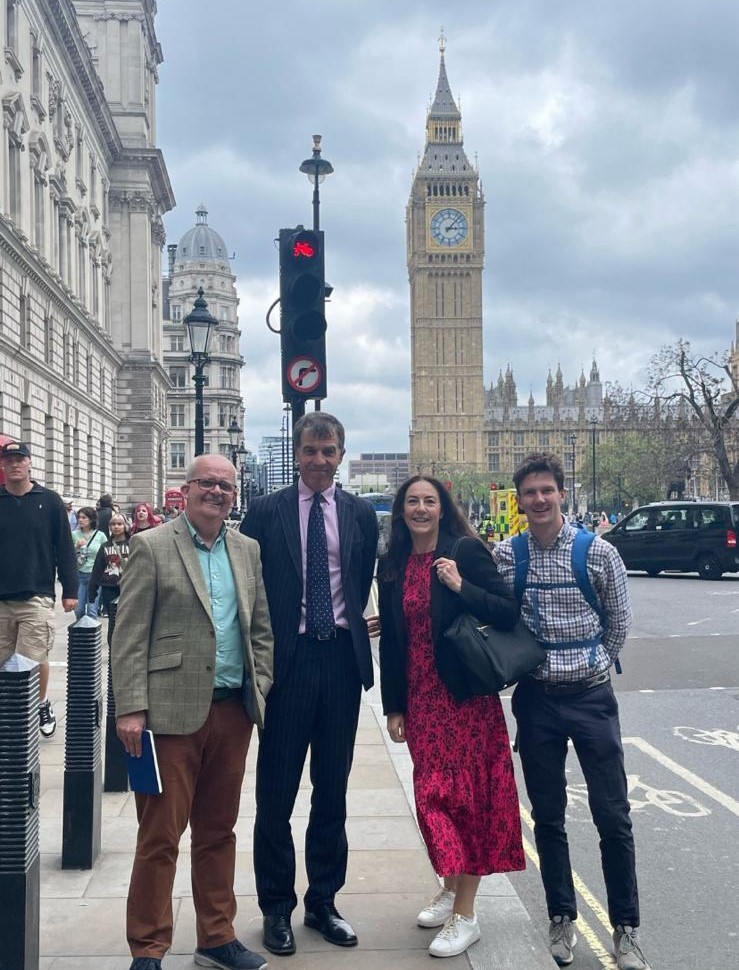
UK Deaf Sport’s delegation to the Sports Minister 13th May 2024
Proportional Representation and Advocacy
1. Population Context:
– The UK has a population of approximately 60 million people. Within this population, around 175,000 individuals are sign language users ranging from those who use it as their first language and others who have required it by learning the language and being exposed to and involved in Deaf community activities such as Deaf sport. This group includes deaf, hard of hearing and hearing individuals.
– The 8,333 signatures represent about 0.014% of the total UK population. This may seem like a small percentage, but it’s more significant when viewed within the context of the BSL community.
– Within the BSL community, 8,333 signatures equate to roughly 4.8%. This demonstrates a strong level of support and engagement from the BSL community itself.
2. Awareness and Mobilization:
– The campaign successfully mobilized nearly 5% of the BSL community, indicating a high level of concern and commitment to the issue within this group.
– However, to reach the thresholds set for government responses or parliamentary debates, the campaign needs to extend its reach beyond the immediate community to garner broader public support.
3. Legitimacy of the Petition:
– Despite not meeting the required thresholds, the petition shows substantial support from a dedicated community, highlighting the legitimacy and urgency of the issue.
– The 10,000 and 100,000 thresholds are 0.0167% and 0.167% respectively of the UK population
– The 8,333 signatures are 4.8% of the UK’s BSL community.
– This level of support within a specific community suggests the issue deserves attention and should not be dismissed due to the overall percentage being small in the context of the entire UK population.
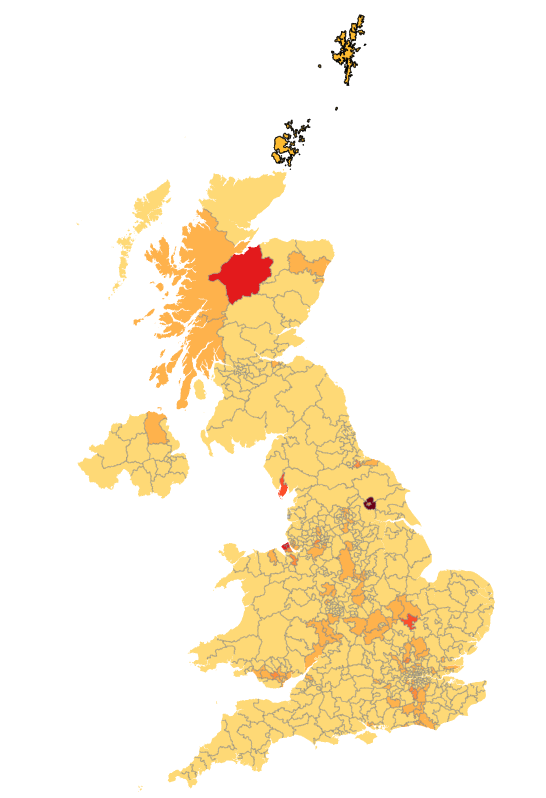
Map from the petition website showing signatures represented EVERY constituency of the UK except one. The darker shading showing signatures with higher % of each area.
Implications of the Government Shutdown for the General Election due on 4th July 2024
1. Impact on Current Advocacy:
– With the government shutdown for the General Election campaign, parliamentary activities will be paused, delaying any immediate action on the petition.
– This period can be challenging for advocacy efforts as the focus shifts to election campaigns.
2. Strategic Opportunities:
– The election period presents an opportunity to engage with MPs and candidates, pressing them to include support for Deaflympic funding in their election platforms.
– This can be a strategic moment to bring the issue to the forefront and secure commitments from candidates.
– Increase the visibility of the campaign through media outreach, collaborations with other advocacy groups, and public demonstrations.
– Share personal stories of Deaflympic athletes and the impacts of funding shortages to garner public sympathy and support.
3. Future Petitions and Partnerships:
– Consider launching another petition after the election, with strategies to surpass the required thresholds.
– Partner with broader disability and sports organizations to expand the support base and increase reach for future petitions.
4. Direct Engagement with Elected Officials:
– After the election, engage directly with newly elected MPs to advocate for policy changes and secure their commitment to supporting Deaflympic athletes.
– Identify supportive MPs who can champion the cause within Parliament and help drive policy changes.
Signing Off
While the petition did not meet the required signatures, it demonstrated strong support within the BSL community, representing nearly 5% of this group.
The upcoming election provides a critical opportunity to push the #FairPlayforDeafAthletes agenda by engaging with candidates and raising public awareness.
By leveraging this period strategically and building broader alliances, the campaign can continue to advocate for equitable funding for Deaflympic athletes.
Seven weeks ago we met ICSD President when he came to the UK to speak at the Sport Accord gathering in Birmingham. He asked why Two Big Ears had stopped reporting and we replied that we had been happy with the progress that ICSD is making and so had nothing to say.
President Kosa explained how much he has enjoyed reading the balanced and evidence-based reports that we have put out there and has encouraged us to continue keeping ICSD under the microscope and holding them to account.
So, we are back.
Two Big Ears Editor, Stuart Harrison and UK Deaf Sports CEO Joanne Cholerton in conversation with ICSD president Kosa at the recent Sport Accord in Birmingham UK
Our first report on the new leadership of ICSD, President Adam Kosa and Vice President Yutaka Osugi went out to you all about 600 days ago (August 2022).
Back then, we were wondering what the new leadership was going to do about some important matters. We put some of these questions to Kosa and this is what we have learnt
Relationships with the IPC and Paralympics
The ICSD have opened up a dialogue with the IPC, to maintain the Mutual respect and support for each others status within the Olympic family under the IOC.
The intention is to strengthen the partnership under the Memorandum of Understanding that has been around now for some time.
Many people will be pleased to see this happening because not so long ago, there were grave concerns about Rukhledev’s arrogance and isolationism which was damaging to international relations.
Commissions
Since we last reported about 600 days ago, the commissions have been active under the guidance of the ICSD Executive Committee.
Recently this year: Athletes and the Women’s commissions have met. Anti-doping has been prominent with a workshop at the Taekwondo world championships and education postings on social media.
Further protections of rights under the ICSD include a statement on racism and how this will be dealt with.
Two Big Ears and UK Deaf Sport discussed the challenges that Great Britain has in trying to get government recognition and funding for GB Deaflympians on a par with GB Paralympians.
President Kosa offered to share important documents in support of the campaign and these arrived in good time at the UK Deaf Sports offices soon after Kosa returned home.
Events
We have seen a full calendar of events happening including the long-awaited Young games that took place in Sao Paulo Brazil. Kosa was proud to remind us that there has been no event cancellations of World Championships so far.
Indeed whilst we were at Sport Acord, we were delighted to have President Kosa’s support as we held discussions with major decision makers on hosting international Deaf sports events in the UK in the future.
2025 Deaflympics
Preparations are ongoing and well underway for Tokyo and we spoke to member of staff of the organising committee who came to Sport Accord to promote the event to the world family if International Federations and major sponsors.
Kosa is determined that the old habits of short-term decision making when bidding and planning for future Summer and Winter games will be dealt with and some significant changes are already being made.
Countries must now make all payments in full three months before the Deaflympics take place, to ensure good cashflow and safeguarding of the infrastructures in place and the commitment of the host cities.
We also learnt from Kosa that there will be a tightening up of qualifications for athletes to compete at the Deaflympics, moving closer to ‘performance’ rather than participation. It will be interesting to see what impact this has on some sports in the future.
Indeed, Kosa wants ICSD to move with the times and if that means some sports no longer on the Deaflympic programme and replaced with more popular sports amongst young people, then this will happen. The ICSD has an open-mind on this and e-sports was part of our discussions.
Russia and Belarus
ICSD continue to adhere to the IOC guidance on participation of athletes from Russia and Belarus. We asked Kosa how ICSD plans to police the conditions that have been brought in to ensure neutrality.
One of the conditions is that Russian athletes state that they do not support the invasion of Ukraine, such a statement would be penalised by the state in Russia, so this will reduce the numbers taking part.
Indeed we spoke about the amazing results of the Ukraine athletes especially since the current phase of the war broke out and we discussed the fact that Ukraine is making the most of the opportunities to win, because at some point in the distant future, when Russia is allowed back in, they will dominate again.
We asked about the staffing situation and the general concerns about the operational standards. It was pointed out to us that the ICSD Executive is somewhat uncomfortable with the way the Summer Deaflympics left the host city in debt.
The most recent news that the ICSD is exploring options of relocating it’s HQ away from Lausanne suggests that changes are underway to disconnect the organisation from the previous management experiences.
Coming Up Next
Our next post will discuss the recent overhaul of the ICSD Constitution that took place at the recent Extraordinary Congress on the 10th March in Türkiye and what this means for deaf sports and the members of ICSD.
The Summer Games of Sport organised by the All-Russian Sports Federation of the Deaf has sparked an international debate in the Deaf sports community this summer, with the ICSD Executive Director appearing to be defying warnings from the ICSD.
In response to the Russian invasion of Ukraine in February 2022, the ICSD took action, and on:
5 March 2022 ICSD banned Russian and Belarussian athletes from competing in ICSD sanctioned events, including those organised by affiliated IDSFs (basketball, chess, football and golf) and the four regional confederations (Africa, Asia-Pacific, Europe and Pan-America)
21 March 2023 When it became known that the Summer Deaf Games, We are Together was being organised by ICSD Executive Director Dimitry Rebrov, Russia was warned by ICSD not to use the name Deaflympics, nor the Deaflympic logo. ICSD also refused to support the event or recognise it as part of the Deaflympic Movement.
July – August 2023 Despite these warnings Rebrov went ahead an allowed the OSFSG website to promote the event as Summer Games of the Deaflympics in all of its news reports including a welcome address from Mr. Putin himself.
Screenshot of OSFSG website
Most of the world was expecting a games for banned athletes and they were surprised and alarmed when Rebrov claimed that 1,500 athletes from 30 nations were taking part. Including one athlete from the USA.
Kenyan athletes were seen wearing the Deaflympics logo on their competition clothing.
30 July2023 – ICSD President Kosa went on social media to say:
We told Rebrov, our Executive Director, not to use the Deaflympics logo and name
We have been ‘monitoring’ the situation and Rebrov, is not conducting any ICSD business, during the period of the Russian games.
OSFSG is not a member of ICSD so we cannot stop them.
This is a Russian thing: They organised a Paralympics event in Autumn 2022 and early Summer 2023 and an Olympic event of BRICS nations will be going ahead in 2024.
ICSD will follow the IOC on decisions about Russia and Belarus.
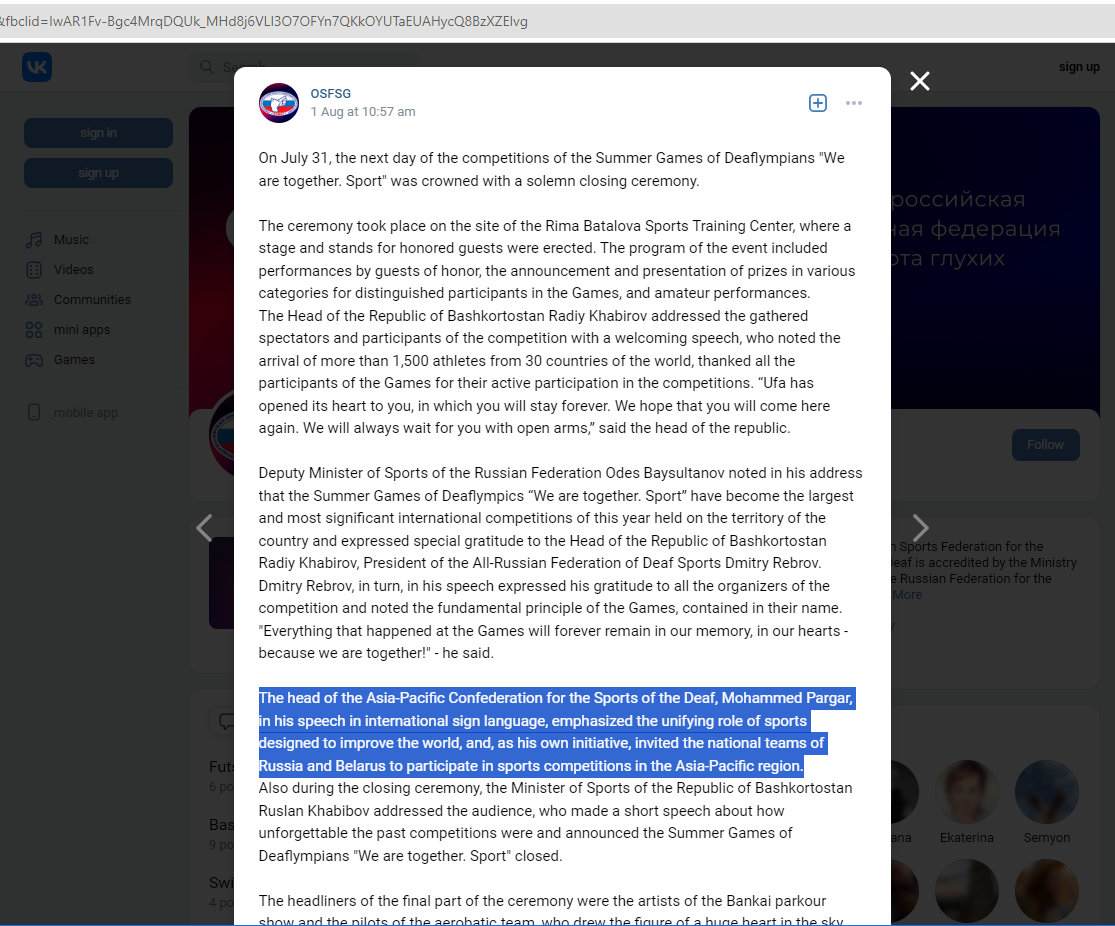
1 August 2023 – OSFSG website and social media reported: The head of the Asia-Pacific Confederation for the Sports for the Deaf, Mohammed Pargar, in his speech in international sign language, emhasised the unifying role of sports designed to improve the world, and, as his own initiative, invited the national teams of Russia and Belarus to participate in sports competitions in the Asia-Pacific region.
Screenshot – OSFSG social media
3 August 2023: The ICSD website published a statement with Pargar denying that he was representing Asia-Pacific and that he did not make any such invitation.
Screenshot – ICSD website
All the activities we have mentioned suggest that there might be an internal battle of wits between Rebrov and Kosa.
A Popular gameshow on the BBC in the UK has recruited Jodie Ounsley, GB Deaflympian as a Gladiator.
Professional Exeter Chiefs Rugby Player, Jodie Ounsley, is named ‘Fury’ thanks to her power and passion for competition. A former England Women’s Rugy Seven’s player, Brazilian Jiu Jitsu British Champion and five times World Coal Carrying champion, she won the title of Deaf Sports Personality of The Year in 2020.
Jodie has Gladiators in her blood, her father was a contender on the show in 2008, and she has been training to outdo him ever since. When she was younger she even dressed up as a Gladiator and practiced the games in her living room! Contenders beware, when that game starts you’ll feel the wrath of ‘Fury’.
This comes after a series of TV shows featuring deaf contestants in different countries over the years. We recently saw GB Football Deaflympian Jamie Clark in an SAS style show.