We were congratulated. We are still Excluded

Last week, the UK government finally acknowledged Deaflympians in Writing.

In a letter to the Culture, Media and Sport Select Committee, Sports Minister Stephanie Peacock congratulated the 65 Deaf athletes who represented Great Britain at the Tokyo Deaflympics, praising their “extraordinary talent and resilience” and calling them role models for Deaf children.

Recognition matters. Deaf achievement is often ignored entirely.
But recognition without change is not progress.

When you read the letter closely, it becomes clear that nothing fundamental has shifted.

Fair Play for Deaf Athletes

Praise does not equal equality

Despite the congratulations, Deaflympians are still excluded from the UK’s elite sport system. There is no access to Athlete Performance Awards. No place on the World Class Programme. No consistent funding for coaching, medical support, or performance preparation.

The explanation is the same one Deaf athletes have heard for years.

Deaf sport is governed by the International Committee of Sports for the Deaf, not the International Paralympic Committee. Because of this, Deaflympians are described as sitting “outside UK Sport’s remit”.

This is presented as a neutral technicality. It is not.

It is a decision that keeps Deaf athletes on the outside.

“Outside the remit” means “not designed for Deaf people”

Funding systems are built by people. They show priorities. When a system repeatedly excludes one group, the problem is not the group — it is the setup.

Deaf athletes train at elite level. They compete internationally. They follow anti-doping rules. They represent Great Britain under the flag, just like Olympic and Paralympic athletes.

The difference is not ability or commitment.
The difference is that Deafness does not fit neatly into the boxes the UK already uses.

Instead of redesigning the boxes, the setup asks Deaf athletes to accept exclusion.

Grassroots funding is not the same thing

The Minister’s letter highlights significant grassroots investment through Sport England, including funding for UK Deaf Sport and a specialist inclusion post.

Grassroots funding is important. It helps Deaf people get active and build community sport.

But grassroots funding does not pay for elite training. It does not cover international competition schedules. It does not offer full-time coaching, performance support, or the stability needed to compete against fully funded national systems.

Congratulating Deaf athletes for winning medals while pointing only to participation funding sends a clear message: Deaf sport is welcome at the bottom of the pathway, but not at the top.

We have had meetings before

The letter confirms more meetings. UK Sport will meet Deaf athletes. The Minister is open to further discussion.

Meetings are welcome. Listening matters.

But Deaf athletes and Deaf organisations have already told these stories. Evidence has already been shared. The problem is well understood.

What has been missing is not information.
What has been missing is action.

Without clear outcomes, meetings risk becoming another way to delay decisions while athletes continue to self-fund, self-organise, and self-sacrifice.

This is not about asking for favours

Deaf athletes are not asking for charity.
They are not asking to be “included” as a gesture of goodwill.

They are asking for equal recognition of elite performance.

They train. They compete. They win medals. They represent Britain on the world stage. They inspire Deaf children who rarely see themselves reflected in national sport.

If that is not elite sport, then the definition of elite sport is broken.

The real question

The Government’s letter is polite. It is careful. It avoids conflict.

But it does not answer the central question Deaf athletes are asking.

If Deaflympians are good enough to represent Great Britain,
good enough to win medals,
and good enough to inspire the next generation —

why are they still not good enough to be funded like other elite athletes?

Until that question is answered with real change, congratulations are just words.

You can read the UK Government press release and letter here

#FairPlayForDeafAthletes

Deaflympics 2025 Media Watch (19 November 2025, 09:00 JST)

The headlines this morning are impressive—if you could find them.


Japan’s own Maki Yamada sprinted to gold in the men’s 400 m, delivering the host-nation’s first win at the 2025 Games. Nippon+1

Taiwan picked up two silvers, one from hurdler Hsu Le and another from shooters Hsu Ming‑jui & Kao Ya‑ju. Focus Taiwan – CNA English News

Ukraine’s tally also soared with nine golds so far. Межа. Новини України.


Yet despite the wins, the global sports pages remain strangely quiet. The athletes are in motion. The record boards are ticking. The cameras? Still mostly pointing elsewhere.


If the Deaflympic movement has one job, it was to show the world they matter. Right now, they’re doing the work. The question: will the world show up?

Bravo to the organising Committee for livestreaming, here’s the highlights for 19th November

Thank you to the UK LumoTV for daily bulletins on the GB athletes. We wonder if other nations are able to provide the same?

Deaflympics Media Watch (16 November 2025)

Data collected 0900 JST 16-Nov-2025

The Games are underway — but you’d hardly know it from the world’s sports desks.

Today should have been the moment the headlines shifted from warm-up stories to actual competition: goals scored, medals won, shocks, heroics, heartbreak. Instead? Silence. And not the Deaf kind. The media kind.

Yes, the results exist. They’re sitting quietly on the official Tokyo 2025 website. They’re in federation match reports — like the USA Deaf Women smashing Japan 5–0, or the Ukrainian men putting five past the US team. They’re hidden in Japanese corporate updates and athlete sponsor pages. The wrestling brackets are fully up. The schedules are live. The data is there.

Japan Today reported on members of the imperial family in attendance at the Opening Ceremony. (Image: POOL via ZUMA press Wire)

But where are the stories?

Where is the mainstream “Day 1 at the Deaflympics”?
Where is the BBC Sport medal table ticker?
Where is the ESPN highlight reel?
Where is even one big newsroom saying “Here’s what happened today”?

This is the pattern we’re exposing: if a Deaf athlete wins, you have to dig through official PDFs and federation pages to find out. The world’s sports media aren’t telling the story. Not yet. Media access information

And that’s exactly why we’re watching.
Exactly why we’re documenting this gap.
Exactly why we’re doing this work.

Because the athletes are competing.
The results are happening.
The moments are real.
The coverage should be too.

Real sport with real results, ignored by real newsrooms.

All the details are here on the official Deaflympics2025 website

Live action via You Tube

Combined Mainstream Media Watch of Deaflympics 14 + 15 November

The Deaflympics are here — and the world is making noise in short, unexpected bursts.

Every day at 0900 JST we will make a round up of the previous days media coverage.

Day 0 gave us warm send-offs, big squads and small victories in visibility.
Olympics.com lit the match with a 111-strong team and one of the best flagbearer stories you’ll read this year. South Africa rolled out its Deaflympic history like a flex. Japan finally joined the conversation, proudly talking Deaf culture, sign language and tech that lets you see sound. Taiwan kept it sweet and simple with one perfect airport selfie.

Day 1 hit a different gear.
The Japan Times stepped up with a thoughtful, detailed feature that actually treated Deaf athletes like elite competitors, not curiosities. The World spotlighted the Deaflympics turning 100 — a message so obvious you wonder why broadcasters keep ignoring it. And then, at last, a shift: Yahoo Sports published a “how to watch” guide for free live streams. Not a TV revolution, but it’s a start.

Illustration featured in Japan Times

Across two days, one thing is crystal clear:
The written coverage is showing up. The broadcasters? Still stretching in the warm-up area.

But the athletes are already on the track. And they’re not waiting.

Combined takeaway

Two days in, the Deaflympics are shining loudest in written media.
The athletes are visible. The culture is visible.
Sign language is visible.
The broadcasters, though? Still playing hide-and-seek.

But the flame is lit — and the story is beginning to grow, we have read that NHK will broadcast the Opening and Closing ceremonies live, so we will report on that claim tomorrow.

Previous Mainstream Media Coverage This Week

In a brief yet significant segment, BBC Breakfast showcased members of the UK Deaflympics team ahead of their departure to Tokyo, highlighting the athletes’ rigorous preparation and the historic nature of this year’s Games. The piece emphasised the pride of representing Deaf sport on the world stage and touched on the broader issues of visibility and recognition for Deaf athletes — though the focus remained largely on inspirational narrative rather than deeper media-rights or coverage-strategy questions.

And an earlier but still recent piece from the UK parliament’s Culture, Media & Sport Committee outlining that MPs have written to broadcasters over the absence of planned coverage for the Deaflympics.

You Can Help!

Do you know of any other mainstream media coverage of the Deaflympics 2025 – send us a link with the reply button

Deaf Cricket Australia Closes: Implications for Future Generations

A Heart-breaking Decision That Shakes the Deaf Sporting Community.

On January 31st, 2025, members of Deaf Cricket Australia (DCA) gathered at Melbourne Deaf Cricket Club. Others joined online for the historic but deeply emotional meeting. The organization announced its closure. What should have been a celebration of 130 years of Deaf cricket in Australia turned into a painful farewell.

Two Big Ears could look in and ask questions during the live-streamed session. We thank Expression Australia for setting up the technical arrangements.

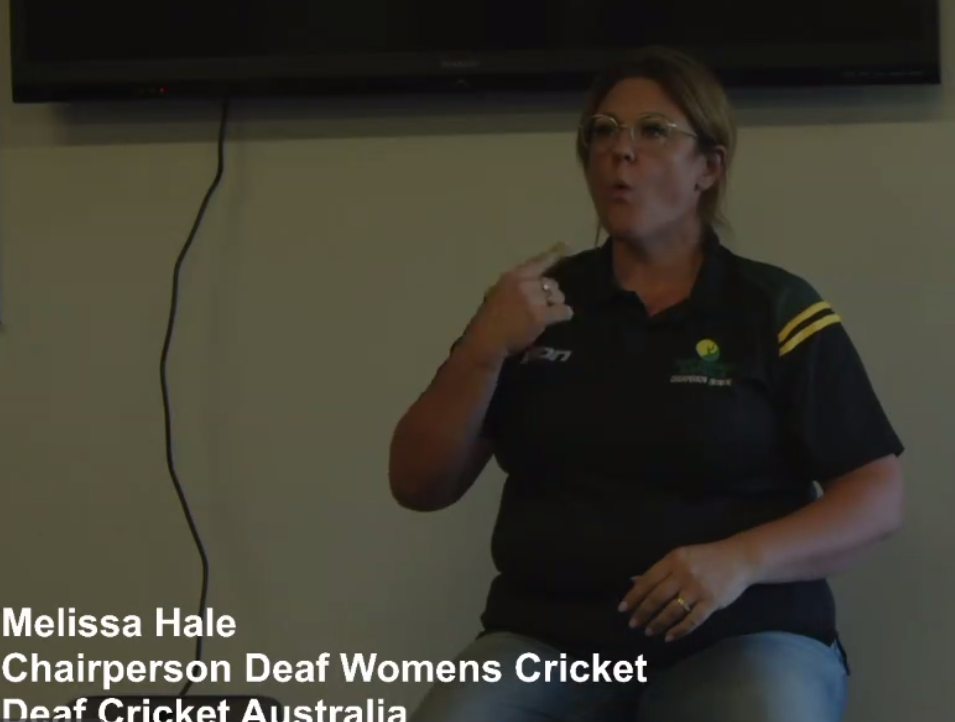
The decision was not made lightly. DCA representatives Melissa Hale, Justin Bergin, and James Hale stood before a devastated audience. They explained the irreversible breakdown in negotiations with Cricket Australia (CA). The raw emotion in the room was unmistakable. As they spoke, their heartbreak was visible to everyone. They fought to hold their composure. It was clear how much this loss meant to them.

Cricket Australia’s Grip on Deaf Cricket

In recent years, Deaf Cricket Australia had to adapt to the structures set by Cricket Australia. Cricket Australia controls the National Cricket Inclusion Championships (NCIC) and the Australian Deaf Cricket Team.

The problem? Cricket Australia had full control.

Under its agreements, DCA:

  • Lost its autonomy to run independent competitions or seek its own sponsorship.
  • Was denied the right to form an Australian Deaf Women’s Cricket Team. This happened despite other countries like India and Sri Lanka already having theirs.
  • Had no say in decisions affecting Deaf cricket at a national level.

Melissa Hale made it clear:

“We knew from 130 years of history how Deaf cricket works. Cricket Australia just did not agree.”

With most hard-of-hearing players growing up in the hearing world, DCA’s biggest fear was the loss of Deaf leadership. They worried that the future of the sport would become just another hearing-dominated system. This change will strip it of the cultural and community values that made it unique.

Melissa Hale, DCA, speaking at the meeting.

A Decision Five Years in the Making

For over five years, Deaf Cricket Australia pushed for greater Deaf leadership. They also advocated for Deaf mentors and a structure that protected Deaf culture within the sport.

But the barriers were impossible to break. Cricket Australia repeatedly denied requests for a Deaf Women’s team. They offered no explanation. The organization also blocked attempts to secure independent sponsorship due to corporate agreements.

Audience member, Tamara Trina spoke for women in the Deaf community. She felt that Cricket Australia’s attitude towards deaf women is Audist and quite discriminatory. This attitude extends to deaf people.

Faced with no alternative, DCA made the painful decision to cease operations and seal its history. The name, logo, and trophies—including the prestigious Webby Cup and Abraham Shield—will now be preserved as historical artifacts.

A Tearful Goodbye: Holding Composure in the Face of Heartbreak

The most gut-wrenching moment of the night came when Melissa Hale, Justin Bergin, and James Hale gave their final remarks.

Each one fought back tears as they addressed the audience. Their voices wavered, and their hands trembled as they signed, trying not to break down. The weight of their words was heavy, and everyone in the room felt their pain.

Justin Bergin has been part of Deaf Cricket Australia since 1994. He shared how difficult it was to explain this decision. He found it challenging to communicate it to DCA life members like John Webb OAM, Kevin Smith, and Tony Clews.

“It’s been part of my life for 30 years. This was the hardest thing I’ve ever had to do.”

James Hale alluded to the internal battles and sleepless nights that went into this decision. He recalled a painful meeting with state representatives in March 2024. During that meeting, it became clear that DCA can no longer continue.

Melissa Hale, visibly struggling to keep her emotions in check, admitted:

“.. the three of don’t really want to be here tonight. We do know that the three of us are going to break your hearts.”

As they spoke, the room was silent. Many in the audience had tears in their eyes. The heartbreak was not just theirs—it belonged to the entire Deaf cricketing community.

What Happens Now?

With DCA gone, the NCIC will continue under Cricket Australia’s control, but with no Deaf leadership. This raises urgent concerns:

  • Without Deaf mentors, how will new Deaf players be welcomed into the sport?
  • Will Deaf culture and identity be respected in a hearing-dominated system?
  • Can Deaf Sports Australia (DSA) step in and make sure that Deaf cricket doesn’t disappear entirely?

Phil Harper from Deaf Sports Australia acknowledged these challenges. He admitted that DSA oversees 16 different sports. It does not have the resources to take over grassroots Deaf cricket development.

A Loss Felt Across Generations

The closure of Deaf Cricket Australia is more than just a sporting decision. It is a cultural loss for the Deaf community.

For 130 years, Deaf cricket has not just been a game. It is a place of belonging. It was a space where Deaf people connect through their language, identity, and shared experiences.

Now, that space is gone.

A Call to Action

The future of Deaf cricket now lies in the hands of the players and the community. Cricket Australia will continue running its teams. Yet, the question remains: Will Deaf players be capable of finding playing opportunities in this new system? Or will Cricket Australia’s decision be the beginning of the end for Australia’s biggest deaf sport?

If the community wants change, now is the time to step ahead. They should contact Deaf Sports Australia. It’s important to push for a system that respects Deaf identity and leadership.

For now, Deaf Cricket Australia is gone. But the spirit of its players, past and current, will never be forgotten.


#DeafCricketAustralia #EndOfAnEra #CricketForTheDeaf #DeafSports #CricketAustralia #InclusiveSport #DeafCommunity #130YearsOfHistory.

Memorial Service Today for CEO of ICSD

The Deaflympic family bids farewell to Ralph Fernandez US athlete, official and stalwart of the Deaflympic movement.

Ralph Fernandez April 22 1964 – Jan 4 2025

A memorial service will be held at Joseph Gawler’s Sons Funeral Home, 5130 Wisconsin Avenue NW Washington, DC 20016 at 12:00PM in the Grand Hall followed by a light reception in the President Eisenhower Suite from 1:30 until 3:30PM.

Many tributes have been flooding in from around he world to recognise his work and passion.

Obituary

Challenges Facing DeaflympicsGB Sports Ahead of 2025 Deaflympics

As Great Britain and other nations prepare for the 2025 Summer Deaflympics in Tokyo in 306 days time, several challenges emerge, particularly when compared to nations that provide robust governmental recognition and funding for their deaf athletes.

Funding Disparities

In the UK, elite deaf athletes often receive less financial support than their counterparts in the Olympics and Paralympics. This lack of elite funding hinders their access to top-tier training facilities, coaching, and competition opportunities, potentially affecting performance levels. In contrast, countries with substantial government backing can offer their athletes comprehensive support, leading to a more conducive environment for success. Chris Ratcliffe, CEO of UK Deaf Sport explains to the BBC why “We have to fund the Deaflympics Ourselves”

Recognition and Awareness

The Deaflympics historically receive less media coverage and public attention in Great Britain compared to the Olympics and Paralympics. This limited visibility results in fewer sponsorship opportunities and a lack of public support, which are crucial for athlete development and morale. Nations that actively promote deaf sports and celebrate their athletes’ achievements tend to foster a more inclusive sporting culture.

Access to Training Facilities

Deaf athletes in the UK face challenges in accessing training facilities equipped to meet their specific needs. This includes the availability of sign language interpreters and coaches trained to work with deaf athletes. Without adequate facilities and support, athletes may struggle to reach their full potential. In contrast, countries with dedicated resources for deaf athletes can provide tailored training environments that enhance performance. It has been argued that there is coaching talent and experience within the Deaf sports community, that would provide the coaching and technical support required which then reduces the need for expensive interpreting and the deployment of coaches who may be highly qualified but lack the communication skills and cultural essence needed to lead in elite sport.

International Competition Experience

Limited funding and support can restrict opportunities for British deaf athletes to compete internationally, which is vital for gaining experience and improving performance. Regular exposure to international competitions allows athletes to benchmark against top competitors and adapt to different competitive environments. Countries that invest in sending their athletes to international events provide them with invaluable experience that can be advantageous during the Deaflympics.

Advocacy and Policy Support

The level of advocacy and policy support for deaf athletes varies between countries. In the UK, the #FairPlayforDeafAthletes campaign is advocating stronger policies form the Department of Culture, media and Sport that will ensure equal opportunities and support for deaf athletes. The UK may argue that the current economic climate makes it very difficult to provide such funding but this will not stand up against the commitments made by countries such as Ukraine whose resources are also engaged in the heroic defence of their territory in war with Russia.

Addressing these challenges requires a concerted effort from sports governing bodies, policymakers, and the community to ensure that British deaf athletes are adequately supported and prepared to compete on an equal footing with their international counterparts at the 2025 Summer Deaflympics in Tokyo.

Show your support for DeaflympicsGB

Make a donation to support Great Britain’s athletes as they prepare for Tokyo! https://www.justgiving.com/campaign/deaflympicsgb

Documentary Film Preview: “Watch Us Roar”

A new documentary from BSLBT gives a riveting insight into the GB Women’s Deaf Futsal Team’s 2024 Winter Deaflympics journey

Sign Language version of the article

On July 16th, sports enthusiasts and documentary lovers alike will be treated to a compelling new film, “Watch Us Roar.” This 30-minute, BSLBT- commissioned documentary, produced by Flashing Lights and set to broadcast on BSL Zone, delves deep into the world of the Great Britain Women’s Deaf Futsal team as they navigate the intensity and drama of the Winter Deaflympics in Erzurum, Türkiye, held in March this year. With a storyline that intricately weaves through personal and collective challenges, “Watch Us Roar” promises to be an eye-opener on multiple fronts. Indeed, this documentary comes with a trigger warning at the beginning.

The documentary sheds light on the daunting decisions and mounting tensions the team faces, particularly against the backdrop of the Department for Digital, Culture, Media and Sport (DCMS) decision to withhold funding for Deaflympic sports. This year, marking the 100th anniversary of the Deaflympic Games, is particularly significant as it was the first time Futsal was included in the competition. The lack of financial support forces both the team management to take calculated risks, and the footballers to divert their focus from crucial preparations to fundraising efforts. This narrative thread underscores the stark realities and emotional toll of competing at such high stakes without adequate support.

One of the central figures in “Watch Us Roar” is Marios Costi, the team’s head coach. The film offers an intimate look at his tactical skills and the emotional depth of his coaching style, which many viewers might find unexpectedly intense by contemporary standards. Costi’s vulnerability and passion are laid bare, presenting a multifaceted view of a coach under pressure. His approach culminates in a dramatic and candid team meeting, where players are invited to express their honest thoughts and feelings, leading to explosive tensions and significant fallouts.

On top of the gripping narrative surrounding the team as a whole, “Watch Us Roar” also delves into the personal journeys of three key players, adding a deeply private dimension to the documentary. By following these athletes closely, the film provides intimate insights into their individual struggles, triumphs, and motivations. This personal focus encourages viewers to connect on a more emotional level with the team, fostering a sense of empathy and support. Through their stories, the audience is invited to not only witness the collective challenges of the team but also to champion the personal adventures of these remarkable women as they strive to achieve their dreams on the world stage.

“Watch Us Roar” does more than just document a sports team’s journey; it provides an unfiltered look into the dynamics of teamwork, the strains of underfunding, and the raw emotions that fuel athletic competition. Deaflympians represent Great Britain at the Winter and Summer Deaflympics under the banner of DeaflympicsGB, authorized by UK Deaf Sport. The documentary is essential viewing for anyone who enjoys sports and is curious about the often-unseen drama of team meetings and behind-the-scenes preparations during major competitions.

Mark your calendars for July 16th – “Watch Us Roar” is a must-watch that will leave you with a profound appreciation for the resilience and spirit of the Great Britain Women’s Deaf Futsal team.

Follow the BSL Zone and get ready for the documentary on 16th July 2024.

ICSD Still Employing Rebrov – People ask ‘What is Going on’?

The global Deaf community has reacted in frustration to the ICSD handling of further misdemeanours by their Russian-based CEO.

Earlier this month, Deaf sports community watchers were alerted to the fact that the ICSD CEO was endorsing and leading Russia’s plans to hold their own government sponsored, ‘Alternative Summer Deaflympics’ because they, along with Belarus are banned from international competitions due to their stance on the illegal invasion of Ukraine.

Nothing wrong with Russia doing their own thing, they have to to everything they can to keep the Russian population in the dark on what’s happening in Ukraine.

But a news video broadcasted on You Tube by Russian Deaf Television, shows Dmitry Rebrov, the employee of the ICSD and supposed guardian of the Deaflympic brand, endorsing the “Alternative Deaflympic Summer Games” in Ufa, Russia.

video created by Russian Deaf TV

Shocked by this blatant disregard for the integrity of Deaf sport, and a claim that Russia intends to invite other nations to participate, the Deaflympic historian Pinchas, shared the story and video on 3rd March asking what ICSD planned to do about it.

On 21st March, ICSD issued a statement that:

According to our current information, the sports event is organised by the Government of the Russian Federation and the All-Russian Sports federation of Deaf Sport (OSFSG). The sports organisation is not a member of the ICSD. According to the sports federation, the word “Deaflympics” will not be used officially at the event.

The ICSD will not give any form of permission for the use of the word ‘Deaflympics’ and will closely monitor the organisation of the Russian Summer Games of Deaf Athletes “We are Together” and if necessary, take action and take any necessary steps against any possible unlawful use of the word “Deaflympics”.

The statement finished by explaining their actions towards Rebrov: “Mr. Dmitry Rebrov has agreed to refrain from promoting and organising the Summer Games of Deaf Athletes “We are Together Sport”.

Once again, people are feeling that Rebrov brings the ICSD and the Deaflympics into disrepute, and infuriated Deaf people have commented on this direct to ICSD, that stronger action should be taken by the ICSD Board. Indeed how on earth are they going to ‘closely monitor what’s going on in Russia ?

“Imagine if the well known Deaf sports historian did not post (the story) on social media it would have made things worse for ICSD. Why didn’t the ICSD CEO inform ICSD about the alternative Deaflympics in the first place. It sounds very strange and awkward.” Donal Desmond

“While Russian athletes are banned from competing in most international sport, due to multiple state sponsored doping and their highly illegal invasion of Ukraine, ICSD should not be employing a Russian! He has been guilty of audiogram fraud. This undermines ICSD’s efforts to build a good reputation” John Neilson

Of course, Miguel Alejandro and others are wondering “why all the fuss” when we should be promoting and putting Deaf athletes first. But this is seen as ignorant and the lack of concern for the unprofessionalism and disregard shown by Rebrov continues to go unchecked.

The lukewarm reactions by non-Western nations to Russian doping, audiogram frauds, imposter athletes and ICSDs continuance to employ a Russian to oversee Deaf sport and to appoint Russians as Technical Directors etc reflects the geopolitical attitude towards the West that we see in mainstream society and such sentiments are no different in the global Deaf community. Perhaps that explains why Rebrov still has a job and why, as far as we know, the IOC has not yet restored it’s funding and full support to ICSD.

New ICSD Leadership Takes Swift Action Against Sexual Harassment

ICSD has banned its Athletics Technical Director from deaf sport for 30 years for misusing his position of trust to sexually harass a woman during the 2022 Summer Deaflympic Games in Brazil.

Whilst this decision took place last November it is encouraging to see that under the leadership of president Adam Kosa, decisive action is being taken on cases that breach ICSD’s Code of Ethics.

The ICSD statement is available on the ICSD website

Since coming to office in September 2022, Kosa and the Executive Board have made swift decisions to strengthen the governance and representations in global decision making for Deaf Sport.

It has appointed:

Legal Commission

Women in Sports Commission

Audiology Commission

New Rules of Procedure for the Executive Board

Ad-Hoc Commission for Gender Balance

It has started procedures for selecting members of the Anti-Doping Commission

Preparation are underway for the 2025 Summer Deaflympics in Tokyo, Kosa having made trips to meet local organisers and government decision makers.

All details on ICSD Facebook