Deaflympics media Watch (for 17th November 2025)

Support Assistant

I can help you set up automatic posting to Facebook! You’ll need a Facebook Page (not a personal profile) to connect with your WordPress.com site. Go to Jetpack → Social in your dashboard and click “Connect an account”, then choose Facebook and follow the prompts to connect your Page. Want me to walk you through what happens next?

Perfect! After you connect your Facebook Page, every new blog post you publish will automatically share to Facebook. But you can customize this for each post – when writing a post, click the green Jetpack icon at the top-right and you can toggle sharing on/off, choose which networks to share to, or add a custom message. Ready to try connecting your Facebook Page?

Got it! Let’s troubleshoot this. First, can you check if your Facebook connection is still active? Go to Jetpack → Social and see if your Facebook account shows as connected or if there’s a “Reconnect” button. Also, when you publish a post, do you see the sharing options in the Jetpack panel on the right side of the editor?

That’s frustrating! Let’s check the sharing settings for your posts. When you edit one of your recent posts, look for the Jetpack social sharing panel on the right side – does it show Facebook as enabled for that specific post? Also, are you publishing to a Facebook Page or trying to share to a personal Facebook profile? WordPress.com can only share to Pages, not personal profiles.

Let me help figure this out! Try disconnecting and reconnecting your Facebook Page – go to Jetpack → Social, click the three dots next to your Facebook connection, and select “Disconnect”. Then reconnect it fresh. Sometimes Facebook changes their permissions and a fresh connection fixes the issue. Want to try that and see if your next test post shares properly?

A gold medal landed yesterday. It should have lit up the sports world. Instead, it flickered in the margins.

Indian shooter Dhanush Srikanth claimed gold in the men’s 10 m air rifle at the Tokyo Deaflympics and broke a world record in the process. (The Times of India) Yet the global headlines barely moved.
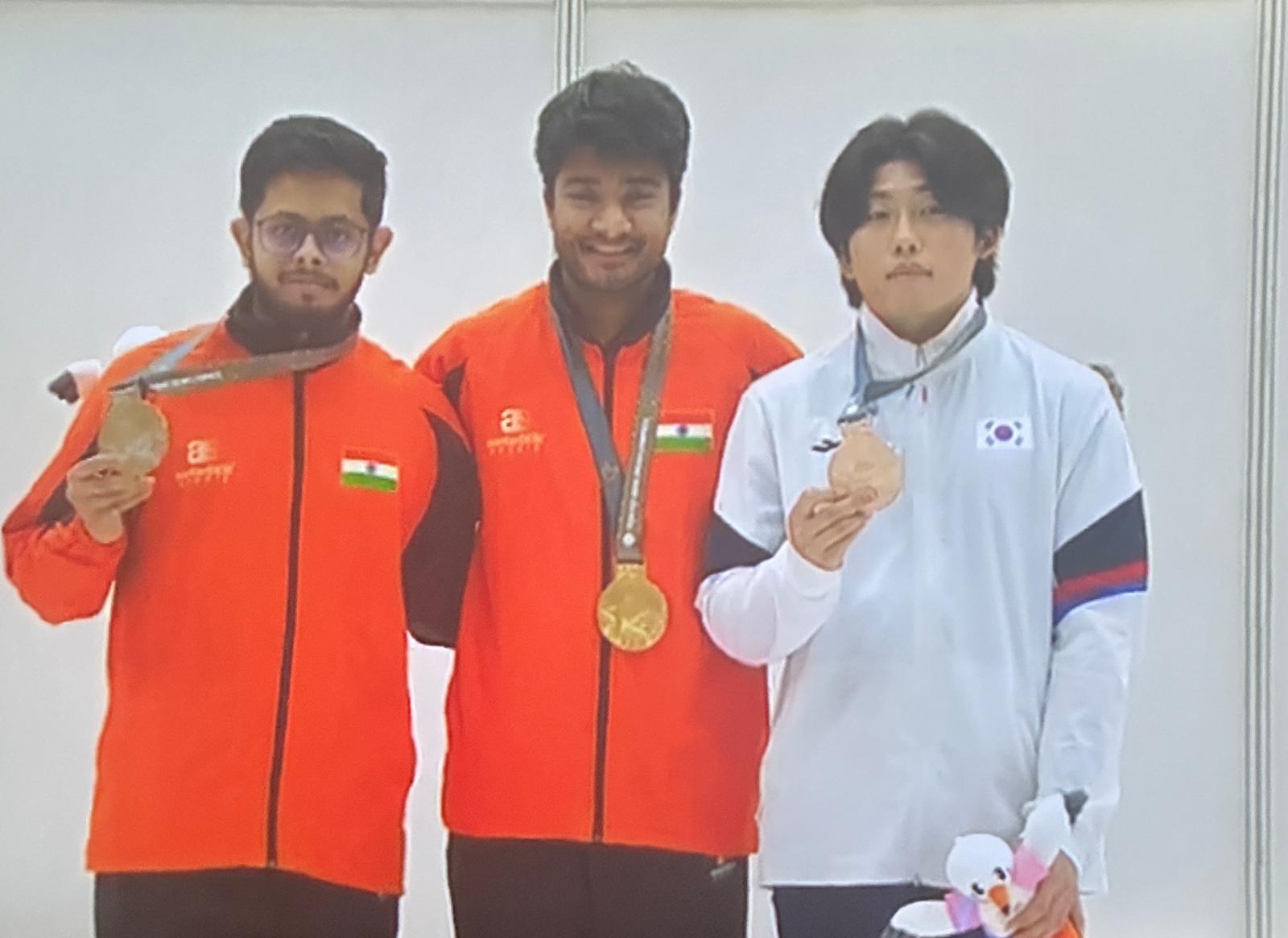
Dhanush Srikanth won gold and broke a world record in the Men’s shooting


In Japan, a local Japanese-language outlet ran a tech/inclusion piece on the Games and the host city’s accessibility strategy — accessible to those digging through Japanese livestreams, but easy for global sports desks to ignore.


And in Latin America, a Spanish-language website celebrated the arrival of the Games with local athletes boarding flights, yet still no major live result coverage.

The UK media ran a strong piece on the funding gap facing Deaflympians, reminding the world that while medals are won recognition is still waiting.


The athletes are winning. The stories are there. But the broadcast and mainstream media radar? Still silent.

The question stands: when record-breaking performances happen, will they get the spotlight they deserve — or will they remain hidden in niche feeds?

What you can do

Watch the action livestreamed on YouTube

Get the results and details on the official website

Mainstream media can get the accreditation they need

Deaflympics Media Watch (16 November 2025)

Data collected 0900 JST 16-Nov-2025

The Games are underway — but you’d hardly know it from the world’s sports desks.

Today should have been the moment the headlines shifted from warm-up stories to actual competition: goals scored, medals won, shocks, heroics, heartbreak. Instead? Silence. And not the Deaf kind. The media kind.

Yes, the results exist. They’re sitting quietly on the official Tokyo 2025 website. They’re in federation match reports — like the USA Deaf Women smashing Japan 5–0, or the Ukrainian men putting five past the US team. They’re hidden in Japanese corporate updates and athlete sponsor pages. The wrestling brackets are fully up. The schedules are live. The data is there.

Japan Today reported on members of the imperial family in attendance at the Opening Ceremony. (Image: POOL via ZUMA press Wire)

But where are the stories?

Where is the mainstream “Day 1 at the Deaflympics”?
Where is the BBC Sport medal table ticker?
Where is the ESPN highlight reel?
Where is even one big newsroom saying “Here’s what happened today”?

This is the pattern we’re exposing: if a Deaf athlete wins, you have to dig through official PDFs and federation pages to find out. The world’s sports media aren’t telling the story. Not yet. Media access information

And that’s exactly why we’re watching.
Exactly why we’re documenting this gap.
Exactly why we’re doing this work.

Because the athletes are competing.
The results are happening.
The moments are real.
The coverage should be too.

Real sport with real results, ignored by real newsrooms.

All the details are here on the official Deaflympics2025 website

Live action via You Tube

Why the Deaflympics Deserves Full Funding: A Call for Equality in Sports

Despite a century of excellence, Deaflympic athletes are still forced to self-fund their participation. It’s time for change.

The Deaflympics Deserve Full Funding and Recognition

The Deaflympics is a world-class sporting event, yet its athletes are forced to self-fund their journey to compete at the highest level. Chris Ratcliffe, CEO of UK Deaf Sport, has highlighted this critical issue in his interview with Matt Taylor for BBC News in the article titled ‘We have to fund the Deaflympics ourselves’, and it is time for the sporting community, corporate sponsors, and government bodies to step up and provide the necessary support. Ratcliffe has been working tirelessly to raise awareness of this issue, and last month, BBC’s Matt Taylor caught up with him to discuss the urgent need for funding and recognition.

Chris Ratcliffe, CEO, UK Deaf Sport “We have to fund the Deaflympics Ourselves”

Photo Credit: © Mark Lomas 2011.

A Century of Excellence, Yet Still Overlooked

As Matt Taylor reported in his BBC News article, for 100 years, the Deaflympics has provided elite deaf athletes with a platform to compete on a level playing field. Established in 1924, it was the first international sporting event for athletes with disabilities, predating the Paralympics by nearly four decades. Despite this rich history, it remains one of the least recognized global sporting competitions. While Olympic and Paralympic athletes receive direct financial support, their Deaflympic counterparts must raise an estimated £4,000 each to represent Great Britain at the upcoming Tokyo games.

This financial burden places deaf athletes at a significant disadvantage. Many are in full-time education or employment while training at an elite level. The additional stress of securing funding detracts from their preparation and undermines their potential to compete at their best.

The Government’s Role in Funding Equity

The UK government, through Sport England, has provided £1.27 million in funding for UK Deaf Sport until 2027. While this is an important step in supporting grassroots initiatives, it does not directly address the financial struggles of athletes preparing for the Deaflympics. As highlighted in Taylor’s article, the exclusion of Deaflympic athletes from UK Sport funding—reserved for Olympic and Paralympic competitors—suggests a misunderstanding of the event’s elite status and its importance to the deaf community.

The time has come for UK Sport and the Department for Culture, Media and Sport to recognize the Deaflympics as an elite-level competition worthy of direct funding. Elite deaf athletes deserve the same financial backing as their Olympic and Paralympic counterparts. This is not just about funding; it is about equality, representation, and the value we place on all athletes, regardless of how they communicate.

Breaking Barriers and Inspiring the Next Generation

Beyond competition, the Deaflympics serves as a vital tool in breaking down barriers for young deaf athletes. As Ratcliffe noted in Taylor’s piece, studies show that deaf children are twice as likely to be inactive compared to their hearing peers. The lack of visibility and investment in deaf sports contributes to this disparity. If we want to create a truly inclusive sporting culture, funding the Deaflympics must be a priority.

UK Deaf Sport’s Destination Deaflympics campaign is a promising initiative to increase awareness, but awareness alone is not enough. If we want young deaf athletes to see the Deaflympics as a viable goal, we must remove financial obstacles. One way to do this is through corporate sponsorships, media partnerships, and a dedicated government-backed funding stream that ensures no athlete is forced to fund their own participation in an event of this magnitude.

UK Deaf Sports Youth engagement programme

A Call to Action

The Deaflympics embodies the very essence of sport: perseverance, excellence, and inclusivity. Yet, as Taylor’s article makes clear, its athletes continue to be sidelined in the funding conversation. It is time for change.

  • Government bodies must formally recognize the Deaflympics as an elite event and provide direct financial support.
  • Corporate sponsors should step up and back our elite deaf athletes, just as they do for Olympians and Paralympians.
  • The media must give the Deaflympics the attention it deserves, ensuring wider public awareness and engagement.

The Deaflympics should not be an event where only those who can afford it get to compete. Every athlete representing Great Britain on the world stage should do so knowing that their country stands behind them—financially, institutionally, and culturally.

It’s time to fund the Deaflympics properly. Anything less is a failure of our commitment to true sporting equality.

For more details on the politics and history of the Deaflympics read “Same Spirit Different Team”

Challenges Facing DeaflympicsGB Sports Ahead of 2025 Deaflympics

As Great Britain and other nations prepare for the 2025 Summer Deaflympics in Tokyo in 306 days time, several challenges emerge, particularly when compared to nations that provide robust governmental recognition and funding for their deaf athletes.

Funding Disparities

In the UK, elite deaf athletes often receive less financial support than their counterparts in the Olympics and Paralympics. This lack of elite funding hinders their access to top-tier training facilities, coaching, and competition opportunities, potentially affecting performance levels. In contrast, countries with substantial government backing can offer their athletes comprehensive support, leading to a more conducive environment for success. Chris Ratcliffe, CEO of UK Deaf Sport explains to the BBC why “We have to fund the Deaflympics Ourselves”

Recognition and Awareness

The Deaflympics historically receive less media coverage and public attention in Great Britain compared to the Olympics and Paralympics. This limited visibility results in fewer sponsorship opportunities and a lack of public support, which are crucial for athlete development and morale. Nations that actively promote deaf sports and celebrate their athletes’ achievements tend to foster a more inclusive sporting culture.

Access to Training Facilities

Deaf athletes in the UK face challenges in accessing training facilities equipped to meet their specific needs. This includes the availability of sign language interpreters and coaches trained to work with deaf athletes. Without adequate facilities and support, athletes may struggle to reach their full potential. In contrast, countries with dedicated resources for deaf athletes can provide tailored training environments that enhance performance. It has been argued that there is coaching talent and experience within the Deaf sports community, that would provide the coaching and technical support required which then reduces the need for expensive interpreting and the deployment of coaches who may be highly qualified but lack the communication skills and cultural essence needed to lead in elite sport.

International Competition Experience

Limited funding and support can restrict opportunities for British deaf athletes to compete internationally, which is vital for gaining experience and improving performance. Regular exposure to international competitions allows athletes to benchmark against top competitors and adapt to different competitive environments. Countries that invest in sending their athletes to international events provide them with invaluable experience that can be advantageous during the Deaflympics.

Advocacy and Policy Support

The level of advocacy and policy support for deaf athletes varies between countries. In the UK, the #FairPlayforDeafAthletes campaign is advocating stronger policies form the Department of Culture, media and Sport that will ensure equal opportunities and support for deaf athletes. The UK may argue that the current economic climate makes it very difficult to provide such funding but this will not stand up against the commitments made by countries such as Ukraine whose resources are also engaged in the heroic defence of their territory in war with Russia.

Addressing these challenges requires a concerted effort from sports governing bodies, policymakers, and the community to ensure that British deaf athletes are adequately supported and prepared to compete on an equal footing with their international counterparts at the 2025 Summer Deaflympics in Tokyo.

Show your support for DeaflympicsGB

Make a donation to support Great Britain’s athletes as they prepare for Tokyo! https://www.justgiving.com/campaign/deaflympicsgb

One to Watch this Week

Two Big Ears, will be keeping up to date on the progress of the Profoundly Deaf European U23 silver medallist hammer thrower, Charlotte Payne, who debuts at this week’s World Athletics Championships in Budapest.

Charlotte, from Reading, UK, is 21 years old who, last year, became the British Champion for the first time in the Women’s Hammer with a throw of 70.59m as she also became the youngest British woman to throw over 70m.

Charlotte Payne (GB) [Getty Images]

Charlotte missed out on last years Commonwealth Games as she failed to qualify, (she broke the British record after the qualifying date). Anna Purchase, went on to represent England at the games and joins Charlotte in Budapest this week. Anna and Charlotte are chasing the 74.54m record set by Sophie Hitchon at the Rio Olympics in 2016, who has since retired from the sport. ‘We are coming into a golden age of hammer’ they told the BBC.

We are not expecting Charlotte to win a medal in Budapest as the event is currently dominated by the North Americans, led by 27- year-old, Brooke Anderson who is only the 3rd person who has thrown over 80m in this event.

Ranked 30th in the world with a best throw of 72.51 this summer, Charlotte is one of the four youngest competitors at this years event including Silja Kosonen (FIN) the European U23 Champion (ranked 8th). The others are Jie Zhao (CHN) 18th and Rose Loga (FRA) 19th. Charlotte has shown that she can compete with the best as she came second to Kosonen and beat Loga by 1.26m at the European U23 championships this year.

The event starts on Wednesday 23rd August with two qualifying groups at 19:00 and 20:35. The final will be held the next day 24th August at 20:26.

If you are watching from the UK we might be able to catch up with the event on the BBC between 19:00 – 21:00. If you like outside the UK, you an find your TV viewing times at where to watch

Payne told the BBC “I hope that I can offer some sort of inspiration for other deaf athletes coming through”.

If you know of any other deaf athletes competing in Budapest this week, please let us know so that we can cover them in our reporting.

See more reporting from the BBC