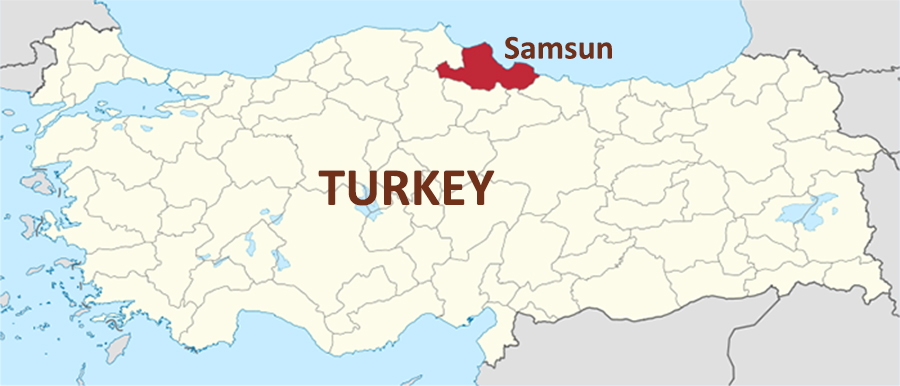
Issac Makokha who made his international Deaf golf debut at the 2017 Deaflympics in Samsun Turkey has just become the first Deaf golfer to win the Kenyan Amateur Matchplay championships.
Congratulations Issac!
Issac Makokha who made his international Deaf golf debut at the 2017 Deaflympics in Samsun Turkey has just become the first Deaf golfer to win the Kenyan Amateur Matchplay championships.
Congratulations Issac!
Members of the ICSD Executive Board are battling with each other for overall control after the resignation of their president.
In our last post we explained that the ICSD Executive Board had removed its CEO and also explained that their Vice president of World Sport was unable to succeed to the vacant post of president according to its constitution. Instead, Mr Kihtir, a member at large, was appointed as chairman to prepare for an Extraordinary Congress and ensure continued business.
Immediately, the interim Vice President Mr Perazzolo e-mailed to complain publicly and argue on a technicality that the minutes of the Board meeting had not been signed and that he had been “…grossly removed from the post of ICSD Vice President by these 4 members at large.”
He argued that a proposal from the four regional presidents had been ignored and felt that it had been an “usurpation of power by members that are ready for everything to keep their seat in the EB (Executive Board).”
What we have seen since then is an outpouring of letters from national Deaf sport organisations lending their support to either camp. The majority are supporting a motion put forward by America and Germany that the post of president should be left vacant and and the chairpersons of the Regional organisations should take control until the next Congress.
Yesterday, Mr Perazzolo sent round a video message and a letter (neither appeared to correlate). In his letter he is arguing that he has the right to sucession according to article 3.2.f in the ICSD Byelaws:
f. order of Succession.
In the event of vacancy for the office of President, the Vice president of World Sports will assume the presidency, and the Vice President of World Sport position then be selected by the Executive Board.
This appears to be a reasonable argument to uphold, but our investigations suggest that if people want to argue on technicalities then we understand from our sources, that Mr Perazzolo was interim Vice President World Sport in name only and the post was not ratified by the 47th Congress in December 2019. It has been suggested that when Mr Chan was formerly accepted as interim President, then Mr Perazzolo’s appointment should have been endorsed too – but this did not happen.
However, a draft copy of the 47th Congress (2019) Minutes issued in May 2020, states:
Mr Mather (attorney) pointed out that at the next Board meeting, they will pick a Vice President – World Sports until the next Congress in 2001.
The Hungarian Deaf Sport Federation, have written a letter, signed by their president Dr Gergely Tapolczai who has been an MP since 2010 and also a member of the European Parliament and Vice President of the European Union of the Deaf;
“…Considering the proposals and suggestions made by either the ICSD Office or either some ICSD members we have to notice, that none of the proposals would solve the critical situation or any of the problems what the community is currently facing.
We do think that under the current circumstances the only way in terms of good legal acting is the chance of an Extraordinary congress, what must be held in the shortest period of time what is possible, so the fact of the election of the new board could save and protect deaf sport family for keep moving forward.
For the upcoming time till the Extraordinary Congress and election,we strongly and definitely recommend to reduce and restrict the power of the current board to a simple and easily supervised operational level, to avoid any acts or decisions (financial or professional) to prevent further miscarriage acts.
Summarising the written above, we still believe that the only chance to solve this critical and unacceptable situation is a new election what the Extraordinary Congress could give us.”
Thank you for reading, we will keep you updated.
The Executive Board of the International Committee of Sport for the Deaf has decided to act swiftly amidst recent controversy and remove Dmitry Rebrov from his position as chief Operating Officer.
According to a copy of the minutes, which appear to be genuine and circulated to all national deaf sport organisations, the following decisions have been made:
The Executive Board has decided that it will immediately begin hiring new staff to ensure continuity of activities.
The new chairman has been set the immediate task of arranging an Extraordinary Congress that will discuss the missing financial audits that have not been presented since 2018 and review the progress of the latest reform package as requested by Congress in December 2019. Congress will also elect a president since Mr Perozzolo, Vice President of World Sport is not eligible to be automatically appointed.
The ICSD (International Committee of Sport for the Deaf) has had a third president resign in less than two years.
From 1924 – 2018, the Deaflympic movement enjoyed a relatively strong and stable leadership under the steerage of nine presidents. With the exception of Eugene Rubens-Alcais (1924-1953) and Jerald M. Jordan (1971-1995) the other seven leaders have served an average of 5.8 years between them.
Since Valery Rukhledev resigned in 2018 under controversial circumstances alleging financial misconduct in Russia, there has been a very quick succession of substitutions. Rebecca Adam stood in temporarily until she was removed by the ICSD Executive Board in 2019 for reasons which remain unknown and was replaced temporarily by Vice President Kang Chen until formerly sworn in at the Winter Congress last December.


The surprise announcement on social media this week has come as shock to the Deaf sports community. The recent departures are not recorded on the news feed of deaflympics.com
President Kang Chen’s hasty departure comes immediately after he released a statement regarding the publication of allegations of criminal activity carried out over a number of decades by another ICSD Executive Board member who has personally denied the allegations against himself. The story deepens as he claims that his accuser is somebody impersonating his own brother who supposedly holds a grudge against him.
Chen’s statement (5th Sept) reads
This is to let you all know that ICSD conducted an internal review of the same situation about Mr. Grigor Grigoryan last July.
As a result, ICSD is satisfied with official documents provided to ICSD by the Armenian government and agreed to let Mr. Grigoryan to resume his ICSD responsibilities but on a condition that his situation be further reviewed by the ICSD legal Commission which is in process of being established soon.
By the way, intervening in domestic disputes is not within ICSD’s jurisdiction. What ICSD has done is to ensure it’s neutrality.
Thank you
Kang Chen, President.
Email: The Truth about Grigor Grigoryan, sent to ICSD members 5th Sept 2020.
The allegations that were circulated to all ICSD national committees, technical directors and officers implied impropriety both inside and outside Deaf sport. The accuser has threatened to send his files to the IOC if the ICSD fail to take action. So everyone will have to wait and see if the threat is carried out depending on the ICSD Legal Commission’s decision that is expected soon.
The statement put out by the ICSD announcing Kang Chen’s resignation yesterday was short. It simply reads:
Mr Kang Chan just resigned his post as ICSD president effectively now due to personal reasons. we on the ICSD Executive Board wish him the best of luck in his future pursuit and really appreciate his outstanding contributions to the ICSD sporting community.
Deaflympics.com social media 8th Sept 2020
Whether true or not, the allegations of criminality, suggests that blackmail was apparently used to force Rukhledev to make decisions about Executive Board appointments. People are left wondering if they are witnessing the results of an internal a power-grab at the very top.
Whatever is going on, whatever becomes the truth, this news draws further controversy to the door of the ICSD who rely heavily on funding from the IOC which was withdrawn in 2018 and will not be reinstated until ICSD is able to satisfactorily meet governance and operational standards befitting an member of the IOC family.
Life for Deaf and hearing people has changed this year, the Coronavirus has taken away our plans and forced us to rethink what we are going to do in the future. One thing for sure is that we cannot go back to the way things were before, we have to change – many people are afraid of change, but change, we must.

With the exception of Belarus, sport across the globe as been cancelled or postponed. On the whole, people who play sport are optimists. A few weeks ago, very few events were cancelled, preferring to postpone and play again as soon as possible. But now, we have seen how dangerous Covid-19 is and governments and international sports federations are having a rethink. It is looking increasingly likely that no international sports events will take place in 2020.
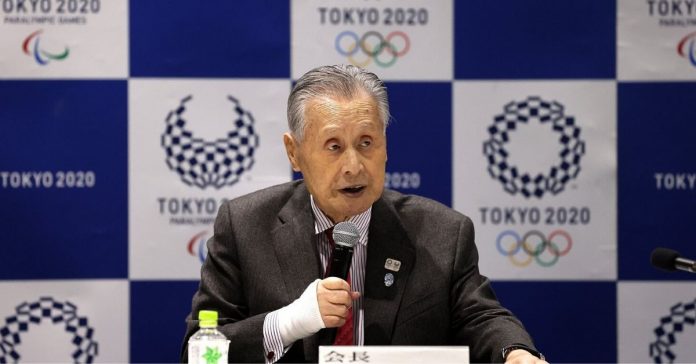
This week, Yoshiro Mori, the former prime minister of Japan and now president of the Tokyo Olympic Committee has suggested that if a vaccine is not ready for the Olympics in 2021, then the event should be cancelled.

Yoshiro Mori (Source: daily Mail)
Argentina, France, Ghana and Holland have cancelled their 2019/2020 Soccer Championships and the UK Premier League is thinking about it. France’s policies also put the postponement of the Tour de France in jeopardy, the UCI meets this week. The Ryder Cup could be postponed to 2021 and played without spectators.
What should Deaf sport do?
Back in March, many organisers of international Deaf sports events were optimistic and postponed events to late summer or later in 2020, but is this possible? The World Deaf Golf Championships of 2020 has been postponed, new dates to be discussed. ICSD wants to carry on and go to Brazil for the Deaflympics in 2021.
Can we honestly expect Brazil to host a Deaflympics in 2021? There is no strategy from ICSD, no funding in place. The Brazilian President has put his people at risk, calling Covi-19 a “measly cold”.
ICSD is in a very weak position internationally with the IOC and IPC. When the ICSD president was placed under house arrest in 2018, all funding taps from the IOC to ICSD were turned off. Even now after two interim presidents have been appointed, the funds are still withdrawn.
Russia has been banned from international sport, yet ICSD have stood by its Executive Director Dimitry Rebrov and continued to allow the Russian to run its affairs despite the fact that he has previously been found guilty of falsifying audiograms. Despite all of this, ICSD carries on as normal with no audited accounts, so IOC continues to withhold funds.
The IOC has asked ICSD to move forward and come up with Deaf Sport Reform, first developed by President Donalda Ammons and then restructured by President Crowley with a unanimous Congress approval to go ahead in 2013. Has ICSD gone to sleep, does it think it is immune from sports politics or is it just afraid of change?
International Deaf sport is on a ventilator, it may not survive.
What should deaf sport do?
On December 9th 2019, the World Anti-Doping Agency Executive Board will meet in Paris to decide whether or not to ban Russia from the global sporting world for four years. The ban not only covers Russian athletes but also events hosted by Russia and any officials who currently sit on governing bodies of sport.

The WADA Intelligence and Investigations department has a 26-page report that accuses RUSADA (Russian Anti-Doping Agency) of removing positive samples from its database as well as deleting and/or altering other files dating back to 2015. The report also alleges that fabricated evidence was planted in the database to discredit Dr Grigory Rodchenkov, the former head of Russia’s anti-doping laboratory who now lives in the USA under a witness protection programme.
If the ban goes ahead on 9th December, the recommendations include:
2. Russian government officials or representatives may not participate or attend and major sports events, including Youth Winter games, Tokyo Olympics and the 2022 FIFA World Cup.
3. Russia to be prevented from hosting any major international sports events during the four year ban
4. With draw events already planned unless it is legally or impractical to do so
5. Russian flag to be banned from all major events
6. No senior officials (President, Secretary General and CEO) of the Russian Olympic Committee or the Russian Paralympic Committee be allowed to attend any major sporting event; and
7. Russian athletes only allowed to participate if they can prove they are not implicated in any way by the non-compliance findings.
All of the above information from
There are voices within the Deaflympic Movement who also want to see ICSD comply with this ban because they are a WADA-compliant organisation. The ICSD CEO, Dimitry Rebrov is Russian.
Russian officials have been speaking out against the WADA recommendations and it is expected that some within ICSD will also argue that Russian athletes and officials have not been involved in doping activities.
One of the reasons WADA is recommending such a ban is because of the fraudulent behaviour of Russian officials towards its own athletes and officials, fabricating evidence to try and discredit people. This blog demonstrated in April 2015 that the Russian Committee of Deaf Sport is also guilty of such behaviour, when the current ICSD CEO Dimitry Rebrov falsified the Audiogram of one of its own wrestlers Eugene Golovanov to get him banned from European competitions – this case went to court in Moscow, who found Rebrov guilty and later his appeal was overruled by the Court of Appeal. He remains guilty of conspiracy to fraud audiograms, the fundamental basis of classifying Deaflympians is their audiograms.

Dimitry Rebrov, found guilty of falsifying Audiograms
If this ban does come into effect on 9th December, it will be three days before the start of the ICSD Winter Deaflympics in Italy where ICSD Congress will be overseen by its Board and Russian CEO. It is unlikely that the Russians will be banned from this Congress or the events themselves because the ban would have come in at very short notice. But what about the next four years?
What will ICSD do next ? What decisions will ICSD members make next month?
Here are some comments from Facebook:
“ICSD really has to stand and be counted for the rest of our Deaf athletes worldwide.” Craig Crowley, ICSD President 2009 – 2013. President UK Deaf Sport.
“Sad for Russian athletes” Greg Ophel, Deaflympian, Volleyball
“It’s all money, money, money….” Graham Banks
“And what about the Chinese?” Mark John Obrien

This week, Craig Crowley MBE, former President of the ICSD and Deaflympics Movement features in a full-length documentary about his life and work.
The programme covers his childhood in the North of England and his parents talk about first steps into football with his hearing peers.
His early career is also featured, including interviews with Morag Rosie of Friends for Young Deaf People and Ken Carter at Reading University where Craig became the UK’s first Deaf President of a Students Union.
Craig is a highly decorated member of British society and his family share their thoughts and experiences about this.
The final part features a conversation with Two-Big ears blogger Stuart Harrison as they discuss Craig’s involvement with Deaf sport, ICSD, the IOC and IPC.
Enjoy watching this programme and dont forget to share your comments with us !

As we get closer towards the Opening Ceremony of the 23rd Deaflympic games in Samsun, Turkey this summer, Deaflympic athletes and their supporters are working hard to raise the profile of this event through Social media (Facebook, Twitter, LinkedIn, Instagram etc) – this is generating the important and necessary exposure that the event needs.
This is important because it is still largely unknown in the sports world and to the general public and therefore many people will be finding out about the Deaflympics for the first time. When they learn that the Deaflympics are the oldest International multi-sports event in the world for disabled people, they want to know why they have not heard the name before.
All types of movements and organisations within society are highly dependent on the political and public profile that the leaders inherit, cultivate or acquire. The founding of the Olympic, Deaflympic and Paralympic movements all originate from the ideals, beliefs, innovations and leadership of three individuals who have been credited as ‘founding fathers’ of their respective events. They were Baron de Coubertin, Eugene Rubens-Alcais and Ludwig Guttmann.
These founding fathers all started their movements from different starting points and once people understand this, they will realise how important the Socio-economic backgrounds and the amount of political influence that these leaders had was critical in raising the profile of their causes.
Socio-economic backgrounds
Before the first Olympic and Paralympics Games were inaugurated, Coubertin and Guttmann had already become very successful, wellconnecetd and highly celebrated in their professional careers.
In contrast, the co-founder of the International Games for the Deaf, Rubens-Alcais, in his lifetime, never progressed to become anything more than a car-mechanic in a Paris suburb. This surely suggests that the legacy of Eugene Rubens-Alcais is remarkable.
Without a comparable high standing in society, Rubens-Alcais was unable to call upon networks or influential political support when most needed. Described as a ‘brilliant’ man of modest habits, he spent the whole of his adult life in a sparsely furnished and simple attic apartment. He gave all his time and everything he had to the cause of his friends and others.
He was eventually recognised decorated several times by his fellow countrymen; Officier d’Académie 1930 (Silver Palms) – awarded in France for contributions to national education and culture, Médaille d’Or de l’Education Physique (1930), a Gold Medal for Physical Education, Chevalier du Mérite Norvegien (1960), Chevalier du Mérite Social and the Commandeur du Mérite Sportif (1962).
For Guttmann, his starting point was very different. When he first established the Stoke Mandeville games, he was able to call upon the support of many influential people. One of his spinal-cord associates was Professor Maglio, who ran an Italian research centre on impairments. They collaborated and worked to ensure their Games followed on from the 1960 Olympics in Rome. Dr Nakamura, a Japanese medical researcher worked with Mr Kasai, Chairman of the Japanese Sports Association for the Disabled who, through him, had close ties to the Japanese government. And Kasai’s further influence secured funding for the 1964 Games from both public and private sector sources. When the Mexican government cited ‘technical difficulties’ as their reason for not hosting the Paralympics in 1968, the Israeli Government was lobbied by the ILAN Society (a group of disability activists); and this resulted in the event being hosted near Tel Aviv.
Political Influences
The political connections accessible to Coubertin and Guttmann placed them in a position of influence that Rubens-Alcais could never hope to achieve.
The Olympics were not an original idea of Coubertin. In the beginning, an Englishman, Dr Brookes attempted to revive the concept of the original Olympic Games but was studiously ignored by the British sports establishment, despite having contacts within the Greek government and with the Greek Olympic philanthropists, the Zappas cousins. Brookes then began to collaborate with Coubertin who used his international society contacts to persuade the King of Greece and its government, along with others, to fund the 1896 Olympics in Athens.
The British government funded Guttmann’s research work so he already had the political backing he required. The idea of using sport as a motivator came to Guttmann when he observed patients playing a game in their wheelchairs utilizing a puck and an up-turned walking stick. The Disabled Persons (Employment) Act was passed by the British government in 1944 and members of Parliament who were war-veterans themselves ‘insisted that the act give preference to those injured as a result of war service’. This, however, focused on those who had become disabled by the trauma of war and did nothing to help the congenitally disabled that had not been injured in the line of duty.
It is necessary to digress here, whilst on the subject of political influence, and introduce a fourth pioneer – Eunice Kennedy Shriver, founder of the Special Olympics. Her first “Shriver Camp” was set up in 1962 and was an indelible part of the philanthropic Joseph P. Kennedy Jr. Foundation and the political drive of President John Kennedy towards the needs of children and the field of intellectual disability. The Kennedy legacy still remains a large attribute of the Special Olympics today.
Eugene Rubens-Alcais, who was born with normal hearing but became deaf at an early age due to fever, already had odds stocked against him when, in the 1920s, he began his far-reaching friendship with Antoine Dresse. Antoine came from a family of Belgian bankers and industrialists in Liege. These two men formed a unique alliance of interests as they began to build a federation of pan European Deaf sports organizations. They had small networks to draw upon and neither had the credibility of a highly respected international social/professional position. But, nevertheless, what they had was an opportunity to empower disabled people in a society that largely ostracised them.
Eugene Rubens-Alcais resigned as the President of the Comité International des Sports Silencieux (CISS) in 1953 and was succeeded by four other leaders who had to compete with Guttmann’s political standing until Robert Steadward in turn succeeded him. Rubens-Alcais’ successors were also people of modest socio-economic standing (See table below)
| Table: CISS Presidents during the time Guttmann led the International Stoke Mandeville Games Federation (ISMGF) | |
| Rubens Alcais FRA (1924-1953) | Car mechanic |
| Oscar Ryden SWE (1953-1955) | Joiner, woodcarver, Sculptor, editor and lecturer. |
| J.P Neilsen DEN (1955-1961) | Carpenter |
| Pierre Bernhard FRA (1961-1971) | Carpenter, wood sculptor, coffin maker and WW2 resistance fighter. |
| Jerald Jordan USA (1971-1995) | Printer, teacher, administrator at Gallaudet University for the Deaf. |
| Further details and biographies can be found in CISS 2001: A Review. | |
To read more about this subject and understand how the disempowerment of disabled people and the professional background of Deaflympic leaders may also have been a strong factor in the low-profile of the Deaflympics, you can order your own copy of Same Spirit Different Team here.
The above article is an edited extract from the book itself.
With just 71 days to go to the Opening Ceremony, President of the ICSD Dr Rukhledev has praised the Organising Committee of this year’s Summer Deaflympics in Samsun, Turkey.

This is very good news indeed, it is important that standards are continually met in order to meet the high demands and expectations of each generation that comes into sport.
I share Rukhledev’s sentiments and praise for the high quality of the 2005 Deaflympics as I was with the GB team in Melbourne when the organisers teamed up with the Commonwealth Games committee and worked together to use the Deaflympics as a testing event for many of the venues. Taipei were up next in 2009 as they wanted to show the world and the IOC that they too are capable of hosting World Class events and should be considered as a contender to host the Olympics. Again, I can also vouch from personal experience from being there with my family that the organisers did not disappoint us; up until now athletes, officials and administrators in the Deaflympic movement have often wondered if it was possible to improve on the spectacle delivered by the City of Taipei.
By all accounts, it would appear that athletes, officials and supporters heading for Samsun this summer are going to rewarded with the best ever Deaflympics to date. To back up ICSD’s claims, the Chef de Mission of the DeaflympicsGB was very impressed with how things were progressing when he went out for an early inspection visit in February, so things have clearly moved up a notch in the three months since then.
Athletes and coaches preparing for this year’s event should be highly motivated by this good news as things have been very difficult economically, especially when many governments still refuse to treat Deaflympians with the same accord as they do for Paralympians. Whilst DeaflympicsGB have maximised the use of social media, personal contacts and sacrificed training time for fund-raising activities to reach their funding targets recently, other Commonwealth nations like Australia are still looking for funds. The President of the IAAF, Sebastian Coe once said that if you put the athletes at the centre of all your planning and preparations, then they will be able to perform at their lifetime best.
With favourable inspection reports coming in, it would appear that the hosts are going to deliver as Lord Coe suggests. For example, this will be the very first time that there will be an Athletes Village for the Deaflympics where everyone will experience the ‘melting pot’ of cultures and nationalities all sharing the same accommodation to be hosted by the University of Samsun. But this will also bring a new set challenges for the 80 or so, national Chef de Missions and their backroom staff who, up until now have been used to managing the daily logistics of preparation and recovery of their athletes from the sanctuary and isolation of privately booked hotels and other forms of accommodation, with minimal interaction and interference from other teams.
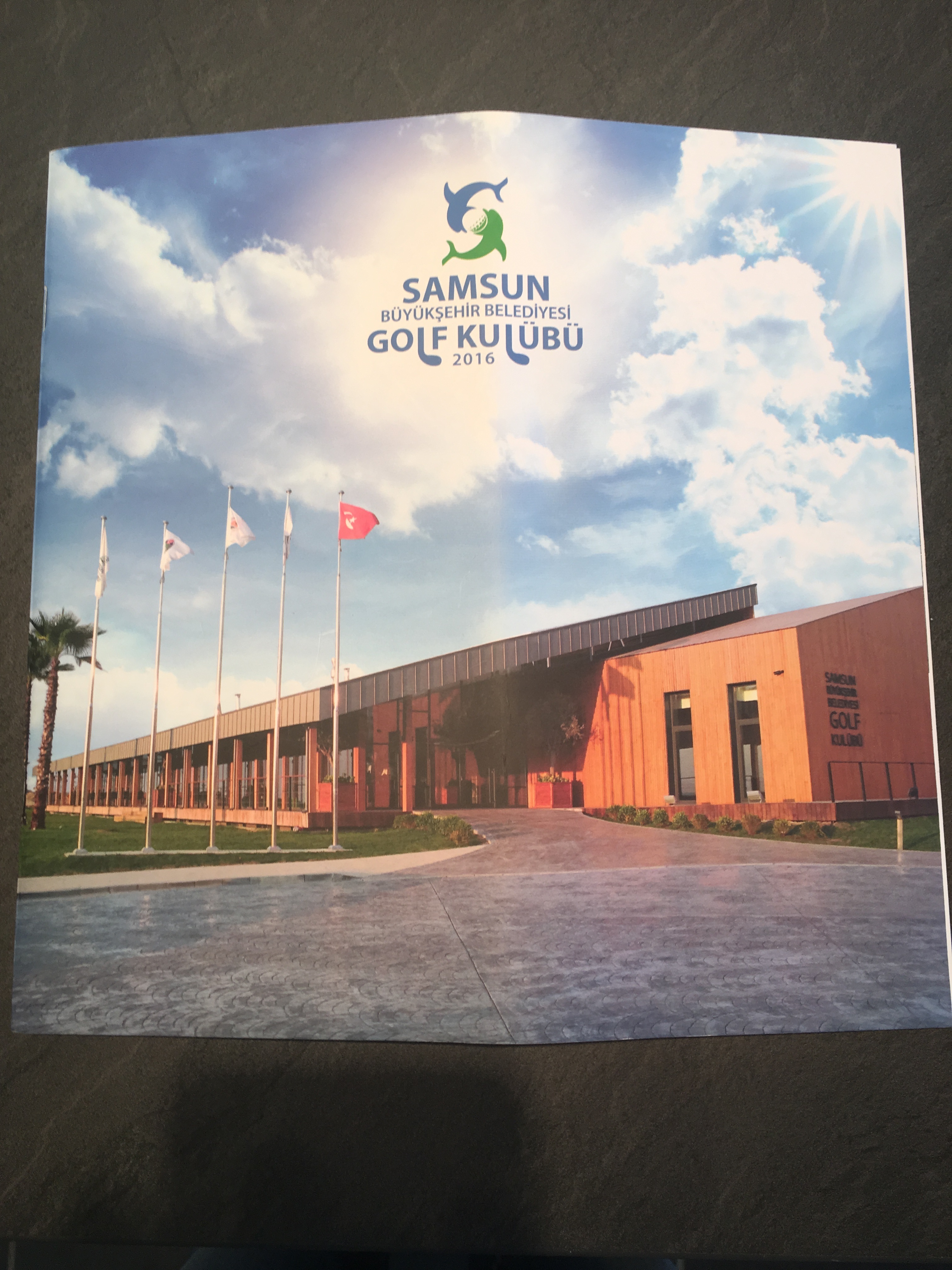
This year I will be joining DeaflympicsGB as Manager for the golfers where our sport will be medalling for the first time since the games began in 1924. Our hosts will be Samsun Golf Club whose brochure and promotional materials backed up by our CdM’s inspection report reassure us that only the very best will be good enough for our competitors.

For more information about the Deaflympics 2017
The programme, which aired on 7th September 2016 celebrated the opening of the 2016 Paralympics in Rio by asking questions about Deaf people and the Paralympics. Unfortunately, this programme is only available to be viewed on the BBC iplayer for a limited time, so I am going to explain, for posterity, how the See Hear programme challenged the ICSD.

Picture: Craig Crowley, President UK Deaf Sport
Craig Crowley, President of UK Deaf Sport and former president of the ICSD and myself, made it very clear to viewers that the ICSD must open up a working dialogue with the International Paralympic Committee (IPC) to look forward into the future and investigate the possibilities of Deaf sports appearing in future Paralympic Games.

Picture: Claire Stancliffe, Captain, GB Womens Deaf Football.
Claire Stancliffe, captain of the GB Women’s Football team repeated the refrain that the lack of recognition from the UK government for the Deaflympics means that Deaf athletes have to spend time and energy on fundraising and this is taking their focus away from training and preparing properly for competitions.
Craig Crowley said it was “regrettable” that the ICSD President will not speak to the IPC because the ICSD cannot continue alone in trying to support and run the Deaflympic games. He compared this to the Paralympics, which would not be able to continue as it is without the support of the IOC and its monopoly on sport. Crowley said, that until there is a relationship between the Deaflympics and the Paralympics, Deaf sport and its athletes will continue to be disadvantaged.
We have all seen how important it is for the IPC to have the support of the IOC when the 2016 Paralympics were threatened in Rio due to financial difficulties, it has been the IOC monopoly that put pressure on the hosts to salvage what they could of the 2016 Paralympics and allowed the majority of countries to take part. Please be under no illusion, the Deaflympic games faces increasing financial pressures every year, and it will not get better. Each games will become riskier and more challenging to organise.

Picture: Dr Valery Rukhledev (on the left for those who don’t know), President ICSD
See Hear asked ICSD President Dr Valery Rukhledev if he could see a future where the deaf were in the Paralympics. His answer was evasive – he said that he respected those who wanted to merge with the Paralympics and he respected those who preferred to compete separately.
See Hear challenged Dr Rukhledev to explain why he did not agree with delegates at a recent IOC meeting who were open to the idea of the Deaf competing in the Paralympics. Once again he was non-committal, he stated the very obvious that at the moment it would be impossible to achieve this because there needs to be a discussion and dialogue.
Rukhledev was then challenged to explain why there was nothing in the recent MOU between the ICSD and IOC to develop a relationship and dialogue with the IPC. His answer has infuriated viewers and highlighted how he is not prepared to take the responsibility. he claims that there is “no communication at all, the IPC has not shown any support to the Deaf.” he explained that “They (IPC) kept quiet, making it difficult for me.” Rukhledev needs to show more courage.
Although he said that he was prepared to sit down and talk with the president of the IPC, Rukhledev’s next comments demonstrated his arrogance and illusions of grandeur because he believes that it is not his job to ask for the meeting, it was up to the IPC to approach him instead.
When asked why he was not going to make the first move, Rukhledev, showed how much of a political dinosaur he was, he appeared narrow-minded and unimaginative in his approach for the future of Deaf sport around the world. He wants to see the IPC proposal first then discuss it and ICSD Congress and only after that would he be willing to meet with the IPC President!
See Hear ramped up the challenge, asking him why he was not prepared to make the first move to ‘grasp the opportunity’ to work with the IPC and get deaf sport into the Paralympic games so that deaf athletes would benefit from increased media coverage and global visibility.
Rukhledev claimed that the MAJORITY of Deaf people still agreed with the original CISS position held in the 1980s and want to see 20 deaf sports in the Paralympic programme. He said if this was to happen then he would agree to the deaf competing in the Paralympics. I replied to this on the programme by explaining that the world has changed in the last 20-30 years and we must go into discussions with the IPC with an open mind. This way, the discussions will be about exploring opportunities of mutual benefit and not dragging up the old days and starting trying to barter their way in.
In “Same Spirit Different Team” I described how Craig Crowley as ICSD President was proactive in meeting with the IOC and the IPC in equal measure. His discussions were about the development of the MOU, designed to protect the name of the Deaflympics under the rights of the Olympic partners, to open doors for marketing media and sponsorship. But this will not come about though the current MOU unless there is a relationship with the IPC. The IOC cannot afford to fund the Paralympics and the Deaflympics separately at different venues and in separate years. There is opportunity to make greater use of the Olympic facilities in tandem.
Deaf athletes like Claire Stancliffe would like to see the Deaflympics and the Paralympics merge so that it gives Deaf athletes equality and more opportunities to be able to train more.
At the end of the programme, a statement form the IPC suggested that the door may be open, ajar, for the ICSD to become a member of the IPC otherwise the current situation ‘forfeits’ the deaf from competing in the Paralympics.
Personally, I don’t think we should be be trying to combine the Deaflympics and Paralympics into one convoluted event, there is already too much pressure on the IPC as it is with complicated classifications and different disability types competing for a place on the starting line. The IPC are continually cutting back on sports and events, trying to be as economical and profitable as possible. So it is about time that the ICSD appointed a president who was a real visionary, who has a proper imagination to explore realistic possibilities because Deaf sport cannot survive by relying on the same old things. I am not sure a Russian would listen to a President of the United States who one said once said:
I plead with the ICSD Executive to stop playing Russian Roulette with Deaf sport, climb down from the high-horse, moral ground, get realistic and take on some realism because you need to go and knock on the door of the IPC before it is too late. Do not wait until you are thirsty before digging a well.
I would like to ask our readers around the world, is the ICSD correct to challenge for 20 deaf sports in the Paralympics or should it be more sensible in its strategy ? Please let us know what you think.