10 Reasons why Russia won the game.

Last Tuesday, ice hockey officials awarded a highly controversial last-second goal to Russia, which has most likely denied the Americans the opportunity to compete in the Deaflympic gold medal match today.

Rules of sport are always complicated and fraught with difficulty. But it s also the responsibility of competition organisers to ensure that the selection of tournament officials is done correctly in order to avoid any doubt when it comes to the interpretation of rules.

The controversial goal has been analysed from different angles by television and amateur video footage. The Americans submitted the initial protest within the 30-minute window. When the result came back still in favour of the goal, the Americans lodged an appeal – this too was overruled despite overwhelming evidence in favour of America.

You can see the video evidence for yourself here. Thanks to “Juciermk”

Two days ago, Two Big Ears consulted with their own contacts in Ice Hockey, who are independent from Deaf sport. Their conclusion is that the referee’s decision is final.

Now, normally, we would move on and chalk it all down to experience. But not on this occasion, because the Americans are now waking up and coming to terms with what it is really like to get into bed with the Russians. The official USA Winter Deaflympic news service believes “This event will most certainly result in continued discussions, and hopefully changes so that other teams so not suffer similar injustices in future events.”

Based on the evidence presented to us, the conclusion is that, as long as Russia is in charge of the Deaflympics, the ICSD will allow mismanagement to continue. Host nations will continue to select tournament officials that swing decision-making in their favour. The Russians are not stupid, but they are arrogant, and corrupt deep within their national psyche. Here are the ten reasons why Russia beat America 6-5 on Tuesday evening.

1. HOST NATION-BIAS

The Russian government has invested heavily into Deaf sport and the Deaflympics. On the one hand this is to be applauded, and puts other nations such as the USA and the UK to shame. However, they are a nation whose politics, economy and sport is so heavily entrenched in corruption that they should not have been allowed to host in the first place. The Russian Deaf Sport Federation (RDSF) did not pay the required $25,000 registration fee when originally applying to host the games, this action contributing to the fiscal mess that the ICSD now find themselves in. Approval was only given once RDSF’s own people had taken over the asylum.

2. THE ICSD ARE NOT IN CHARGE.

First of all, evidence strongly demonstrates that the ICSD have lost control of the 13th Winter Deaflympics and the Russians are taking every advantage possible to ensure they win. Whilst Two Big Ears applauds Russia for working in partnership with non-deaf people to host the games, they are seen by others to have taken advantage of the controversial last-second goal to ensure that a team of veteran ice hockey professionals are not defeated by a young and upcoming team of American youngsters.

Secondly, sportsMX TV reported that ICSD President Rukhledev was brought in to mediate between the Russians and the Americans over the goal controversy. By participating in this way, Rukhledev and demonstrated yet again his incompetency to lead the Deaflympic movement;

a) He is the President and therefore cannot be involved with any disputes – but he chose to ignore this and carry on anyway.

b) He is Russian, so how was he going to make himself impartial to any decision-making? Why did he not instruct his neutral Vice President to attend the meeting instead?

c) It was the responsibility of the ICSD TD to resolve the dispute, not the President.

3. THE PROTEST COMMITTEE IS BIASED

The ICSD regulations allow the host (The Organising Committee) to choose who takes control of each sport. In this case, the Russians have appointed three of their own countrymen headed by well-known skating coach. Given reason 1 and 2, it is not surprising that the last-second goal could have been voted 3-1 against. The American protest and subsequent appeal has so far failed to extract “… a clear explanation as to why the goal was counted…” (official US Deaflympic media)

4. RUSSIANS DON’T DO COMPROMISE

According to the USA Deaflympic news reports, there have now been several days since the controversial result was made for officials to have made a correction. Either to have the two teas plan an overtime period, or just agree to a 5-5 tie. Sorry guys, that isn’t going to happen. This is the Russians you are dealing with.

5. RUSSIANS DO CORRUPTION AND CHEATING – IT IS BUSINESS AS USUAL

The Russian Deaf Sports Federation has been found guilty by a court of Law of falsifying an athlete’s audiogram to discredit him. The ICSD Congress has voted to ignore this and carry on. This is normal behaviour from Russians when it comes to participating internationally in sport and foreign policy, as the next two reasons will show:

6. DOPING IN SPORT IS A RUSSIAN NORM

The IAAF is struggling to find real evidence of doping amongst the ranks of Russian athletics. Good luck, it does not have the resources against the Russian system. The same goes for the ICSD, and the audiogram ‘doping’. And;

7. RUSSIAN TACTIC: DENIAL, DENIAL, DENIAL

When Russia invaded the Ukraine, they denied accusations that they had sent in their own troops to take control. When they had control of the Crimea, they clarified that “volunteers” had crossed the border. When faced with the clear evidence of audiogram fraud, they have remained silent and taken advantage of ICSD amateurism and distrust amongst nations to shield themselves from having to come clean.

8. IF THE RUSSIAN’S DON’T LIKE YOU…

One day you will be minding your own business, crossing a bridge and you will get shot from behind.

9. RUSSIANS BLAME OTHER PEOPLE:

  • The invasion of the Ukraine was not their fault
  • Shooting political activists is not their fault
  • Campaigning to overrule the early cancelation of the 2011 Winter Deaflympics, and then blaming others when it all fell apart is not their fault.
  • Concerns about audiogram cheating is just ‘sour grapes’

10. RUSSIANS TAKE CREDIT WHERE IT IS NOT DUE:

  • Contemporary recognition from IOC is not down to Rukhledev, it is thanks to Crowley’s diplomacy (2009-2013)
  • The concept of the International Deaflympic Committee is not Rukhledev’s idea. It was created during Ammons’ residency (pre 2009).
  • Russians have not contributed any beneficial actions to safeguard ICSD or the Deaflympics.

The world should not be surprised then, that the Russians have never been given the opportunity to lead, in any shape or form, a multinational sport federation, commercial entity or geopolitical organisation that includes Western nations. The ICSD Presidency has been a gift to the Russians to practice their imperialism and anti-IOC agenda.

A pity then that Russia has not taken the greatest opportunity to demonstrate good practice by ensuring that the Protest Committee of the ICSD Deaflympic Ice Hockey tournament was multi-national. Something that was well within their means to achieve to ensure that Olympic-level sports governance is transparent. Instead, they have chosen to play the game their way and have done the Deaflympic movement a further disservice by creating further controversy.


Deaflympic Congress votes to ignore fraudulent behaviour of the Russians.

Last week, at the 45th Congress of the International Committee of Sport for the Deaf, a proposal to discuss concerns about the Russia Committee of Deaf Sport (RCDS) being found guilty (by a Russian Court of Law) of submitting fraudulent audiograms was turned down and effectively ignored.

When put to a vote, 33 delegates were in favour of action, 5 against and 12 abstained. The motion needed 41 votes to gain a majority of 75% to proceed in accordance with the ICSD Constitution.

Staff employed by the RCDS falsified audiograms in 2011 to discredit an athlete. They were found guilty in a Russian Court of Law and another Court also overturned their subsequent appeal in 2014. Dimitry Rebrov, the current Chief Executive Officer of the ICSD, submitted the audiogram and Valery Rukhledev, now President of ICSD, was President of RCDS at the time.

The act of RCDS officials submitting fraudulent audiograms is on a par with Olympic officials submitting fraudulent doping specimens or test results or Paralympic officers submitting fraudulent disability classification assessments.

This raises the question; Do the 12 national representatives at the ICSD Congress who abstained actually understand the implications of the case? Was something amiss in translation? Did the proposers allocate sufficient time to ensure that everyone had read or understood their concerns?

When random testing in carried out at the Deaflympics, athletes whose hearing loss does not meet the audiogram standards are dismissed from competitions immediately. Job done.

But when a national federation is found guilty by a Court of Law of deliberately submitting a false audiogram to discredit an athlete – nothing is done.

Something is not right.

Deaf Sports takes another backward step into obscurity.

Kang Chen, the Vice President – World Sports, International Committee of the Deaf (ICSD), has appointed former president and vice president Donalda Ammons and Josef Willmerdinger to join him onto the three-person Deaflympics Evaluation and Coordination Commission. Both Ammons and Willmerdinger were responsible for heading up the catastrophic selection of host countries for the 2011 Winter and 2013 Summer Deaflympics and yet, Kang believes that they are his best choice of counsel to safeguard future games.

The major task of the commission is to monitor the progress of the Deaflympics Organising Committee (DOC) and assist the DOC in the delivery of future games. Their first task will be the scrutiny of the 2017 DOC host Turkey with site inspections and inspections of forward plans and preparations.

Such an appointment demonstrates once again the inability of the ICSD Executive to make rational decisions based on previous experience. They have approved the full time appointment of their CEO Rebrov from Russia who has been found complicit in the falsifying of athletes audiograms in order to discredit an athlete and now Chen has appointed Ammons and Willmerdinger whose decisions to choose the one-man operation in Slovakia that swindled millions of dollars in the Winter Deaflympics that never was and both were also in charge when ICSD simultaneously, allowed Greece a nation with insurmountable debt to go ahead and host the 2013 Summer Deaflympics.

Chen and Rebrov should be asked why they did not appoint former president Craig Crowley onto their Evaluation and Cooordination Commission. He would be a good candidate as he demonstrated that he was capable of identifying the major flaws in Slovakia and Greece as soon as he was appointed. If the ICSD Executive is looking for someone with backbone and an eye for detail, then Crowley would have been seen as a good choice.

The present incumbents were amongst those who were highly critical of Crowley’s decision to stop the Slovakian Winter games in May 2010 when his due diligence and site visits discovered major flaws – the current president of the ICSD, Ruhkledev was instrumental in the defiance of Crowley and persuading the ICSD to overule him in December 2010 and reinstate the Slovakian games which, in the end, had to be cancelled when Crowley’s concerns were proven right. It is not surprising then, that ICSD has reverted to type, pre- Crowley.

Is this the beginning of the end of the Deaflympics ?

Critical Review of Thomas Giddens’ documentary: “Does Deaf Football have a Future?”

I have been eagerly anticipating the release of a new documentary “Does Deaf Football Have a Future?” because it is the first time in a while that a programme about Deaf sport was being made in the UK where I had no involvement or insight. I wanted to compare this documentary with my analysis and perspective of the way in which media promotes the Deaflympic Movement and Deaf sport.


The documentary has been made at BSL Zone who support the next generation of d/Deaf filmmakers through their Zoom 2014 scheme aimed at d/Deaf scriptwriters and directors who have some experience but have never had their work broadcast on television. This is Thomas Giddens first ever attempt at documentary filmmaking where he explores ideas about the future of Deaf football. The film is now available online.


There are an infinite number of ways to analyse a subject and in Same Spirit Different Team I highlight the important of how the media representation of sport shapes and informs public attitudes to disability sport. Journalists have the power to inform or not to inform and they construct reality from their particular perspectives. I was looking forward to finding out how far Giddens would take his responsibility of wielding power to inform us about the future of Deaf football.


Without giving too much away; I recommend that you watch this enjoyable and well-made documentary as I think it gives people a broad perspective of Giddens potential as a documentary maker. This debuting director was limited to 15 minutes of airtime and I think he did well to;

  • Use old newsreels and contemporary footage, to give us an historical perspective from the experience of the current GB manager Philip Gardiner.
  • Advocate the current politics and philosophies about deaf football
  • Briefly explore the importance of role models and inclusive football
  • Give us all a hint into what the senior management at GB Deaf Football believes needs to be done in the future


Exposure to mass media plays a significant role in reinforcing existing norms and attitudes that might serve to change public attitudes. Family and peer opinions can be strong, but these too are mass media influenced. Journalists have the power to inform or not inform and they construct reality form their particular perspectives.


I hope this experience has inspired Giddens to continue making sports documentaries because the more coverage we have of the Deaflympics and Deaf sport, the more information we have to share with the public and society to increase exposure and encourage debate and discussion.


Whatever coverage is realised, it does influence attitudes towards the Deaflympics brand; and so it is important that national federations like UK Deaf Sport and their IOC representative the International Committee of Sport for the deaf (ICSD) interacts with the media as much as it possibly can; to present a positive and attractive brand to future athletes, target audiences, corporate supporters and others who are essential to the sustainability of Deaf sport.


The Zoom film scheme is designed to support the next generation of d/Deaf filmmakers. Included five days training, mentorship, script development, production and communication support. Find out more by logging into the BSL Zone.

ICSD Audiogram Cheating is a Disgrace

Deaf sports men and women and their public supporters have been contacting Two Big Ears to demonstrate their anger and concern at the news that International Committee of Sport for the Deaf (ICSD) employs staff who have been found guilty of falsifying audiograms. They have responded to the declaration from Deaflympic cyclist Tom Smith who has led the call for the Executive Board of ICSD to investigate and make changes to the ICSD leadership otherwise he will be boycotting the 2017 Summer Deaflympics.

Thousands of people around the globe have been following the story since it broke on the 23rd December here on Two Big Ears. Amongst these readers is Deaflympic swimmer Emily Noden who believes that the situation is “a disgrace because it strips deaf athletes of their reputations as honest sportsmen and women.” She has come out in support of the need for Deaf sport to come under the control of the International Paralympic Committee (IPC) in order that doping and audiogram regulations can be controlled at events like the European Deaf Swimming Championships where she competed recently “ the fact that there was no doping control meant I was at an unfair advantage knowing anyone there could have taken performance enhancing drugs and got away with it, making the sport potentially dishonest.”

A former Deaflympic swimmer, who remains anonymous suggests that it would be difficult to integrate deaf events into the Paralympics but does agree that the ICSD should be working closer in parallel with the IPC “to get back to better managed again.” With doping and audiogram control under independent bodies to oversee this work. The swimmer went on to say “It’s unfortunate that the ICSD Delegate voters went for Russian to be president of ICSD in 2013 who has now caused controversies to date. We in deaf sport will need to learn from mistakes and choose a proper and right people to sit on ICSD and a new president to manage, led and change where Craig Crowley have left off as he had done so much of the rebuilding work…” and that the ‘ill-advised’ delegates who voted not to re-elect Crowley in 2013 are “banging their head on the wall with their mistake.”

Verity Joyce who competed in the Deaf World Games (Deaflympics) in 1993 aged 12 can “certainly see advantages for being part of the para movement – funding being a big one, along with status and integrity.” Able to speak from previous experience of being part of a former Paralympic swimming set up “communication is key and no other athlete was isolated to the same level as I was in terms of information and inclusion. If we are to become a part of the para movement, it will be a huge culture shock to them, the media and so on. Also we need to fight for communication inclusion on a whole new level, which in some ways will be a shame as it will detract from the sport.”

In reply to Joyce, Emily Nolan said “The IPC, with their millions of pounds of funding they have received in recent years would certainly not have any problems in funding interpreters”.

Members of the Deaf community, like David Jackson (married to the Deaf Culture and Sign Language advocate Eva Feilding-Jackson) who supports and enjoys watching Deaf sport are coming round to the idea of deaf people competing in the Paralympics and argues that Deaf sport should accept the fact that logistics and IOC regulations will mean that deaf athletes will be subject to the limitation of athlete numbers as it is for all disability classifications because “It is the Deaf Awareness aspect that will definitely arise from seeing Deaf athletes on TV and in newspapers. That can certainly be a good thing for us. We need to force the ICSD do accede to this- it seems to me that some of the ICSD members are from countries where there is a clout to stop us being part of the Para’s movement. If that is the case, it is a very negative attitude that we will suffer for years to come.”

The ICSD (International Committee of Sport for the Deaf) have not commented publicly on the issue of audiogram cheating but reliable sources have informed us at Two Big Ears that the Executive has “taken notice” of the story being released.

3,000 viewers in 59 countries are paying attention to this story and expect to hear some answers from ICSD.

The Russian-led ICSD who control regulations for the Summer and Winter Deaflympics and oversee regional federations around the globe will be holding their next (45th) Congress at the end of March during the 15th Winter Deaflympics taking place in the winter sports city of Khanty-Mansiysk – in one of the most isolated and little known regions of Russia. Congress information packages have ben sent out to national delegates and ICSD president Rukhledev said ‘The more of you are able to come, then the more we are able to discuss the many pending items on the agenda that requires approval.”

Guy Finney of the UK deaf athletics team wants the 45th Congress delegates to challenge ICSD on taking remedial action over false audiograms – Two Big Ears wants to know who will be brave enough to make the long trek to Khanty-Mansiysk to stand up and challenge the Russian Bear?


For an in depth study of the Deaflympics you can order a copy of the latest book

Same_Spirit_Diff_52d405a637836

Cyclist will boycott next Summer Deaflympics if ICSD do not change their ways.

Professional cyclist and Deaflympic silver and bronze medal winner, Tom Smith from Wales has responded to the latest news on the falsification of audiograms.

IMG_1860

“Your recent article on the falsification of audiograms by the Russian leadership of Deaf sport has touched me in a negative way. I am really disappointed about what I have read.

I have never been comfortable about the outcome of the election at the ICSD Congress in Sofia 2013, where America and Great Britain promoted clear mandates and manifestos in their election campaigns. The Russians provided neither a manifesto nor even a general plan on what they were going to achieve.

Since then, the ICSD President; without reason, has sacked its entire staff, the majority of whom was British and brought in an abundance of Russian personnel.

After this I learned that at the European Swimming Championships (held in Russia), all doping controls were held on the final day after a week’s worth of competition, and not all events were tested. This alone makes a mockery of sporting values, and towards WADA.

The Russian ICSD have made no improvements to deaf sport, no improvements to doping control, no improvements to athletes futures and refuse to answer simple emails from nations about upcoming events. More worrying is that the ICSD President has told the IOC and IPC that he does not need their assistance to develop deaf sport; this misplaced defiance is both arrogant and irresponsible.

And then we learn about a senior member of staff, put there by the ICSD President himself; submitting a false Audiogram under an athletes name, putting them in danger of disqualification. Fortunately for that athlete the situation was rectified but let me ask you this- what right do Russia have to the in charge of the ICSD?

I want to say to my fellow Deaflympians; do you honestly believe that the ICSD leadership has your best interest at heart? They have so far ignored the Athletes Commission chaired by Dean Barton-Smith and Terence Parkin. They have already been found guilty of manipulating audiograms. They have lied, they have cheated, and they have alienated the IOC and IPC along the way. Deaf Sport currently has no future.

Are you really going to sit back and allow this to carry on? We should be in the Paralympics where our best interests will be safeguarded, and also to enhance deaf awareness. There have been talks of a petition for the Deaflympic athletes who really want this change. If you want this change, email Two Big Ears and let them know.
As an athlete who has morals and ethics, I can say that I will 100% not be going any further Deaflympics with these criminals in charge.”

Golovanov Receives Compensation

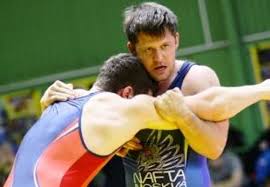
Our Christmas Day inbox included a message from Russian Deaflympic wrestler Eugene Golovanov thanking us for highlighting the issues over the RSDC submitting a falsified audiogram in his name.

images

We can confirm by his message that we received this morning, that the sum of 100,000 rubbles was deposited into his bank account on 19th December, this was unknown to us as we promoted the story on 21st December – so we are pleased to see that Eugene has been compensated for moral damages.

IMG_0802

It is not known to either Eugene or ourselves, if this deposit was made in the knowledge that we were going to go public with the story or if it was a happy coincidence.

P1010317

Golovanov said “I hope that after this publication, I would not (be) interfere with participation in the Championship of Russia on March 23-25, 2015.”

ICSD Executive Officials Guilty of Falsifying Audiograms

How many Deaf athletes are guilty of falsifying their audiograms?

The BBC recently stated that a German TV documentary claims that 99% of Russian athletes are guilty of doping. You can find a link to this report at the end of this post.

The TV documentary is another investigation about Russian officials systematically accepting payments from athletes to supply banned substances and cover up tests. Not surprisingly, the Russian Athletic Federation (RAF) says the allegations are ‘lies’. The IAAF and WADA say they are investigating; hopefully they will be thorough.

Now, we mention this because in Deaf sport, it is the audiograms which are sacrosanct – falsifying an audiogram is as serious as it gets, just as ‘doping’ gives athletes an advantage, submitting a false audiogram to pretend that you are Deaf enough to compete in Deaf sport and the Deaflympics is cheating.

Does Audiogram cheating occur in Deaf sport? At the Deaflympics there are WADA anti-doping tests and random Audiogram testing to catch out the cheats. This happens at every Deaflympics, and it is a good thing, because it shows that the ICSD are vigilant about audiograms and the Deaflympic Movement values the inviolability of the Olympic Code as we compete under the banner of the ICSD and IOC.

More often than not in doping and audiogram checks, it is athletes who are caught out and banned, but occasionally coaches and officials are too. But what about a member of a National Olympic Committee or indeed a high –level member of staff at the IOC, what would happen if they cheated by falsifying information, would they be given a ban? Yes, indeed, we expect they would, just as IOC members are stripped of their membership for accepting bribes etc.

Unfortunately, most unfortunately, this type of cheating and cover up is occurring right now at the highest levels of the ICSD. I have read information that the Russian Deaf Sports Confederation (RDSC) was found guilty of falsifying audiograms. I have seen legal Moscow Court documents, supplied by a Russian Deaflympic wrestler Eugene Golovanov, showing that the RDSC have been ordered to pay compensation to him as the court ruled that the RDSC falsified his audiogram in order to discredit him. As well as making compensation payments, the RDSC were also ordered by the court to issue a public statement vindicating the wrestler. The falsification of the audiogram took place in 2011.

RDSC immediately appealed against the decision, which they eventually lost in early 2014. According to my correspondence with Mr Golovanov he has still not received the compensation and he continues to meet resistance form the RDSC to allow him to compete.

Dmitry Rebrov is the man who submitted the false audiogram in 2011 and “strongly urged” ICSD administrators to check the details. After the RDSC had been taken to court, they continued to keep Mr Rebrov in office as they defied the court order and lodged their appeal.

images

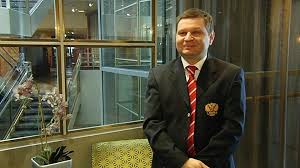
Photo: Dimitry Rebrov, who submitted a falsified audiogram to the ICSD in 2011.

 Following his appointment as President of ICSD in 2013, Mr Rukhledev personally appointed Rebrov as interim CEO of ICSD and then recently, he was awarded the job permanently and presumably, with the approval of the ICSD Executive. Today, the Deaflympic Movement is lead by its Chief Executive who has been caught behaving in the most malicious way imaginable. This situation of leadership and management is untenable, as Rebrov and the RDSC have still not compensated Eugene Golovanov and shielded this scandal from public knowledge until now.

The problem highlighted by this case, is that National Federations who are trying to win medals are also responsible for the audiograms of their athletes. This is a clear conflict of interest and vulnerable to abuse as we have seen with the RDSC.

ICSD should consider setting up an anti-doping AND audiogram commission to ensure checks are taking place independently and impartial in respective member countries – with what we know already about the Russians, there is doubt that they would push for this to happen.

BBC Report “Russian Doping claims: 99% of athletes guilty, German TV alleges.”  http://www.bbc.co.uk/sport/0/athletics/30324812

Why researching Deaf sport is necessary.

The other day I was intrigued to learn via the BBC that Dr Michael Kearney from the University of Melbourne has discovered why Koala bears hug trees.

They do this to regulate their body temperature and thermal imaging cameras have demonstrated that in hotter weather the Koalas moved to the lower, cooler parts of trees – and the closer they hug trees, the cooler they get. fascinating stuff.

Now, what on earth does this have to do with Deaf sport?

Photo by : Stephen K Johnson

Photo by : Stephen K Johnson

Up until this morning, everytime I have seen pictures of Koalas, they are seen climbing trees, because that’s what they do, it’s their habitat. For most people, it’s nothing remarkable to note.

But from now on, until my dying day, my perspective on these animals will be altered. Everytime I see a Koala hugging his tree I will understand. I will have greater empathy for them and will also perhaps be more concerned about deforestation and its impact on other tree dwellers etc

My perspective has changed because of some interesting research.

Deaf sport and the Deaflympics require in depth research in order for society to accept that for too long now it has misunderstood deafness in relation to sport.

Photo by: Sam Perkins

Photo by: Sam Perkins

When you see pictures of Deaflympic athletes in action – nothing is remarkable, nothing grabs your attention. But once research demonstrates the impact of deafness on sports performance, there will be greater empathy and a willingness to act and ensure that sport no longer excludes deaf people and keeps them on the margins.

Same_Spirit_Diff_52d405a637836

You can read more about how deafness affects sports performance in my new book, Same Spirit Different Team – educating one new reader at a time.

Share your thoughts and experience :


← Back

Thank you for your response. ✨


Are the Deaflympics really necessary ?

A common question I often get asked : “Are the Deaflympics really necessary?”

The straight answer is “Absolutely.”  However, people seek justification for that assertion – they want to understand it in ways that they can relate to.

Recently, I came across a short video of Helen Willis and her life as a student at university. Helen wears a cochlear implant and the video explains the pros and cons of day to day living. Before you read the rest of this post, you need to watch the film, (there are subtitles and there is some sign language) It is only about 9 minutes long so please bear with me and come  back to this page once you have finished watching here.

Welcome back. Now, I suspect that some of you will have already decided how some scenes in that video give clear reasons why the Deaflympics are really necessary for the benefit of Deaf people. However, if you are still unsure, allow me to elaborate.

The IOC, in its wisdom, believe that the Deaflympics segregate Deaf people from society. On the contrary, the Deaflympics are necessary to provide opportunities to a balanced world of “silence and synthetic sound”. Although there have been advances in Cochlear Implant technology that now overcomes some of the limits in Helens implant, there is still a need for assistive technology and other resources to enable a Deaf person to function independently. Implants are not a cure and flashing doorbells, electronic note-takers, sign language and the company of other deaf people is still required.

The Deaflympics are necessary because the IOC and sport has not yet solved the barriers that prevail in sport. It is said that the ‘rules of the game’ do not need to be adapted for deaf people – but the environment does. Opportunities to improve communication for Deaf athletes and others in the sports environment remain uncharted, untapped and under-resourced. The assistive technology already in use at the Deaflympics is still not a regular feature in the sports competitions run under International Federation rules. Sports officials are also still ignorant to the simple changes that can be made to enable Deaf athletes to respond when play is stopped. Thus, the Deaflympics are necessary in order to teach the IOC and sport what is required to become inclusive.

The Deaflympics are necessarily  important for society because the development of an elite athlete is similar to the career development of every employee of working age and there are two areas that need attention in order to progress, succeed and get promoted. The first area is the development and practice of skills and activity of the job itself, this has to be done in the most efficient and effective way possible. The second area is the continuing professional development, socializing and networking that enables the worker/athlete to take on more information, insights and confidence to develop their skills and activity area further.

Helen’s experience as a student in an elite academic environment mirror the same difficulties facing Deaf athletes who work hard to function in the elite sporting environment. Like Helen, their brains have to work overtime to fill in the gaps so they can understand the complex information that their coaches are conveying. So much brain-power is used, just keeping up with the coaches and other support staff that assistive technology and resources or changes in behavior and working practices are required.

The sports environment is still very much like the pub scenario described by Helen. She is amongst fellow elite students but she feels useless, all she can do is watch people lips move because it is impossible to understand every word despite being skilled at lip-reading. The ability to contribute is an important measure of a persons worth to others.

The Deaflympic pathway is necessary because it is an untapped source of Olympic talent that has only been utilised by a very small minority ( Terence Parkin, Dean Barton-Smith ) to balance out or springboard up to the next level of elitism. Unfortunately, governments and national governing bodies are blinkered by the Olympic/Paralympic monopoly as the only pathway for disabled athletes. By doing this, they have marginalised elite deaf athletes to the back of the queue when it comes to access to the funding and resources required to succeed. I have covered the impact of this monopoly extensively in the book; Same Spirit Different Team.

The Deaflympics are really necessary because sport and physical activity are beneficial to people’s personal health, well-being and academic/economic efficiency. The same is obviously true for Deaf people, well, it was at one time, when educational systems based on Deaf schools fostered the adoption of active healthy lifestyles engineered through the school – community links that prevailed. Nowadays, that has all but disappeared. Deaf sport has been fragmented and in some localities obliterated into extinction.

The workplace is a stressful environment for everyone and it is possible find ‘release’ in sport and physical activity or other forms of recreation that takes our noses off the grind-stone and allow us to relax and recharge. But not so for Deaf people, the bolt-holes everyone takes for granted are still stressful environments for Deaf people and Helen’s involvement in Dancesport is a good illustration that sport is the ‘happy place’ we can all escape to and ‘forget our cares and lose ourselves’.

Like Helen, all Deaf people seek out the benefits of sport within the mainstream environment, in the local clubs and facilities that are close to hand. But as we saw in the video, the acoustic environment of sport does not lend itself well to effective listening and communication. The interviewer in the video asks Helen “When do you hear? – When do you hear about the results?”. Helen answers “I think I am going to be very happy with it. I’ll be very happy with whatever they say”. Realizing that Helen had not understood the question, the interviewer patiently tries again “Do you know when you hear?” and Helen was able to answer the original question, thus contributing effectively.

The important point to consider here is that this was a one off situation in the relatively short relationship between the interviewer and Helen that lasted for the duration that the film was made. But this occurs more often in the daily relationship between Deaf and hard of hearing people and their hearing friends, colleagues and family members. This scenario repeats itself time and time again, people lose patience and draw away and stop communicating with deaf athletes because it becomes burdensome. I once came across a declaration made by a hearing person that you can invite your Deaf friend to a party once, but only once because the situation with communication was too awkward.

In the film, Helen’s parents are supporting her at the dance competition. Whether or not this is a usual occurrence is irrelevant but their presence serves to answer another point about the support structures that elite athletes need and how this can be found in the Deaflympics. There was someone in the sporting environment that was able to communicate more effectively with Helen as a competitor and provide her with the stress-free interactions that enable the athlete to stay calm and composed under pressure.

If we do eventually succeed in persuading the IOC and sport to recognise and support the Deaflympic pathway correctly, the majority of athletes in the Summer and Winter Deaflympic will still not reach the pinnacle of the Olympics, but they will at best have been given the opportunity to reach their potential. This is true in the case of Rajeev Bagga, five-time Deaflympic badminton gold medalist. Bagga never reached the Olympics, but he did compete in the Commonwealth Games and other world –ranking events. Now retired from the Deaflympics, he still competes internationally in mainstream Masters badminton for England and is now sharing his knowledge and experience with Deaf and hearing people as a badminton coach through opportunities that have been created by Sport England recognizing the key strategic importance of UK Deaf Sport, the British representative of the Deaflympic movement and its network of sports opportunities offered by third sector deaf organisations and their partnerships with national governing bodies and other providers of physical activity. We are only just starting to get there.

We can argue that some political decisions that were made in the late 1980s and early 1990s by the leadership of the Olympic, Deaflympic and Paralympic movements have denied Bagga the opportunity to compete at the Olympics. The International Committee of Sport for the Deaf and Deaf sport needs to learn from this and move forwards. Deaf sport needs to teach society that the Deaflympics are necessary and have much to offer non-deaf people in return.

If you want to know what those benefits are right now or need further information on the politics that have shaped Deaf sport into what it has become today, read Same Spirit Different Team, the latest book on the Deaflympic games.

Thank you to Helen for sharing her experiences with us.